

On your marks! - Ranjit Pratap’s Jaguar 240
Oxford's particularly sleepy when someone rings up the police, a crime seems to have been committed. They are on the way already, and by now it's clear that for anyone looking to have a long 12-hour sleep, it's not going to be an easy night. Amidst the commotion and frantically moving bystanders, a Jaguar emerges from the darkness. As if to be the guiding light, bringing an end to whatever's caused the town to wake up in the middle of the night. Music drowns in the silence, the offside door opens, and Inspector Morse steps out to take charge. No case is going to be straightforward, some taking days to be solved, but eventually, it'll be all right just within two hours. As far as telly goes, that's a win in my book, and the protagonist deserves a fair bit of credit for that. For he’s cultured, great at his craft, and most importantly, characterful. And his car? More so. It's the smaller-engined Jaguar Mk2 2.4, which looks impactful on the screen and doesn't even detract from the relatively more modern traffic, even if wearing a misplaced vinyl roof.

Only a few thousand miles from Oxford is another Mk2 driven by a gentleman called Mr Ranjit Pratap. His wide collection of cars is a masterclass in variety; meticulously curated and cared for, Ranjit's cars have been appreciated by classic car lovers across the country. From venerable classics to Youngtimers, all generations of the S-Class (save for the 223) to relatively more affordable classics like the Fiat 1100 and VW Beetle, the Chennai-based RP Collection definitely has no constraints on nationality, budget, or even vintage. I sit with him to have a brief chat about his prized Jaguar Mk2, the story behind the car and its ownership, and of course, how dear it is to Ranjit's heart.

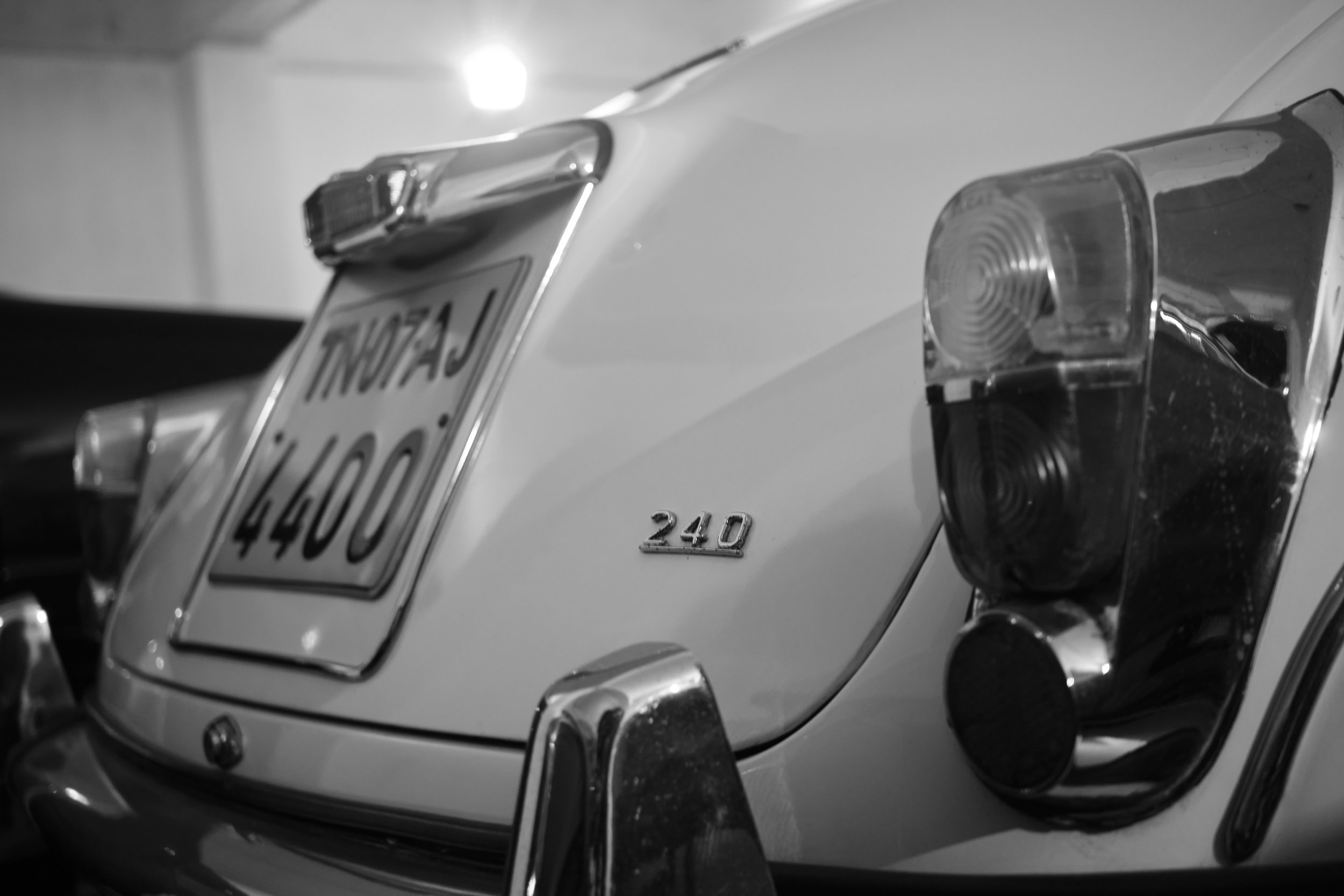
Brought home from London nearly two decades ago, this late-model Mk2, or 240 as it was badged towards the end of the lifecycle, has been a well-appreciated sight at car shows and rallies ever since. While it wasn't in its best shape when imported — the body was rusted — it had all its parts intact. The engine, on the other hand, was found to have developed a crack during its life there, which was rectified and the car was soon up on its feet. Fast forward to the end of the noughties, and this 240 had become a regular on Ranjit's Sunday morning drives and won many an accolade, too.
Right before the dreadful COVID pandemic brought everything to a standstill, the car was requested to be at a classic car event. The preliminary run witnessed the engine heating up more than it ought to, followed by a drop in power. It was nursed back home until the head was opened again, its water channels cleared of any debris, the six-cylinder engine underwent another round of machining, and it was back to being healthy. A few bits were redone, parts were re-chromed, the interior was refreshed, and after spending a fair bit of time and effort, it matched Ranjit's expectations.
“I spent a lot of time and money on the car, everything was deteriorated, but all the parts — internal and external — were there, which is a big thing. So I didn’t have to source, as sometimes it gets difficult to buy missing parts — horn buttons, door handles, or even something on the bodywork. I could redo the car to perfection, and now I’m very fond of it.”
Sourcing hard-to-find parts isn't something Ranjit is new to, his collection currently has about a hundred classics, and the majority of these are globally recognised as classic models. His love affair with cars began as a young lad and it's never taken a back seat ever since. While he always had something special on the drive, this unending passion led to him systematically building up his personal collection since the beginning of the noughties. He picked not just cars that he loved and wanted to own but also tracked down the ones that got away.
A team of extremely talented mechanics is always present to look after these — not just periodic upkeep but also the often arduous task of restoration. They also ensure that the cars are ready to be driven whenever Ranjit wishes to. Because that's what cars are made for, aren't they? And it’s not just about developing his personal collection, Ranjit is actively involved in helping nurture the growing classic-car craze locally. Last year, he was the driving force behind Heritage Rollers, an an extremely enjoyable car show in Chennai which saw marvellous classics come from all over the country to join some astounding metal from Chennai including many of Ranjit’s cars.
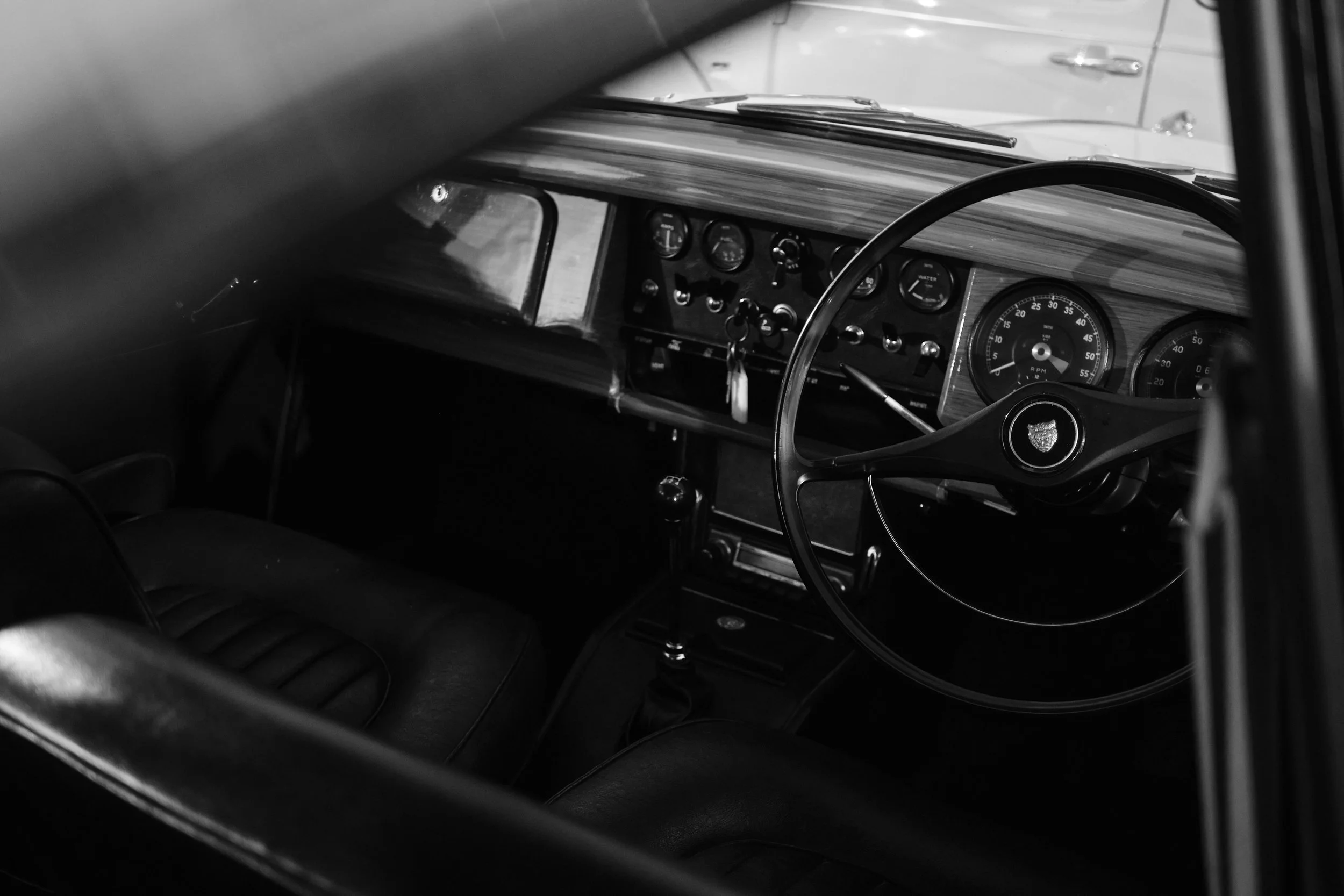
Back to the 240, many readers would recall it to be a swansong for the Mk2. The latter half of the 60s had Jaguar streamlining their product line, and the Mk2 3.8 bowed out, the 2.4 became the 240, the larger-engined car became the 340, and so on. The refreshed model got slimmer bumpers, the interior became a touch less lush than before, and the maximum power for the 240 saloon, according to JEC, was 133 bhp. Not bad for a 0-60 mph of 12.5 seconds and a top speed of just over 100 mph. A through update to the Mk1, the Jaguar Mk2 was also equipped with disc brakes on all its wheels, and that remained unchanged on the 240, too.
There were 3716 examples of the RHD 240 produced, and Ranjit's car is one of those. The six-cylinder 'XK' still sounds mega, it still is connected to the original stainless-steel unit that the car came with, and Ranjit loves to hear what he refers to as the nice, healthy beat of the engine. Finished in white, this one also has the optional wire wheels, which look great. The interior is in top shape, too, and the number plate with mixed font sizes is atypical of Chennai cars, most likely made by Speedex.
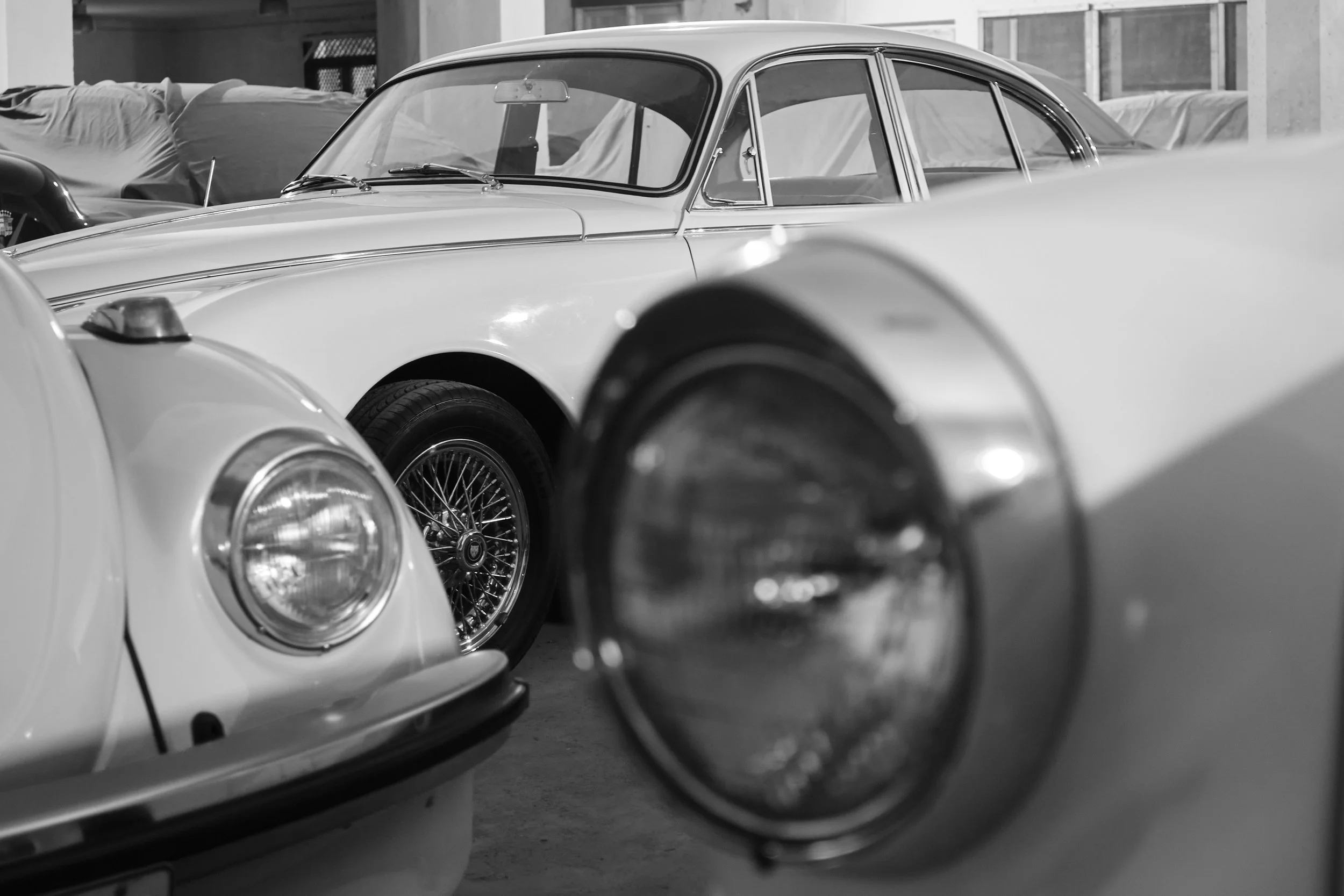
So, how come the Mk2? It's a bit like asking a parent who their favourite child is (it's always the dog, but I might be biased), and Ranjit spends no time answering my borderline-daft question. 'I love the shape,' he quips, before continuing 'I have many favourite classics, and this is one of my favourites.' Easy peasy!
How difficult was sourcing it? Without any disgruntlement on his face; he says, 'Not very difficult, because at that point in time, these cars were quite cheap at around £7-8k, but a lot of work on the body had to be done especially the wings and the footboard.' The bodywork looks solid now, and he confirms that the panels were well-aligned and free from damage.
Is this the reason why you started looking for the XJS? "I've always liked Jaguar designs, especially from the 60s to the 80s."
And finally, is an E-Type on the cards? It might surprise many that Ranjit isn't a fan of the E-Type, while he acknowledges how loved the car is, especially for its looks, he finds the proportions a bit odd. He's now quite content with the three Jaguars he has: the Mk2 which you see here, a Series II XJ, and a recently restored XJS. The latter. a V12 convertible, has also undergone a complete transformation, and is now fitted with US-spec quad lamps. Which look lovely!
I never got to chat about Morse because we were a touch short on time but it's always nice to see favourites from the telly come to real life, and it's always a pleasure to have a chat with someone who has great taste in cars. One of the first features I did on Ranjit's cars was about a Honda Accord saloon (external link — takes you to deRivaz & Ives). He used to have an Accord hatchback and regretted selling it, and was always looking for one. So when a pristine Accord saloon came up for sale, he knew it was the next best thing. And guess what Morse's sidekick Sergeant Lewis drove in one early episode of the series? A first-generation Honda Accord saloon.
Coincidence, I think not.
