
Cheap Thrills: Mini Cooper S (R53)
BMW’s first attempt at homage to the Monte Carlo Rally winning Cooper S is a rare sight these days. Now sixteen years old, I hope that the first generation hot hatch will become a modern classic.
In ABC’s series Lost, survivors of flight Oceanic 815 find themselves stranded on a remote island after the aircraft breaks into two sections. The series explores several themes ranging from the colonisation of land and stress-induced romance to the scientific phenomenon of time travel and natural psychic traits. One of the central characters, Desmond Hume, comes to possess unique psychic functions whilst on the Island, allowing him to predict certain events relating to the other characters on the island. Since re-watching the series, I’ve come to view my life in a similar way to Desmond Hume. Wind back the clock to October 2020 – a few weeks after I had regrettably sold my MX5 – when our 1999 Toyota Corolla was sadly written off by an elderly gentleman in an eighteen-plate Mini hatch. This chap parallel parked into the side of the Toyota, bursting and destroying the driver’s-side rear wheel. The insurance firm wrote the car off as ‘uneconomical to repair.’ Robyn was a fantastic and quirky little car, costing only £200.00 in 2017.
Two months passed before we managed to find a car my partner and I could agree on, which culminated in the acquisition of a 2004 Mini Cooper S (R53). There seemed to be a certain pattern emerging, particularly when a few days before the purchase, I had noticed Car Twitter popping off about this first-generation Cooper S. To name one esteemed journalist, Chris Pollitt had mentioned the model’s emerging cult status and his desire to get a hold of one. Attached to his tweet was a 2004 Cooper S with 120K on the clock, advertised at over £2,500.00 from memory. I was in luck. My pseudo-psychic traits inspired by Desmond Hume’s character had paid off in this instance. Particularly as the car we purchased had only 68K on the clock and had been in the safe hands of a family member, who is also the owner of Autofficina, Surrey. On the day of the crash, I didn’t predict buying a Mini Cooper S. However, I do now accept that there are some events in life that will influence your future decisions.
Being sixteen years old and BMW’s first attempt at paying homage to the Monte Carlo winning Cooper, you might be thinking this purchase was an error. A system glitch taking place at the behest of a global pandemic, feeding off of poor decisions and alcohol-fuelled transactions. I would argue not. Maybe the events listed above foreshadowed this moment; maybe they didn’t. Nevertheless, the hype around this gen’ one Cooper S certainly propelled me (us) forward with the purchase. An old car it may be, but the quirky style penned by American designer Franc Stephenson continues to appeal to a mass of humans around the globe. You can find out more about the years building up to the launch of BMW’s MINI range here.
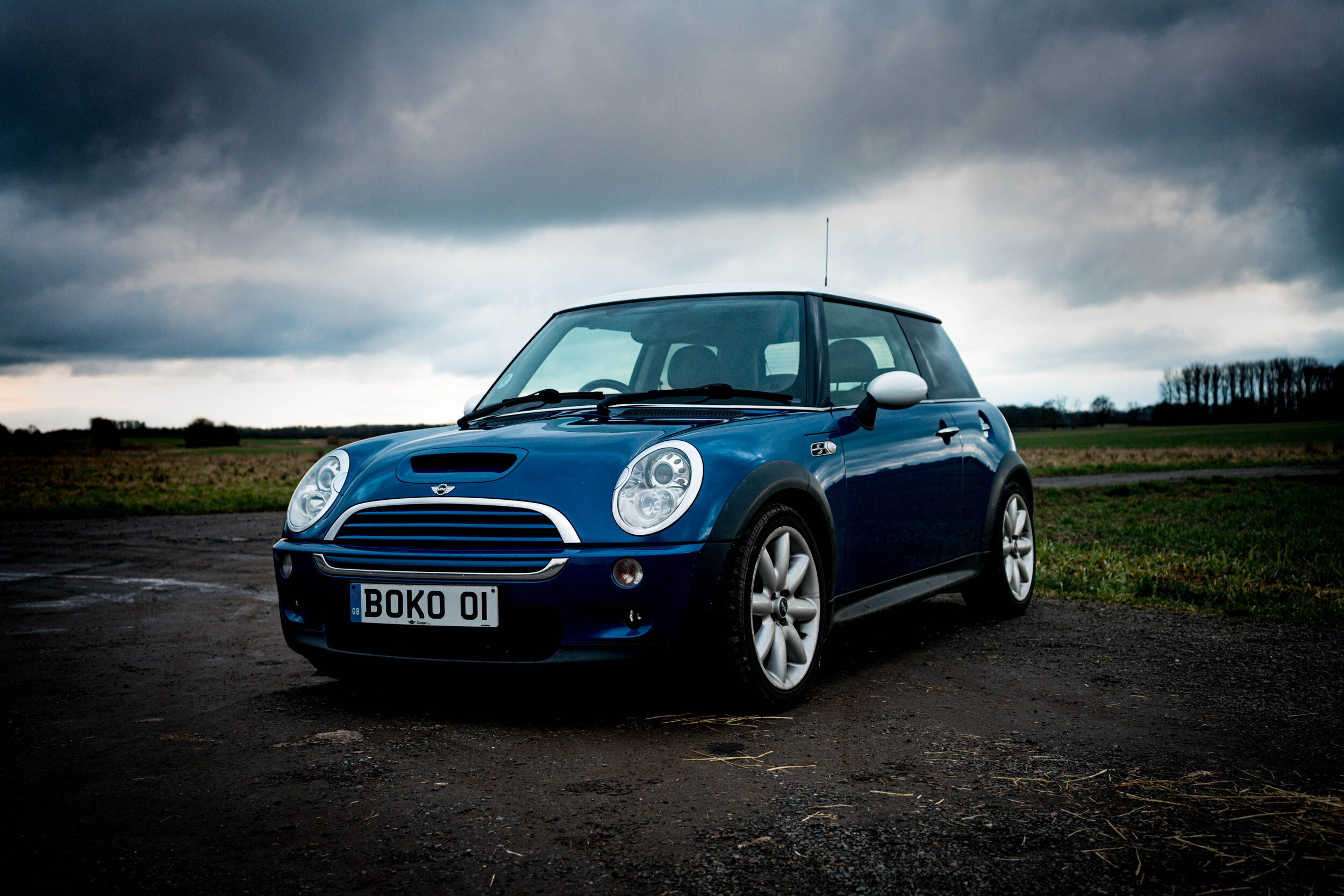
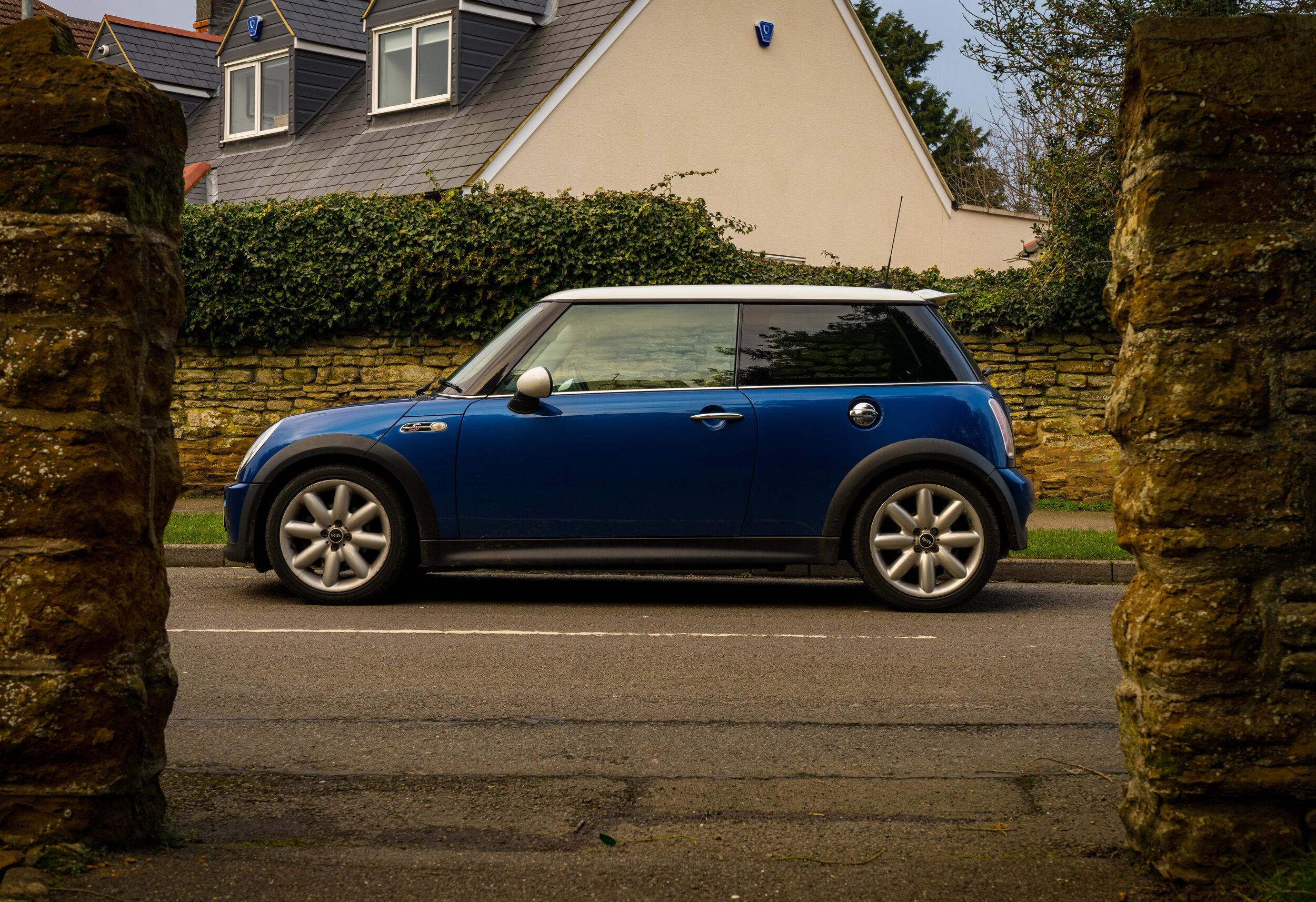
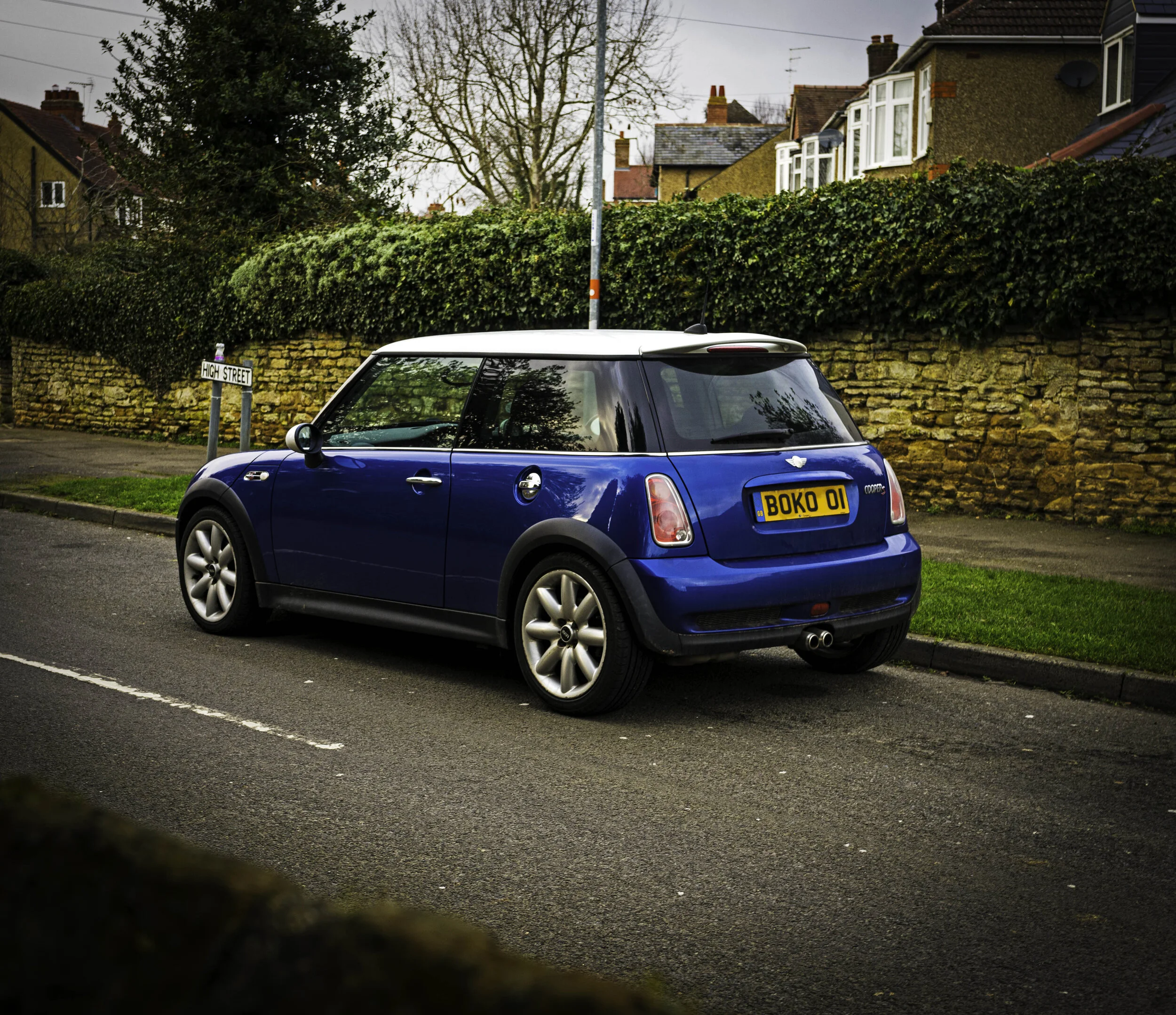
The first thing you notice when you look at the R53 is its planted stance as if each corner has been pressed out with a rolling pin. Especially when you notice its proximity to the ground. The car looks comfortable from any angle and the anthropomorphic front-end appears so pleased to catch your glimpse. So much so, I deliberately look back at the car when I walk away, just to witness that cheeky face. We named our R53 Bo-Katan because she sports a deep metallic blue paint finish – fans of the Mandalorian series will understand why the name is relevant. The R53 features a colour-matched grille, chrome headlight and window surrounds, as well as plastic fenders around the whole car. Designer Franc Stephenson configured a clamshell bonnet, with panel lines reminiscent of the external seams on the classic Mini, opening up to reveal plastic wheel arches. This alleviates the issue of rust BMW (as well as classic Mini) owners are all too familiar with. What I especially like about the aesthetics of this car is the way the glass wraps around the C and B pillars on the outside, giving it more of a Modernist feel to mark the millennium era, no doubt. I’m sure you’re all familiar with this car and its styling, so I will move on.
Much of the enjoyment and admiration for this car comes from the supercharger, which provides an adequate punch to the 4-cylinder 1.6 engine and a scintillating sound to driver and spectators. Starting the car (with a key) is something to look forward to – the twin sports exhaust (which is ready to be replaced) combined with the supercharger groan, gives a nice neighbour-disturbing explosion. After all, it’s important to announce your presence from time to time. Back in its youth, the engine would produce 168bhp, which I hope is a fair reflection of its power today. The car is certainly responsive to your demands but apt for the stock setup; so, not menacingly sprightly. The benefits of supercharged engines are immediate power, bereft of the lag you may have experienced with turbos. The latter though is now so much more advanced in 2021, the difference is nigh on impossible to tell. This is where a direct comparison between the gen’ 1 and MINI’s current offering would sit... Another time perhaps. Worth noting though is that the 2020 MINI Cooper S only shaves 0.3 seconds off the 0-60mph time of the Gen’ 1 R53…
The car itself does though, produce a lot of other noises. When stationary, you may find that the power steering whines, but this does tend to dissipate as you move off. The indicator also gives a truly hollow ‘click’ that sharpens at the end of the note. I find it very annoying. Once you get over these idiosyncrasies, there is much fun to be had. The R53 features a 6-speed GETRAG gearbox which replaced the 5-speed Midlands gearbox, allowing for power upgrades well beyond 200bhp. I have found the GETRAG setup is awkward and bereft of the slicing motion you’d expect from a more modern gearbox. Even the Toyota Corolla was much smoother to change. Reverse gear is particularly difficult and requires long arms and a lot of oomph. Despite this, you can easily catch each shift if you’re keen with your hand-foot coordination.
Steering is direct and precise, with that short nose allowing you to get involved with the road. I have noticed some wiggling of the steering column when applying a lot of power, confirming my feeling that the R53 is better suited to straight lines. That being said, you can plough into a corner with all the bravado of James Hunt, reassured that you will nip the edge of the road with accuracy. Just be ready for some rapid readjustment as you exit the bend. From a ride perspective, it is common knowledge that the combination of run-flat tyres and stock dampers won’t do much for your spinal structure. The stern ride is also loud. You do however get very little body roll, which makes for better handling. To put it bluntly, the R53 is not compatible with the quality of roads around Northampton. Hit a crater too large and the dash lights up like a Christmas tree, urging you to check every possible structural and electrical component for problems. This often resets itself, but there is nothing as unnerving as the impending doom signified by the triangle-encased exclamation mark. These dash lights change from amber to red based on the severity of the problem.
The rev range is rewarding in the R53; with the supercharger barking more aggressively as you hit the 3000-3200 mark. With the extremely compact setup, the supercharger notes come right through the vents on the dash, making you feel at one with the car. Absent of that fake throttle response you find in a lot of modern German vehicles, may I add. Equally though, you can drive at motorway speeds without an ear-grinding groan that displaces the sound of your driving playlist. If you plan on changing your exhaust system and want to maintain an adequately sporty sound, I’d advise staying away from a straight-through stainless steel exhaust system. Otherwise, be prepared to be deafened and not really enjoy long journeys.
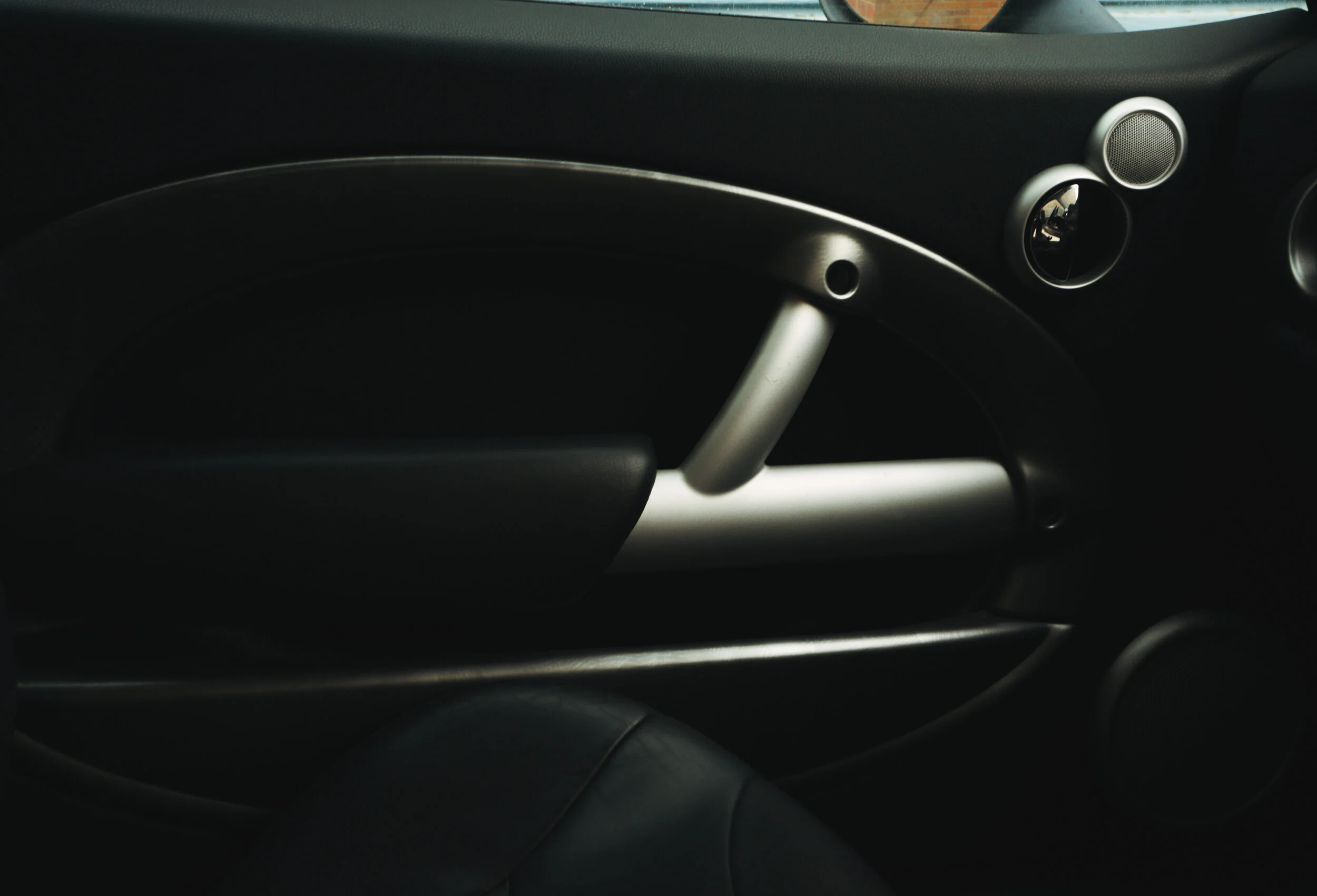
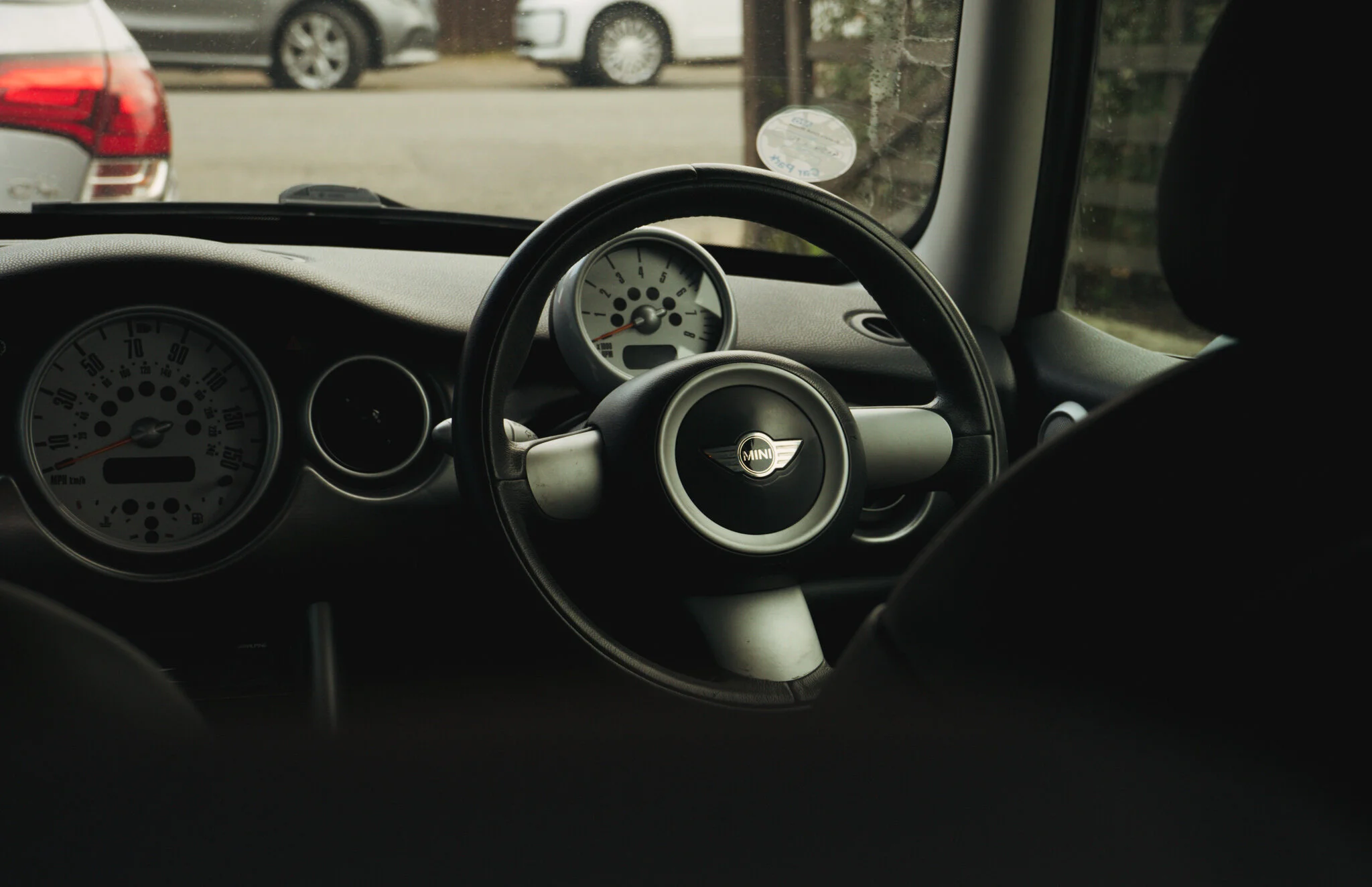
Inside is fairly minimalist in terms of its use of natural materials. Beyond the leather for the seats, other materials used are majority plastic-based. Either they were cutting costs, or they predicted that users would need to wipe down each surface to delete remnants of a coronavirus. Probably the former. The interior is comparable to the new Citroen Ami, which Johnny Smith suggests is ‘Covid secure.’ The interior does do well from a design perspective; with space and utility reviving the spirit of the original classic Mini. The door handles are integrated into a bar that stretches horizontally across the door card, allowing a useful amount of space for storage within the door internals. You get three cup holders, two for the front passengers and one for the rear. Boot space is minimal, as is the rear. Being six-foot-one, I find the cabin ample for my long legs and high knees. Although, I can’t facilitate the in-laws. The dials are centrally mounted atop the steering wheel - a design that has been adopted by many of the new electric vehicles. See the VW ID range for example. All of the dials are encased in plastic surrounds and our IP is made from a substrate covered with some sort of metallic effect. This is the best-looking element of the interior.
The supercharger setup makes it particularly easy to add more power. Shortly after the Cooper S was released, BMW launched the John Cooper Works performance pack which allowed you to make an array of adjustments including an 11% pulley reduction for the supercharger, colder temperature range spark plugs, remapped ECU and much more. This was just the beginning of the JCW legacy. A few years later, BMW bought the JCW brand which allowed them to offer a factory-built JCW model. At this time, the performance upgrade would have probably cost you – well BMW prices. Fortunately, you can achieve the same, if not better power and ride qualities for a lot less. If you do come across one of these early models with the JCW tuning kit, be sure to keep hold of it.
For the money, this first-generation Mini Cooper S is a bundle of laughs. It looks good too and I hope that it will hold its value or at least be slightly sought after in ten years. Let’s consider the cost of the 2020 Cooper S, which, with a modest specification will cost you circa £26,000 on the road. Likewise, A PCP arrangement with a £2,750 deposit will demand £351.33 over 47 months; with an optional final payment of £9578.67. If you are looking to retain a healthy bank balance while obtaining a comfortable-ish, fun and affordable daily driver then why not opt for the R53 or R56 (2006 onwards). Expect to pay anywhere between £3000 and £6000 for a circa 70,000 miles rendition with a full-service history.
With the recent facelift of the MINI Hatch, you come to appreciate how well Franc Stephenson and the engineers at BMW and Rover did with their early efforts. The facelift is an unfortunate step – one that looks as if BMW ran a competition for children or drunken adults to submit their desired changes to the MINI’s aesthetic. Hand a child or a drunken adult a crayon and you get a moustache. Or perhaps the facelift was a deliberate move to feature in Cars 4 - to subtly manipulate a future generation of MINI drivers… Who knows? What I do know, is that you should get hold of one of the earlier Cooper S models before they’re all chavified.