

The K-Car monarch: Hyundai Creta Review
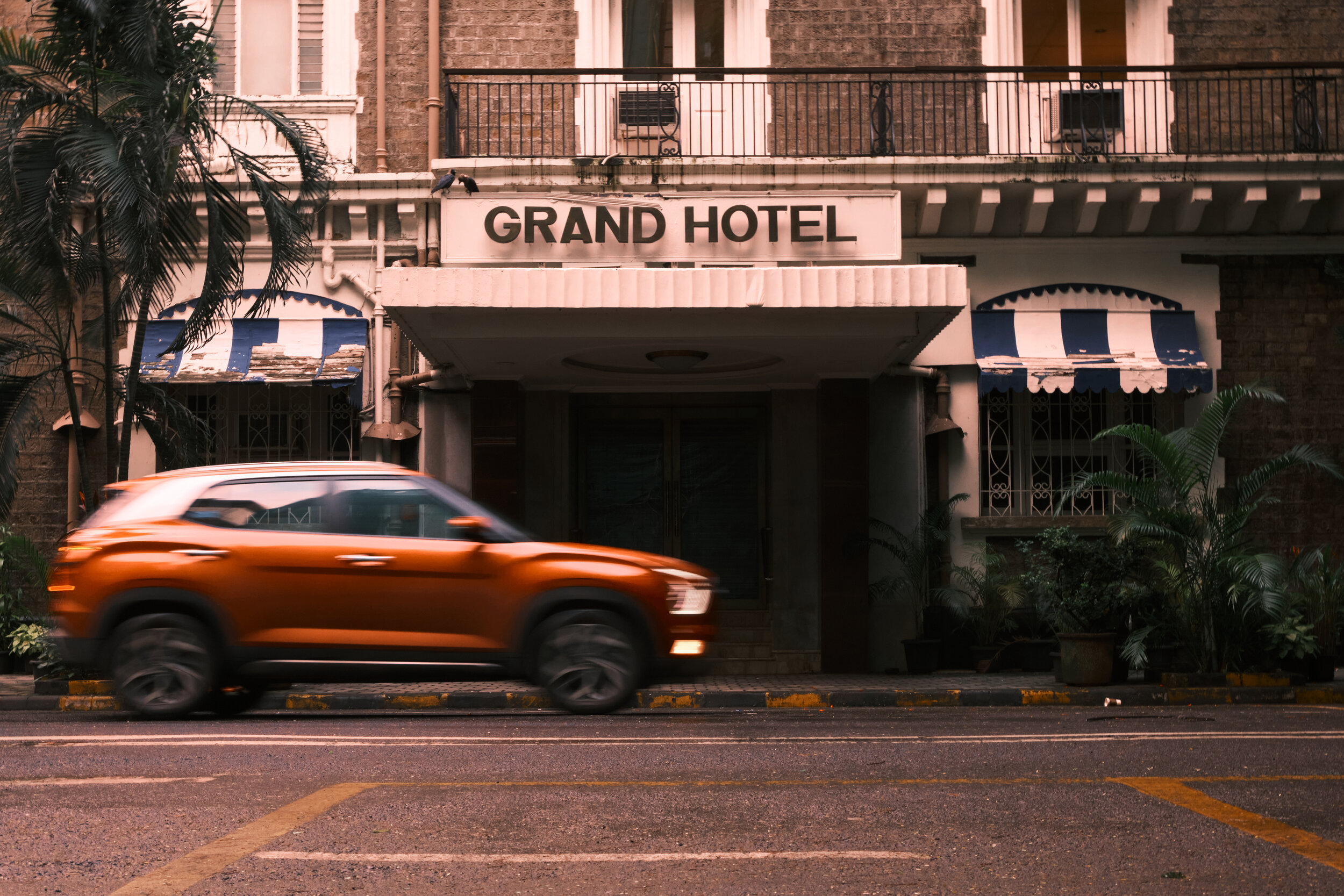
The first car that Hyundai launched in India came about two years after the brand set up its local base. It was the year 1996 and a South Korean carmaker was looking at working its way up to the top of the sales charts in India — something that was repeated about two decades later with the other child from the Hyundai Group, but at the time, it was anything but usual.
The Santro was the said car (Atos/Amica elsewhere) and as a newcomer from a brand that had no brand recognition locally, it made a decent start. Hyundai didn’t stop there — and how could it, it was after all the beginning of the Korean automotive invasion. A little over twenty years later, not much has changed in its progress towards the apex of the sales charts.. But as the market has evolved, the numbers have become unimaginably huge, and Hyundai’s relentless pace to adapt and offer the Indian customer exactly what he wants hasn’t faltered. The case in point is the Hyundai Creta. Now in its second-generation, the Creta is to a lot of car buyers the ideal upgrade from a hatchback like the Maruti Suzuki Swift or Hyundai i20. As the first drive review for The Car Cult, I took one for a spin, to find out whether Hyundai’s ability to understand the Indian customer has changed or has the Creta become the only car to beat in the segment, overcoming the ever-increasing competition.
The first-generation Hyundai Creta doesn’t feel like it’s half a decade old. And although one sees quite a few of these around, its stature can’t be reduced to ‘just another common car’. That’s saying a lot, because in the last five years, Hyundai managed to shift 500,000+ units of the Creta. On average, that is a solid 11 cars sold every hour. Anyone with a basic calculator can do the maths, but not everyone can come up with a successor to a car that’s had a market performance nothing less than stellar.
Call it karma, but the way the Hyundai Creta, when new, pushed possibly each of its rivals to irrelevance is exactly how the first-generation car was finally shown the door. The increasing popularity of cars like the Kia Seltos (based on the same platform as the Creta), the Tata Harrier (based on a new platform, shared with the Land Rover Discovery Sport), and even the MG Hector (SAIC’s crossover, also sold elsewhere as the Baojun 530, Chevrolet Captiva, etc.) did create a dent in the Creta’s almost-unabated run to glory. Honestly, in comparison to the aforementioned cars, it’d be fair to say someone buying the outgoing Creta would’ve felt a bit short-changed. It didn’t have a plethora of cameras or an ability to open the sunroof without the user having to push a button, and it certainly didn’t run on a platform that could be linked to off-road pedigree…
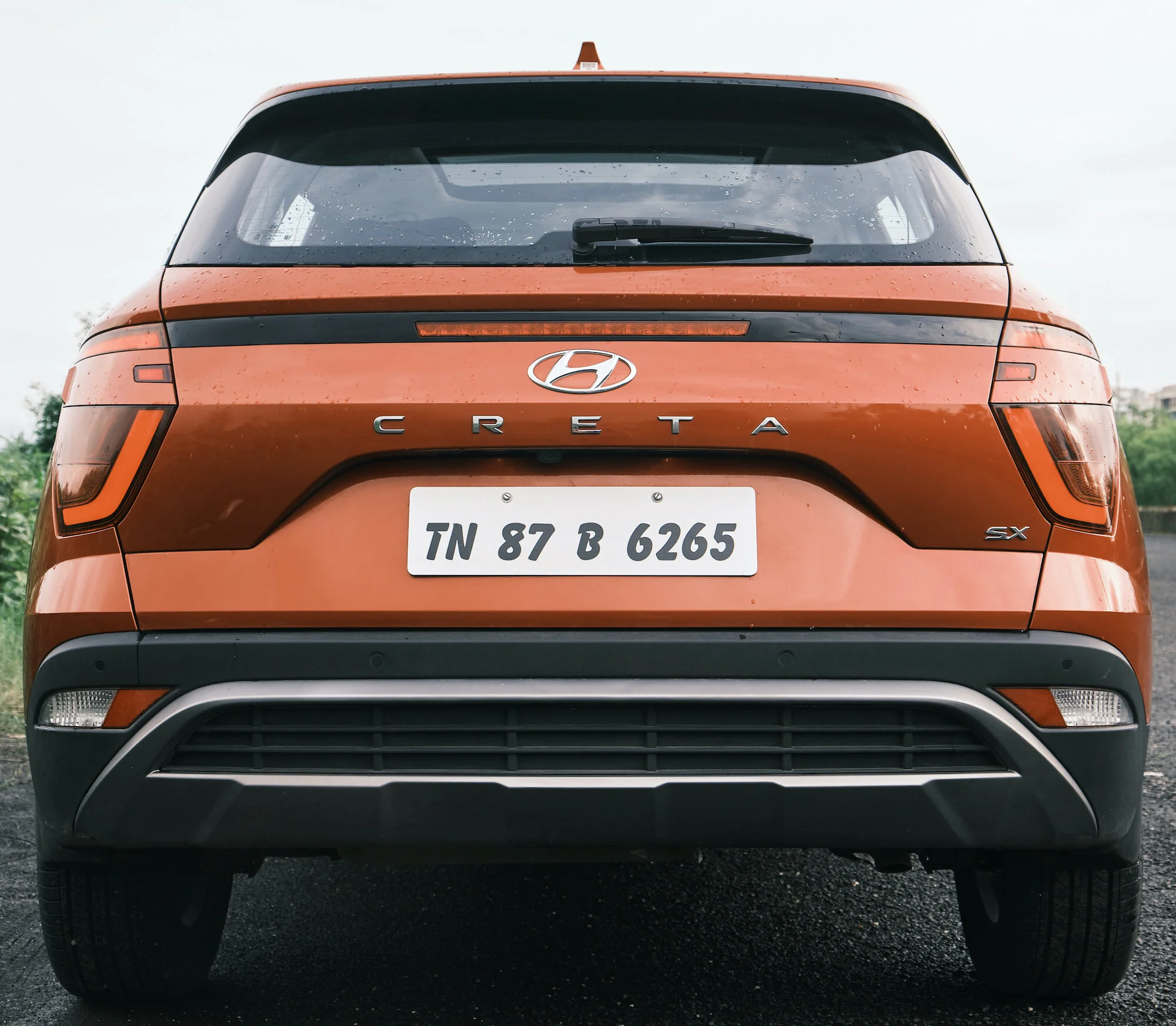
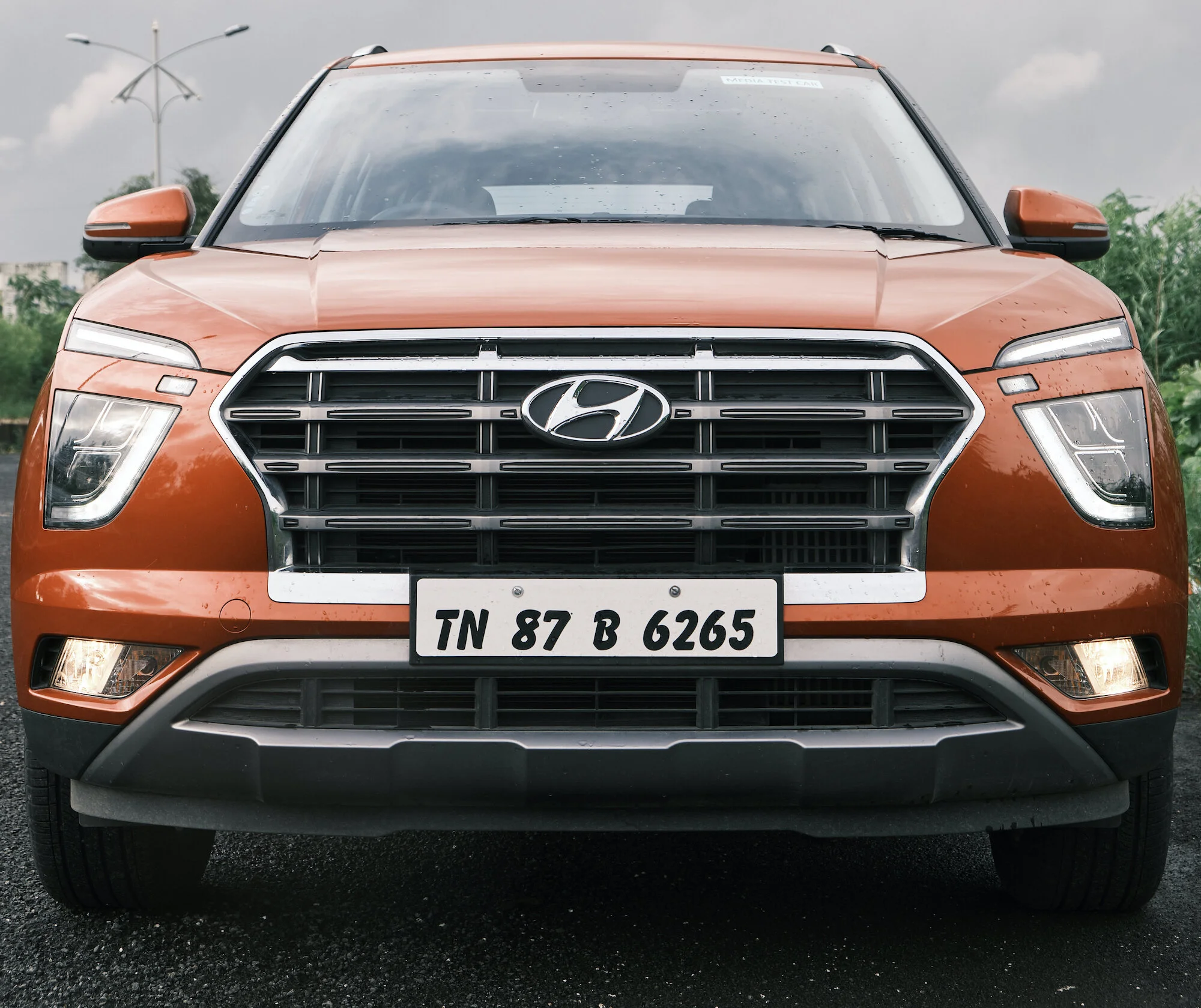
To respond to this, Hyundai’s approach had to be nothing but revolutionary. A mere facelift wouldn’t have cut it. Something that makes people stop and take notice would have been on the top of the priority list. Because that’s exactly what the new Creta’s design will make you do. In comparison to the upcoming Elantra’s extreme-origami-influenced styling — which is where Hyundai seems to be heading — the Creta’s might as well be the new conventional. But in reality and in comparison to the rest market (and obvs relative to the previous Creta), it’s anything but that. The crossover’s styling might not be to everyone’s taste but it eventually makes everything else seem a bit too boring, and too safe, even. The first thing anyone would notice is that the front and the rear are worlds apart, and it can take a while getting used to that. But it does grow on you.
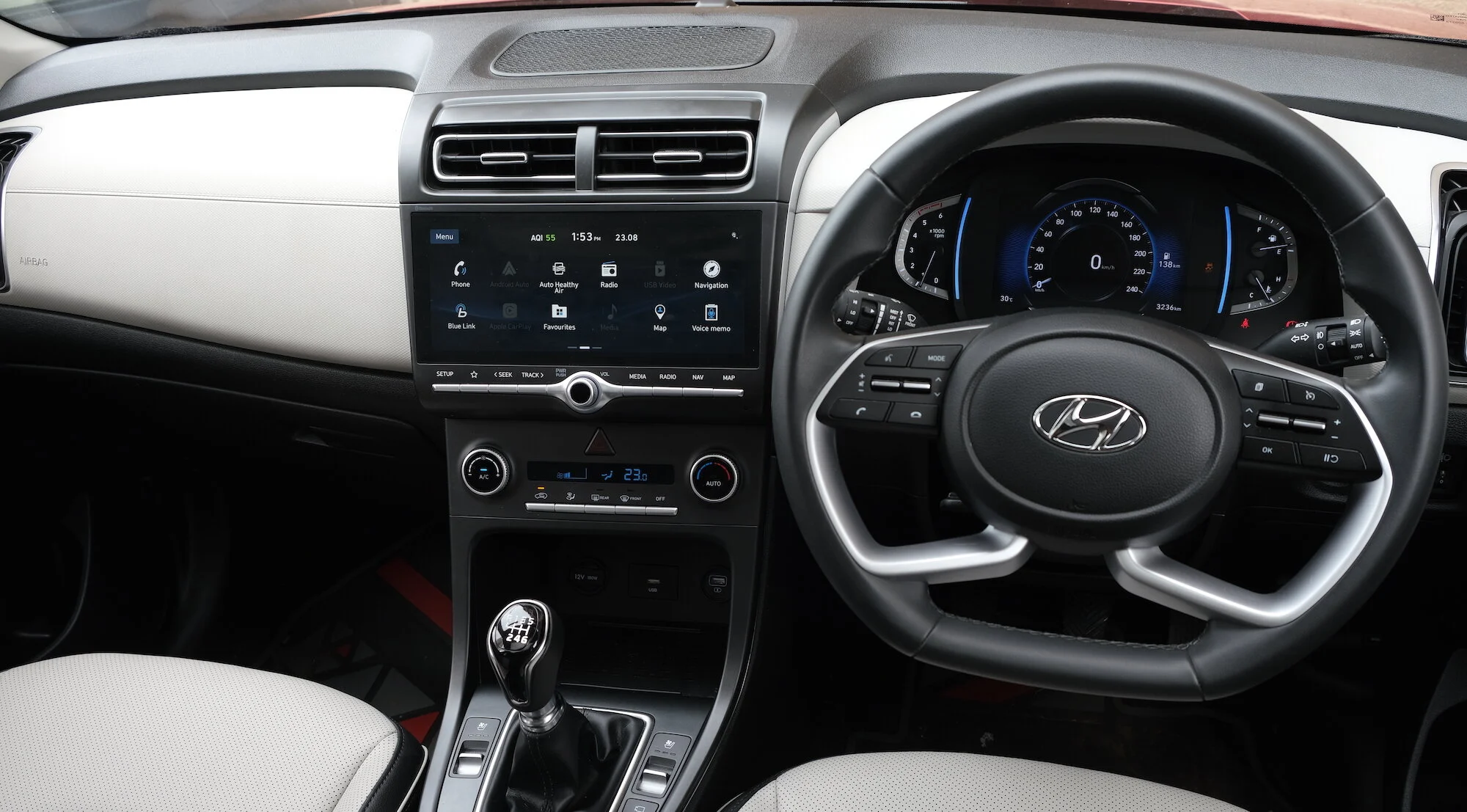
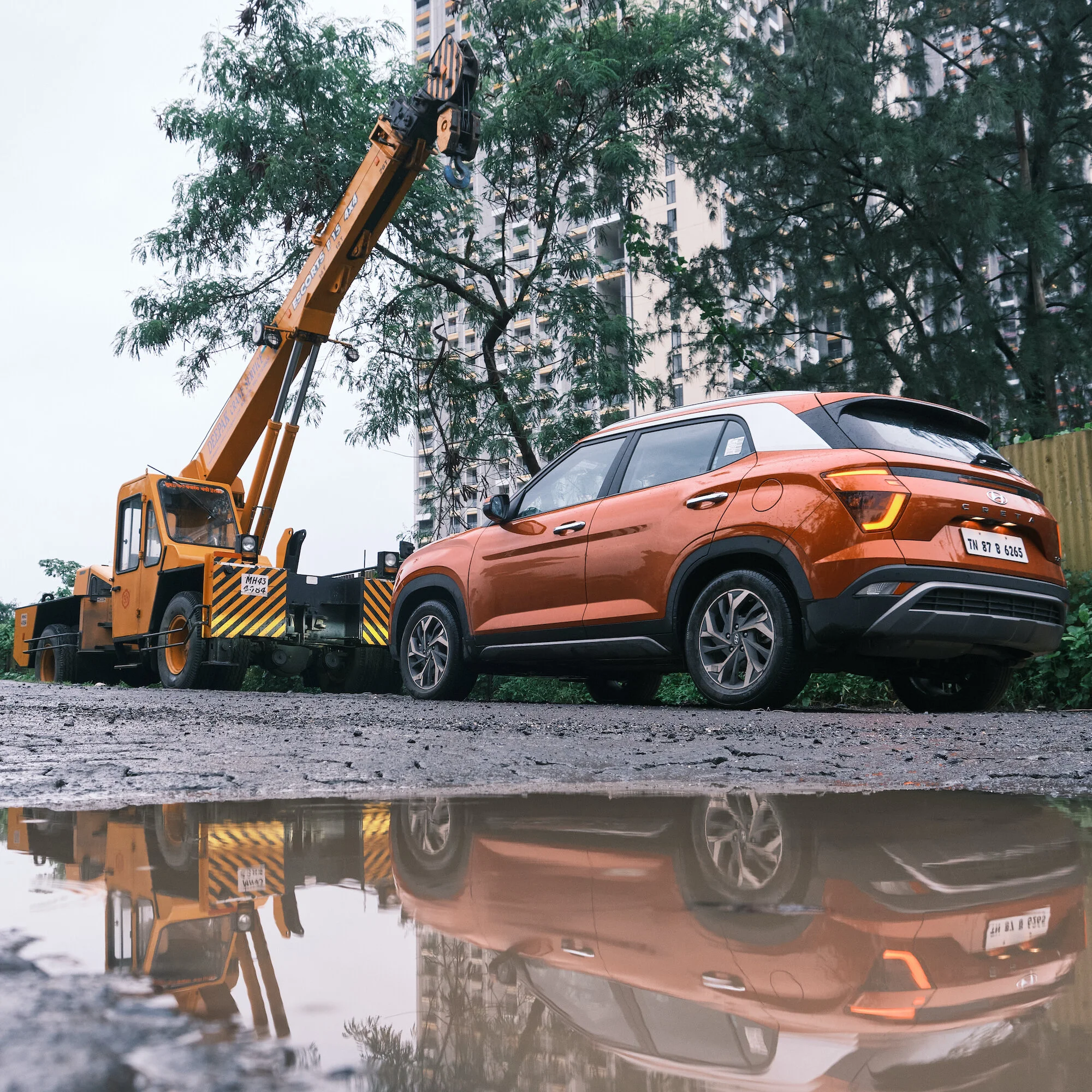
Things have certainly moved forwards on the inside as well. There’s a new Blue Link connectivity suite which allows the occupants to get in touch with the emergency services, or call for a tow truck etc., at the push of a button. The phone app might not render the chauffeur useless yet, but it’s still fairly useable. One can also speak to the Creta to open the sunroof. No idea why it’s all the rage in this weirdly popular segment.
Other features include the ability to control the car’s ignition, AC, air purifier; destination sharing; monthly health report of the vehicle, etc. And in the unfortunate event someone nicks the Creta, the system can track the vehicle for you as well. You can even hook up your smartwatch with the Blue Link system. In addition to that, the new Hyundai Creta also gets a panoramic sunroof, wireless charging, a rather large touchscreen system (which works exceptionally well, as one would expect from a Hyundai), an eight-speaker Bose audio system (which is good), ventilated seats, ambient lighting, reverse parking camera, TPMS, cooled glovebox, etc. If you choose a DCT-equipped version, you get paddle shifters. Higher variants also get an electric parking brake (with auto-hold), traction control and drive modes (also dependent on the engine+gearbox), and cruise control. Phew! But despite the long list of features, the Creta misses out on front sensors or camera, 360-degree and blind-spot cameras, and even head-up display. These aren’t features from a segment above but from the Kia Seltos, with which the Creta shares a lot.
The way the dashboard is slightly curved towards the driver is a nice touch. In terms of colour themes there are two of those: a two-tone black and ‘greige’ as you see here, and an all-black with orange pack — the latter is available on the Turbo version. The overall quality is nice almost everywhere, but sharp edges and plastics that don’t feel/look reassuring aren’t totally absent. Thankfully, Hyundai didn’t hold itself back where it matters the most — features and options. The seats are comfortable, there are eight exterior colours to choose from (and a few combinations), and as mentioned above, quite a lot of features to ensure you don’t get bored. Dual airbags at the front are standard across all variants, while the top variant — SX (O) in Hyundai speak — also gets side and curtain airbags. Stability control, hill-start assist, and disc brakes at the rear are limited to the SX and SX (O). This is valid for child-seat anchor, too.
In India, Hyundai was proactive when the BS-VI emission norms were applied, and it thus readied the vehicles accordingly. That means on the new Creta, the engine range has been rejigged to include a variety of new powertrain and gearbox choices: a 1.5-litre petrol (NA), a 1.5-litre turbocharged diesel, and a 1.4-litre T-GDi turbocharged petrol. All are four-cylinder engines and available with either 6-speed MT, CVT, 6-speed AT, or DCT. For more details, you can check out Hyundai India’s website — the link to which is at the end of the story.

In the diesel MT guise that I drove, the Creta invoked a sense of familiarity. It’s never out of breath in the city, neither does it puff on the highway. But at 113 bhp @ 4000 rpm and 250 Nm @ 1500 - 2750 rpm, both the maximum power and torque are down in comparison to the 1.6 D. And although the difference can be felt (if you’re coming from the 1.6, that is), does it take away from the driving experience? No! On the bright side, the Creta is so much quieter that — excuse the cliché — you might not notice it’s a diesel. You’ll never find a reason to doubt, though, as its wider torque band makes that fairly apparent. The gearbox is like any other Hyundai’s — smooth and easy to use. So much so that if you don’t mind giving up on the overall convenience of an AT, this isn’t going to be something you’ll regret buying.
I haven’t driven the 1.5-litre petrol, so can’t comment on it yet. But given that the 1.6-litre petrol wasn’t the strongest performer (in the Creta), I’m keen to see how far Hyundai has come in that regard. The 1.4 T-GDi is the same as the one in the Seltos, although in the Seltos it can be specced with either a 6-speed manual or a DCT. In the case of the Creta, it comes only with the dual-clutch automatic. In the Seltos, it turned out to be one of the strongest reasons why the crossover appealed to a wide variety of buyers, and I don’t see why that will not be the case with the Creta. Hyundai differentiates between the standard versions and the Creta Turbo with the help of aforementioned all-black interior; different wheels; optional dual-tone colour choices; black paint for the mirror caps, radiator grille, bumper, non-functional roof rails, etc.; and a new ‘Deep Forest’ single-tone paint. That’s a nice throwback to the Forest Green paint on the Accent/Tornado. In addition to this, the Creta Turbo is also bestowed with paddle shifters, drive modes, traction control modes (to vary the power delivery depending on the surface it’s traversing), and a twin-tip exhaust.
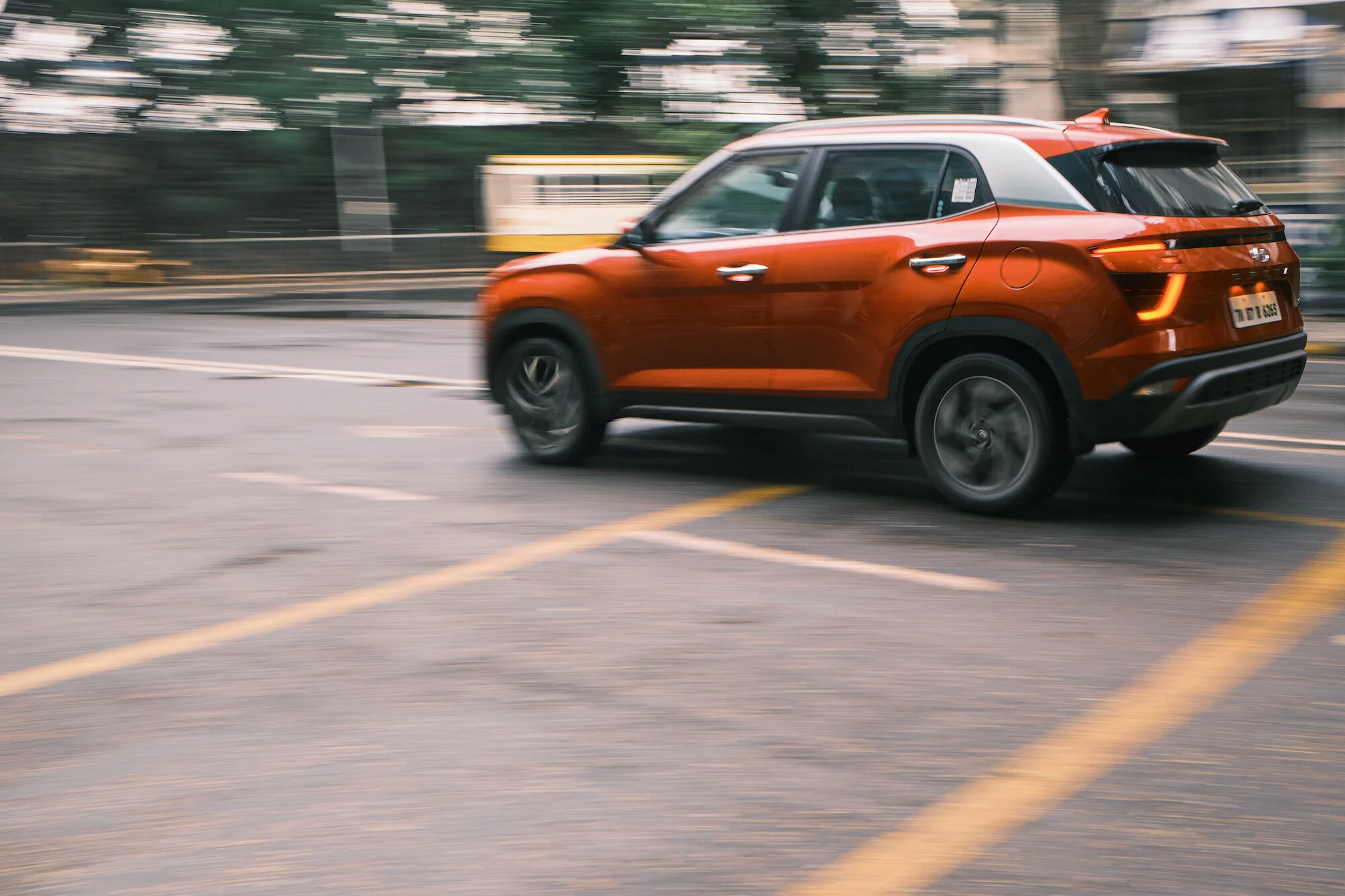
On the move, the Creta continues the reassurance it’s always had. It doesn’t get AWD, and that’s because the market segment hasn’t evolved that way — most products, like the Creta, are FWD, hatchback/saloon-based crossovers. The Renault Duster used to get AWD as an option, but that’s no longer on sale, either. The Creta’s suspension is happier on well-paved roads and regardless of its speed, it remains decently stable. It rolls a bit, and the assisted steering is devoid of feedback, but looking for improved dynamics here is like asking for a Skoda Yeti in 2020 — we want it but the thing won’t be anywhere close to what the majority of the market wants. Most buyers in this segment want a car that does a little bit of everything without being a pain to live with. And it’s safe to say that the Creta delivers. Hyundai knows that well enough to bank on the assumption that it’ll work with the masses. The oddball styling hasn’t put people off, and more importantly, while the competition must’ve made things difficult for the new Creta, it’s bound to come out of this battle unscathed. It’s anyone’s guess why Hyundai still doesn’t offer front parking sensors on the car, or that to enjoy a basic feature like the rear windscreen viper, one has no other option but to choose either the S, SX, or the range-topping SX (O) version. But my complaints do end there.
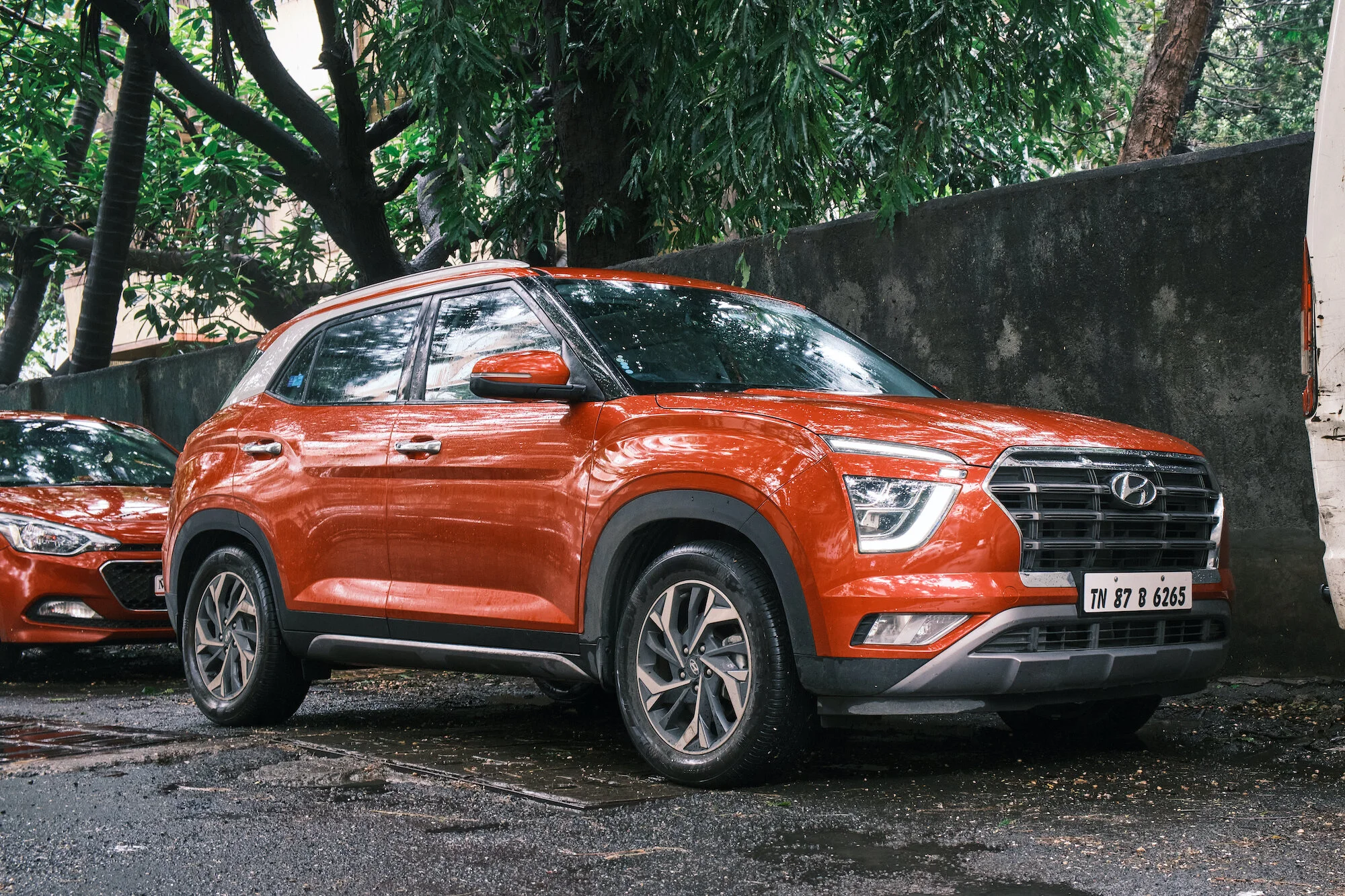
At 4300 mm long, 1790 mm wide, and 1635 mm tall, the Creta is only slightly larger than before. The wheelbase is longer, so anyone looking to deploy another human to do the driving for them as they continue to enjoy the rear-seat comfort will also enjoy the added space. To make it more cosy without going overboard, Hyundai also includes a nice detachable cushion for the rear headrests. The fuel economy I got while driving the Creta in Bombay has remained close to 16 - 17 km/l. Which isn’t bad considering, despite having to share the road with fewer people than usual due to the current restrictions, I spent a lot of time in the first three gears only. The Creta never threw the slightest of fit and chugged along merrily. As if it was made only for this kind of a thing…
Final thoughts
I particularly like how the Creta feels the way the first one did when new — not mundane like other everyday cars but at the same time not out of reach either. For a runabout, that has to be the most-important criterion. If you can attain the kind of rapport with your car that you don’t have to think twice before heading out for even the most boring of tasks, it’s a sign that you’ve accepted the car. The Creta has managed to do that to me in just a week, proving that it’s an easy car to live with. The downside is that it’s not the most exciting one to drive. It rides well on good roads and if you aren’t looking at pushing it over-enthusiastically into corners, it won’t mind almost anything you throw at it. And even with the slight power deficit, I don’t think the Creta will be a deterrent on long journeys. It has what it takes to be a good car for long trips. As a product, the Creta is pretty much where it originally was: right at the top. Like a monarch, a K-car monarch.
Photos by Paranjay Dutt. Shot on the Fujifilm X-T3 (processed with Fujifilm Classic Negative in Capture One Pro). Hyundai Creta courtesy of Hyundai India; Prices start at Rs 9.99 lakh (ex-showroom) onwards