
No more T-foolery: VW T-Roc Review
In a bid to offer people their car, VW has stretched its model portfolio to market segments that according to many didn’t exist. A case in point is the Volkswagen T-Roc. It’s an MQB-based crossover that, in terms of pricing, sits below the erstwhile (in the Indian market) Tiguan but above the upcoming Taigun. Its existence here is also due to a recent relaxation in the import laws under which a carmaker can import a limited number of vehicles without having to bear the cost of homologation (local certification that a new car is road-worthy). It’s still not a win-win for everyone, as importing a fully manufactured car to India effectively doubles its price. Which means while one gets a truly world-class product, it comes with a price tag that won’t look out of place in a country whose GDP didn’t recently fall so badly that conversations about buying new cars seem rather irrelevant. But with a hope that things will improve, Paranjay gets behind the wheel of the T-Roc, already smitten by its cheerful exterior (not usually associated with the VWs that India has seen) and later by its enjoyable drive (unsurprising, as that’s a VW trait globally).
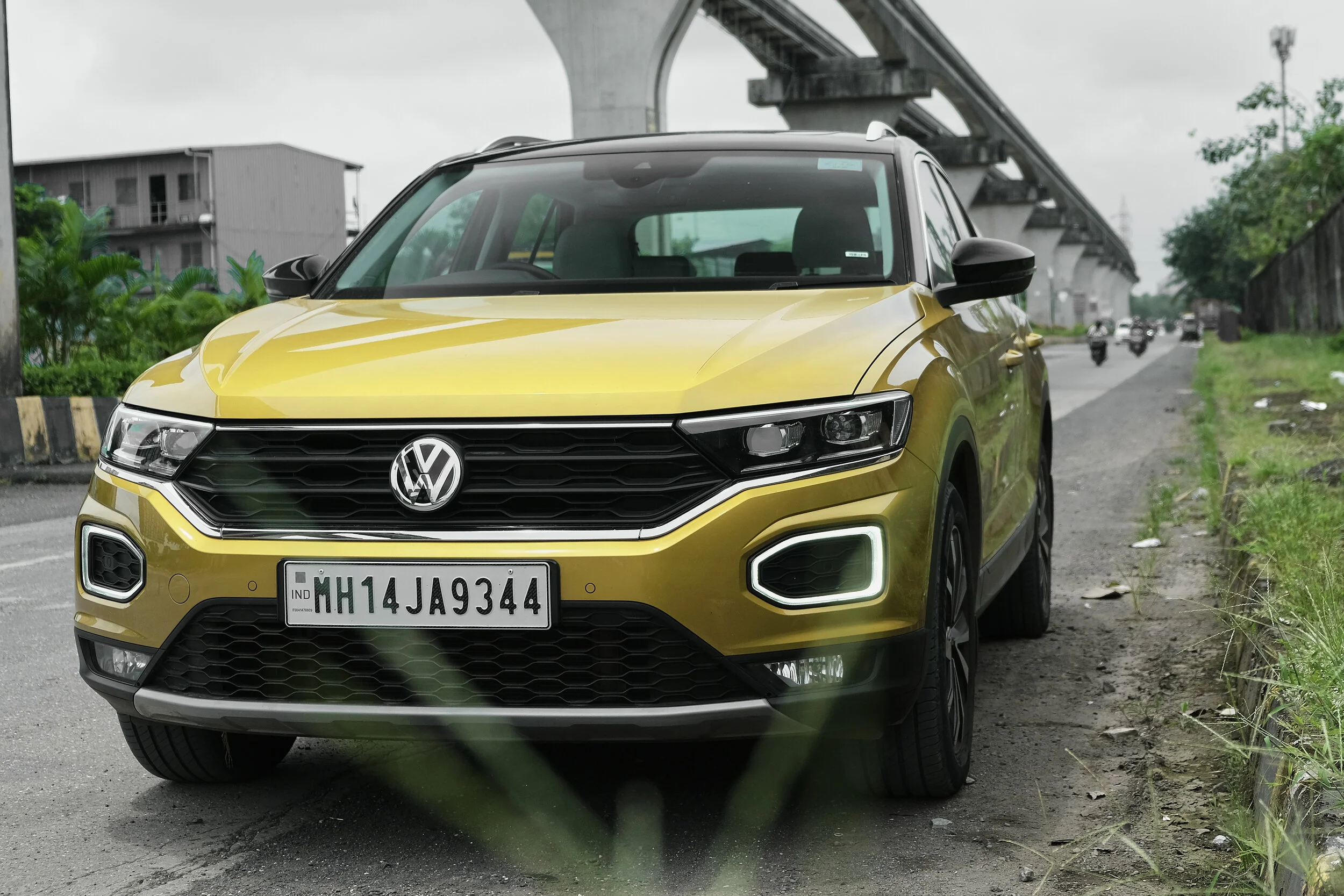
Think of the T-Roc as the Golf that India never got. That’s quite an assumption I’ve made even before reaching halfway through the review. But my point is that it just gets the job done, without making you feel bored behind the wheel. I might sound like a completely thankless tool here, but it’s partly sad and also annoying how the lack of a variety of designs in this space has made people appreciate the T-Roc’s by calling it very individual and quirky. The last car I remember which had a design that stood out for the right reasons was the Skoda Yeti. And again, excuse the overused comparison (by myself at least) with the Yeti; if the T-Roc turns out to be even half as appealing as the Skoda from the past, I’ll call it a winner.
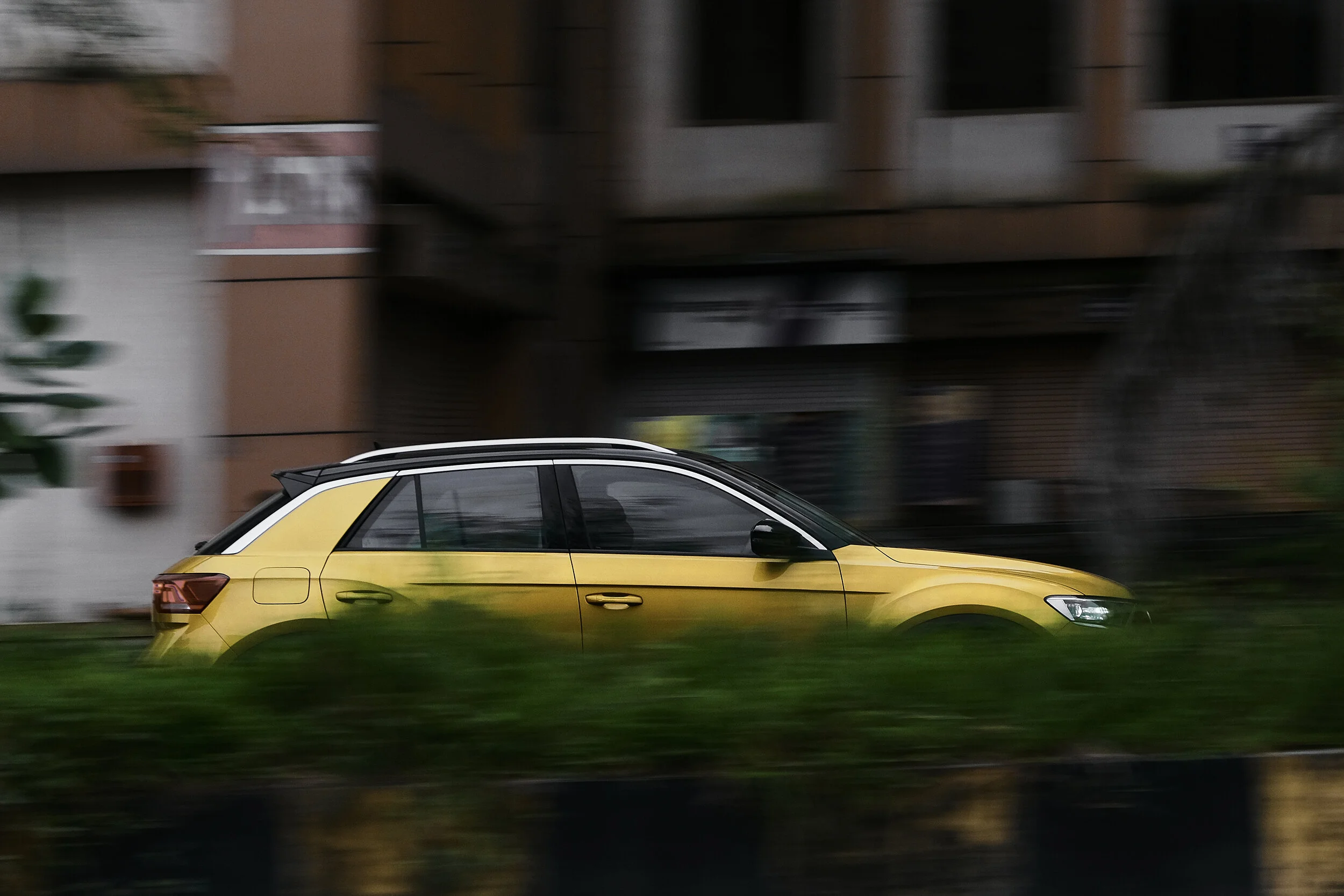
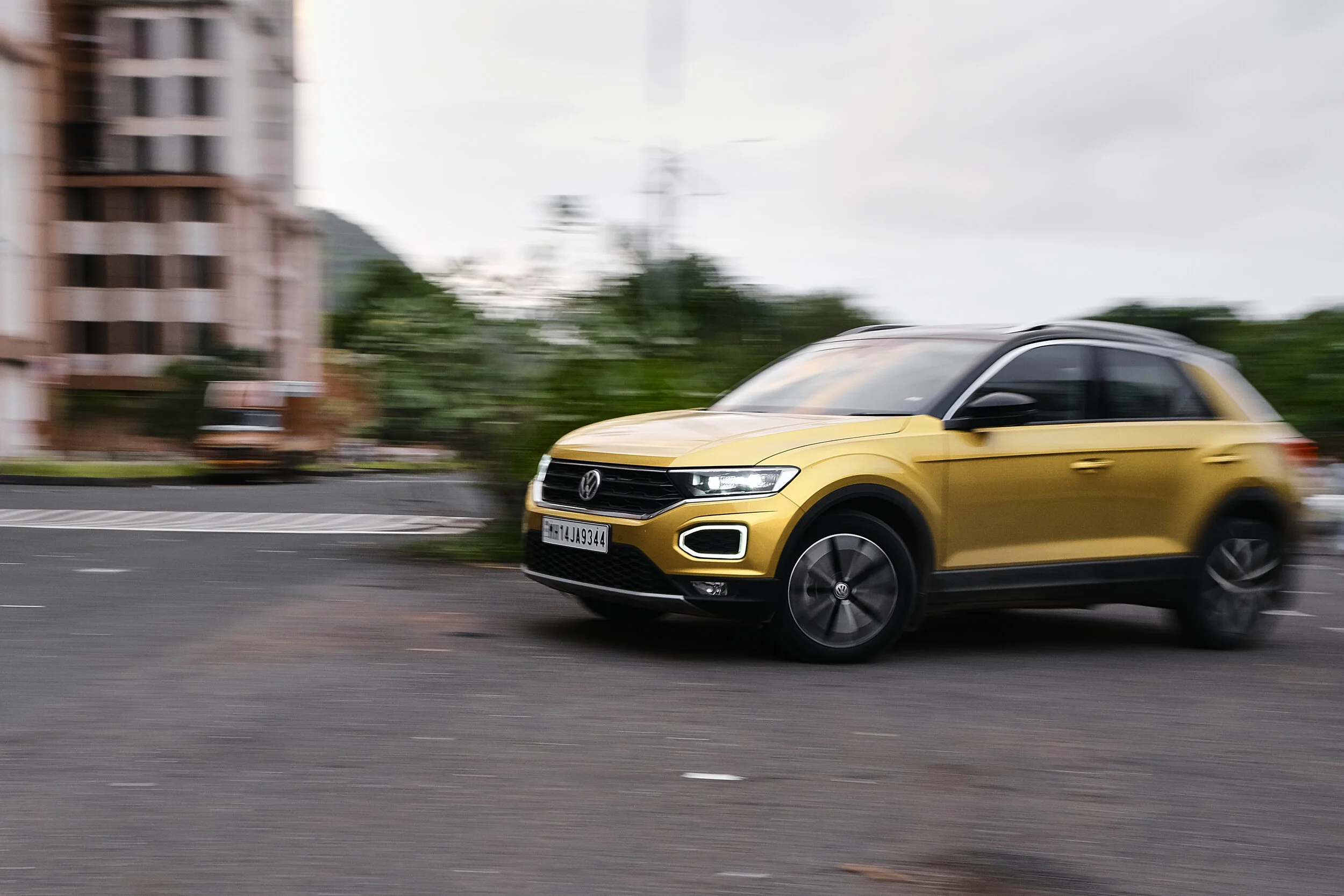
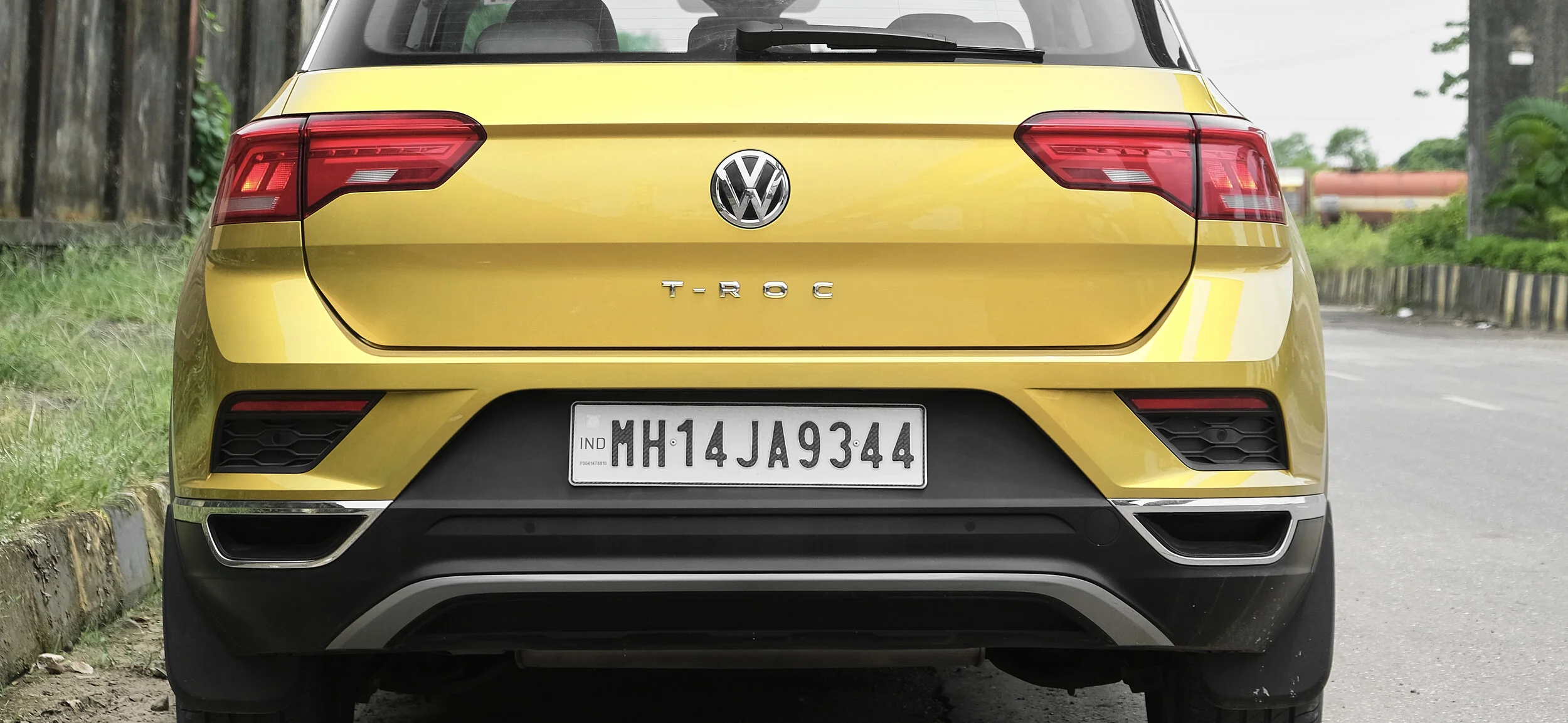
For that, it’s imperative that we look at the design. A touch too bright and out there by VW’s standards, the T-Roc in Kurkuma Yellow is exactly what makes you ignore the gloom of an overcast day. In other colours, it’s not as striking, though. Like other VWs, the good use of lines makes the T-Roc’s look like a balanced design. The use of black roof and black wheel claddings means it’s effectively a two-tone colour combination, with prominence given to the main body colour. The rear windscreen meets the body at a greater angle than other crossovers, making the T-Roc appear what a lot of reviewers might refer to as ‘sporting’. It’s like the previous-generation Audi Q3 but in a smaller form. Viewed head-on, there’s a lot to like both at the front and the rear. The chrome trim around the radiator grille which meets the lights and isolates the headlamps and the grille from the rest of the fascia is a nice touch. The hexagonal DRLs which double up as indicators are good, too — and a great way to stay away from the increasingly popular (and annoying) dynamic/sweeping indicators. At the rear, the tail lamps are ‘joined’ by a character line, which not just serves as a visual relief from too much metal but also keeps things fairly simple but stylish. Rounding things off is a set of faux exhaust vents. It might not get the instant seal of approval from a lot of car enthusiasts, but it does a fair bit in making the rear design look less drab.
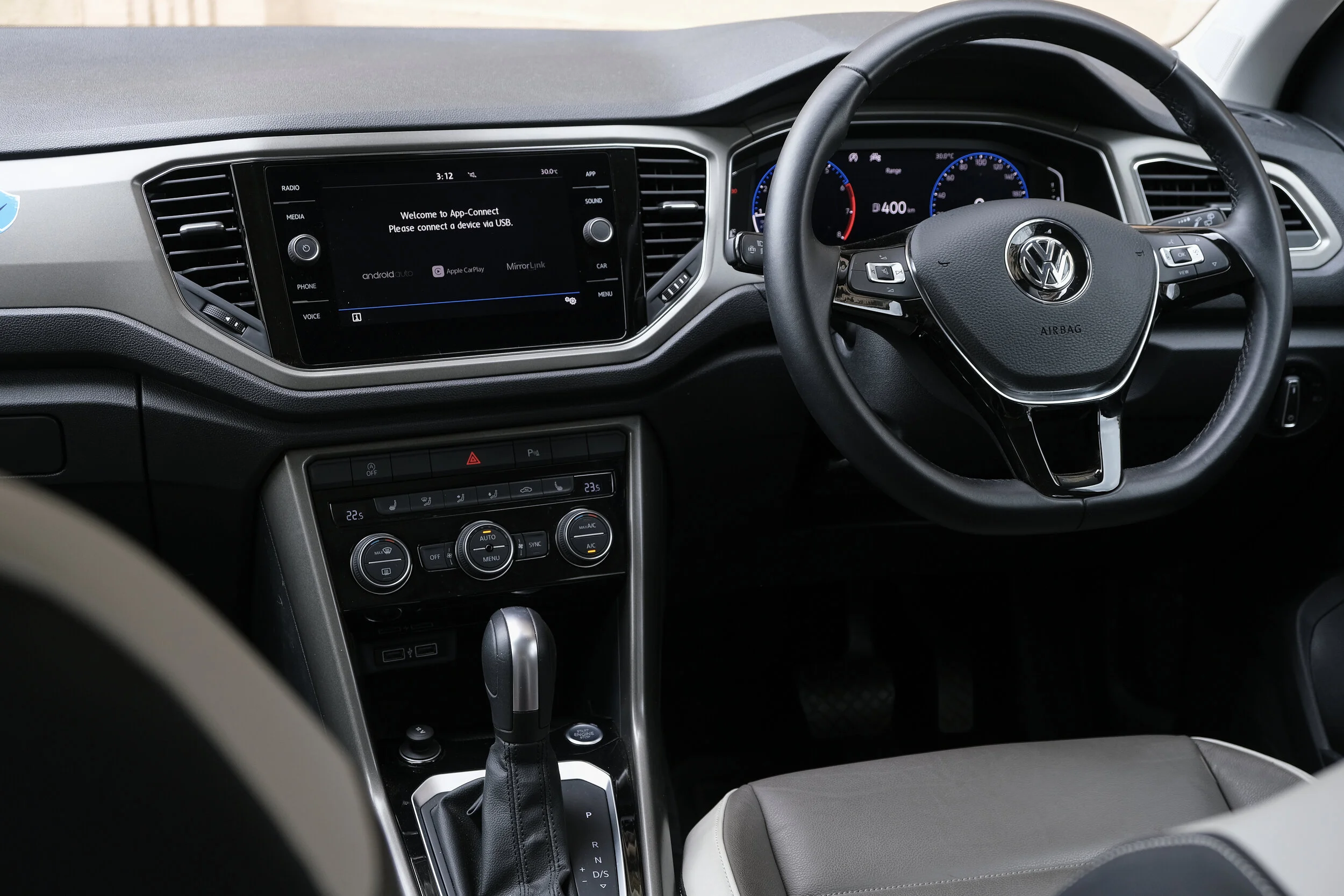
Like the outside, the interior is also familiar VW territory. The well-designed, curved-towards-the-driver dashboard appears to be from a generation ago. But that’s not a bad thing, because the buttons, switches, and knobs (haha!) are all in the right place. It’s got a touchscreen to satiate all the Apple-CarPlay needs, and the six-speaker audio system works fine, too. The seats don’t get electric adjustability, which, let me assure you, means nothing more than a sad face smiley when you tell your mates about your new car. It’s easier to slide the seat, anyway, although one would argue that given the T-Roc’s price tag, electric adjust should’ve been a standard feature. Fair point! There’s steering adjustability, too — and that’s also manual, in line with what you get for the price. On the bright side, its heated mirrors are a surprise inclusion, while heated seats in a tropical climate might just be of no use. What’s equally of little use is the space at the rear — this is not the car one would consider in the price bracket if they were looking for rear-seat space. The boot isn’t very large, either. But it corresponds to the size of the car and not your unrealistic expectations, okay?
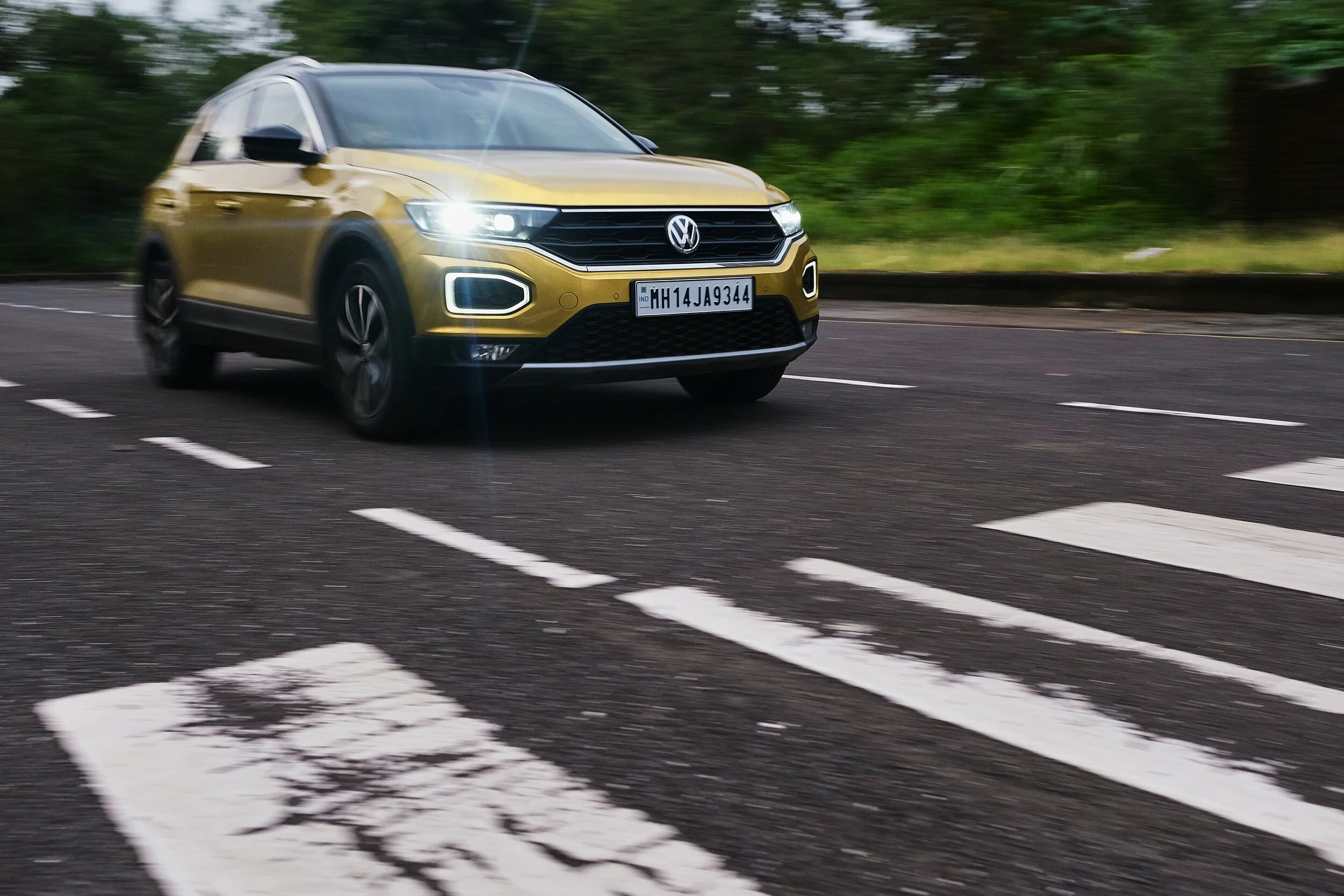
On the other hand, it’s from behind the wheel that you’ll appreciate the T-Roc the most. The thin-rimmed steering is a delight to hold. It’s sharp on turn-ins and fairly responsive elsewhere as well. That is until you want it to achieve sports-car-like feedback because that’s where it’s bound to disappoint. The body control is also better than most crossovers in its price range — it stays stable at motorway speeds and also instils enough confidence to make drives generally more enjoyable. What hampers its progress there is the way it rides on bad roads. The T-Roc is clearly as road-orientated as something in the segment can get without flaunting a track-only badge. If your commute involves making a trip to surface that resembles that of the moon (or say Andheri if you’re in Mumbai), this won’t make for a good purchase. But if your city happens to be blessed with good roads and you don’t mind paying a little extra for something that is right at home on the tarmac (well-paved only, mind), the T-Roc is one great choice. The front-wheel-drive platform means you won’t be looking at taking this off-roading (or even green laning), and you do miss out on the safety net of an all-wheel-drive system in extremely difficult conditions. The inherent stability of the chassis will be good enough for most everyday tasks, though, I reckon.
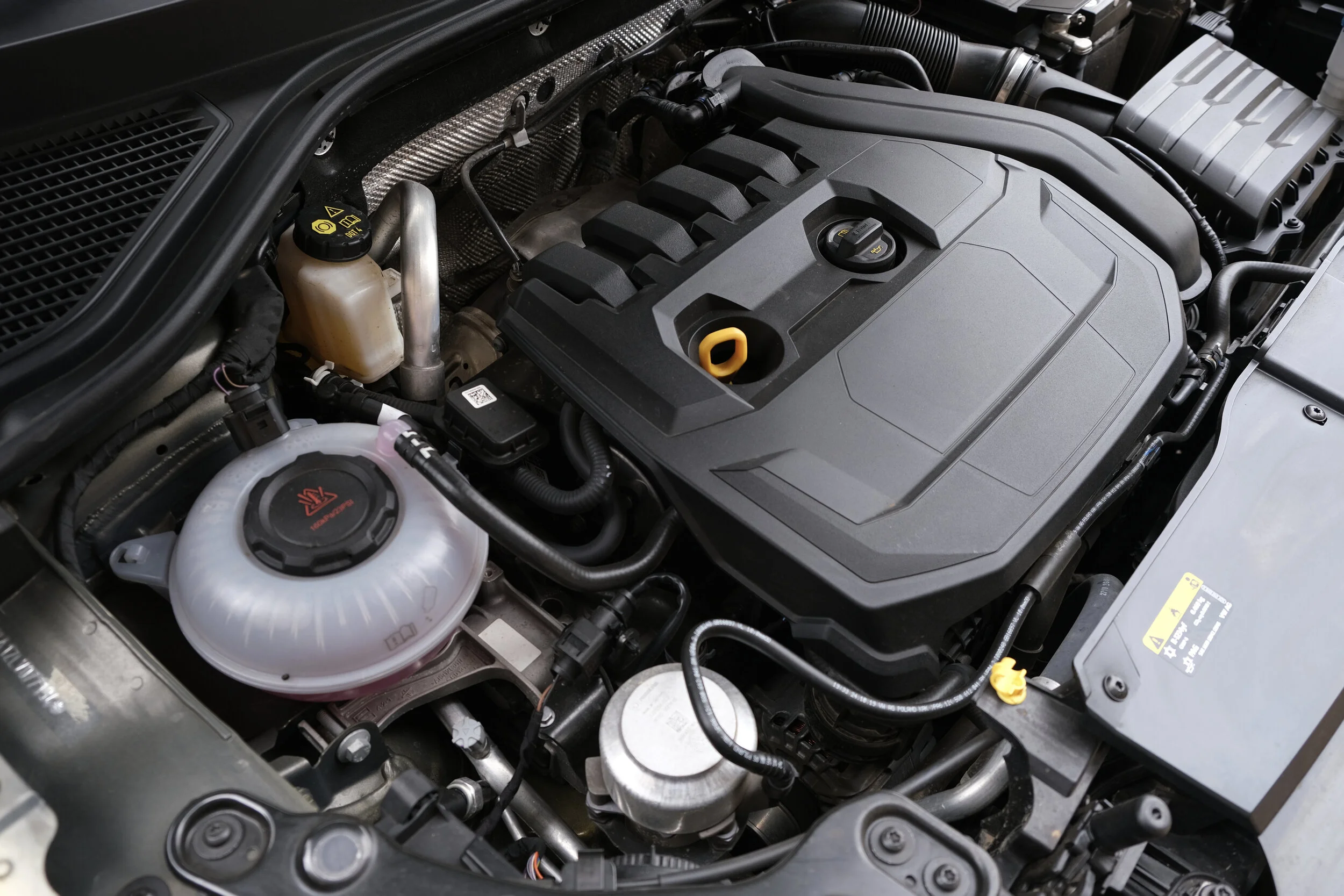
Further attenuating any apprehensions in calling the T-Roc a winner is the 1.5-litre turbocharged petrol engine. It makes 148 bhp and 250 Nm, which is apt for a crossover that weighs 1350 kilos (kerb weight with driver). It has adequate performance but If you’re an idiot YouTuber who likes to ‘launch’ all the cars, the T-Roc might feel a tad slow. But for what the T-Roc is (a non-performance-orientated runabout), it’s spirited, eager, and doesn’t feel dull at all. Where you really see the car shine is in the way the gears can be changed effortlessly (and quickly) and how the engine seems to have decent punch almost everywhere in the rev range — the mid-range is fairly strong. Since it’s a globally available engine, one can expect performance tuners to offer new engine maps for this one soon. And since VWs generally tend to respond well to upgrades, it’s safe to assume that if someone wants to play a bit with the performance, the T-Roc won’t be a bad place to start. And at the same time, it’s an equally fitting choice if you’re looking at keeping it stock. The engine’s cylinder-deactivation tech enables it to run on two cylinders only for when you’re cruising without excessive throttle inputs. It doesn’t take much time to wake the remaining two up from their slumber, whenever you express a desire to overtake/increase the vehicle’s speed.
When big changes are happening at VW — from corrective measures to minimise the damage that Diesel Gate has caused to passing the baton to Skoda for creating cars for India — it feels good to see a new car that doesn’t fit in the segments that the market has created on the basis of product pricing and not the product. When a prospective buyer is going to do a comparison between this and the myriad of crossovers one can find in the price bracket, it will never be a direct one. It’s important that you drive the T-Roc a bit before making a purchase. That will help you make a better decision, because honestly, features list and spec comparisons will hardly prove how much better the T-Roc is as a product — and how it feels from behind the wheel. It’s certainly not for everyone, and given the price tag, the purchase might be harder to justify than say the Hyundai Creta (you can read about that here). On the bright side, the T-Roc is going to be rarer and if you bite the bullet, there’s a strong chance you won’t find its novelty fading away in a few months (simpler designs continue to appeal for longer). Despite the absence of materials that define how premium a car is, the T-Roc’s cabin feels good and might just age more gracefully. And to top it all, from the way it sits to how it drives, the T-Roc seems unassuming but confident. That’s what sets it apart. And you know, that’s the kind of thing that makes people fall in love with cars, and even put them on pedestals taller than those bestowed by the market. As a mate of mine put it, the T-Roc simply seems to have everything it needs to attain the status of a cult car, even in the highly crowded space (filled with accomplished crossovers) in which it sits.
The Volkswagen T-Roc is priced at Rs 19.99 lakh, ex-showroom. Since the vehicle is imported, you’ll need to check with your local dealer about availability. Photos by Paranjay Dutt. Shot in and around Bombay on the Fujifilm X-T3 with help from Limin Mathew. Car loaned by VW India.