

Halo From The Other Side: Land Rover Discovery Sport Review
It’s safe to say that the concept of halo car isn’t misplaced — it is as important for the carmaker as it is for a prospective buyer. It’s true even when customers want the best engine, plushest interior, most impressive features, etc. without paying top dollar for their new car. A tidy (and recent) example of how important the concept of halo cars is can be the Jaguar AJ V8’s continuation. Ford’s announcement regarding the closure of its Bridgend-based plant which made the supercharged V8 engine could have been heartbreaking for many a Jaguar/Land Rover fan. But JLR saved the day by reaffirming that the engine was here to stay — and that its production will continue at the firm’s Engine Manufacturing Centre, as mentioned by Autocar. Which is great news without a fraction of doubt, but how many buyers are actually going to choose one over a more practical, economical, and environmentally friendly powertrain?
A lot of us fancy the idea of driving a Defender SV (or whatever it’ll be called) with its V8 burbling away as one cruises alongside the most scenic vistas. And despite having a fair few downsides that come with a large engine, it’s equally safe to assume that not a single soul among us will publicly tell JLR that we can now move on. That’s because, quite understandably, these newer, smaller engines lack in character if not in outright firepower. When you’re paying a lot of money, you wouldn’t want to settle for something devoid of aural appeal — and bragging rights. And even when you aren’t paying a lot of money, the fact that you own a car based on the same platform as the one which maybe won at the Nurburgring 24h (not a Defender, but generally speaking) has an appeal pretty hard to ignore. But somehow the new Land Rover Discovery Sport without any of the aforementioned bits looks like an unbeatable package. It’s neither the most powerful, most luxurious, or even the most happening vehicle in JLR’s line up. In The Car Cult’s review of the 2020 Land Rover Discovery Sport D180 S, Paranjay tries to find out what makes the Discovery Sport an unmissable car in the segment.
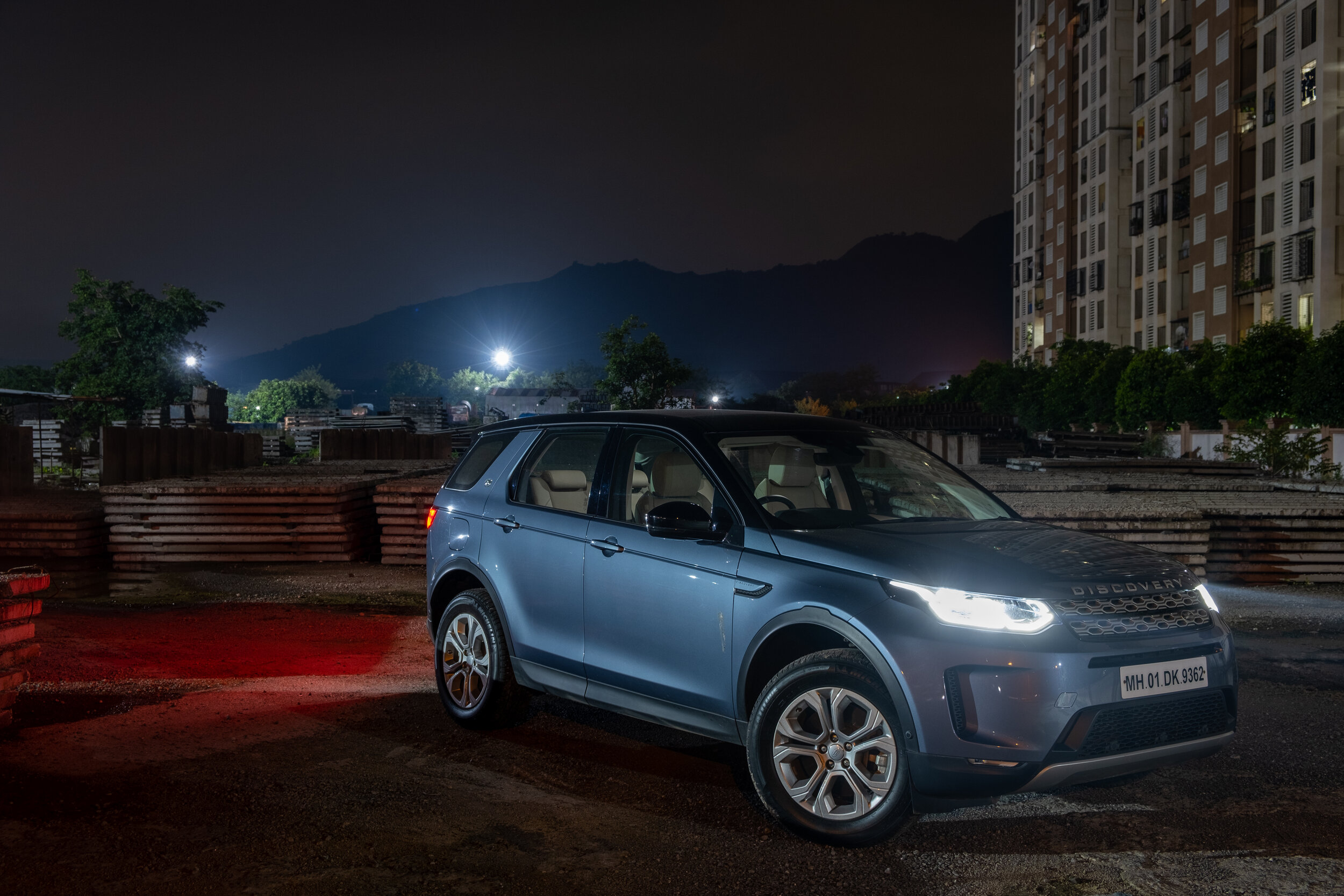
Despite being the most popular and commercially successful Land Rover in recent times, the Discovery Sport has always been kept away from the limelight. Maybe not deliberately, but it’s not difficult to guess why — there’s the more stylish (according to many) and slightly less expensive Evoque sat right next to it in the JLR line up. In the model year 2020 version, the Discovery Sport moves forwards with a more technologically loaded avatar — one which not just keeps up with its stylish sibling but can also decimate the notion that it’s getting a bit old. Before stating the obvious changes, let’s first look at the basics.
Gone is the D8 platform, and in comes Land Rover’s new PTA (Premium Transverse Architecture). It’s slightly stiffer than before, has a provision to include some form of electrification, and most importantly, it gives both the Discovery Sport and Evoque brands a new lease of life. One must keep in mind that it’s not an entirely new platform (based on the D8, still a steel-intensive platform), so on the move, the Discovery Sport feels fairly close to the pre-facelift model — especially at everyday speeds. For a completely new experience, you might have to wait until JLR eventually moves to an aluminium platform (like on most of its other cars). That’s still a few years away, though, and there’s a strong likeliness that cars by then will be a lot different from what we have on sale at the moment.
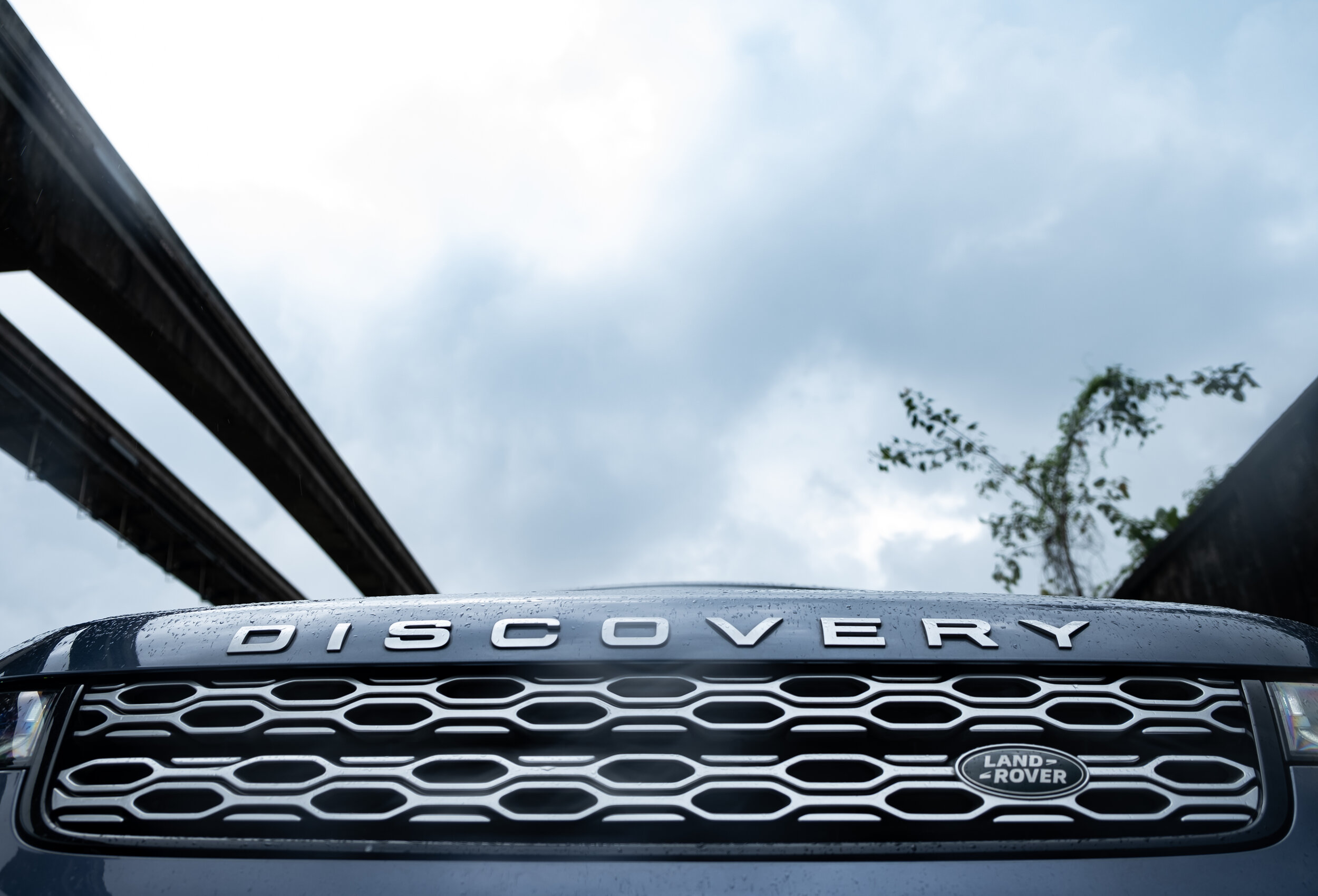
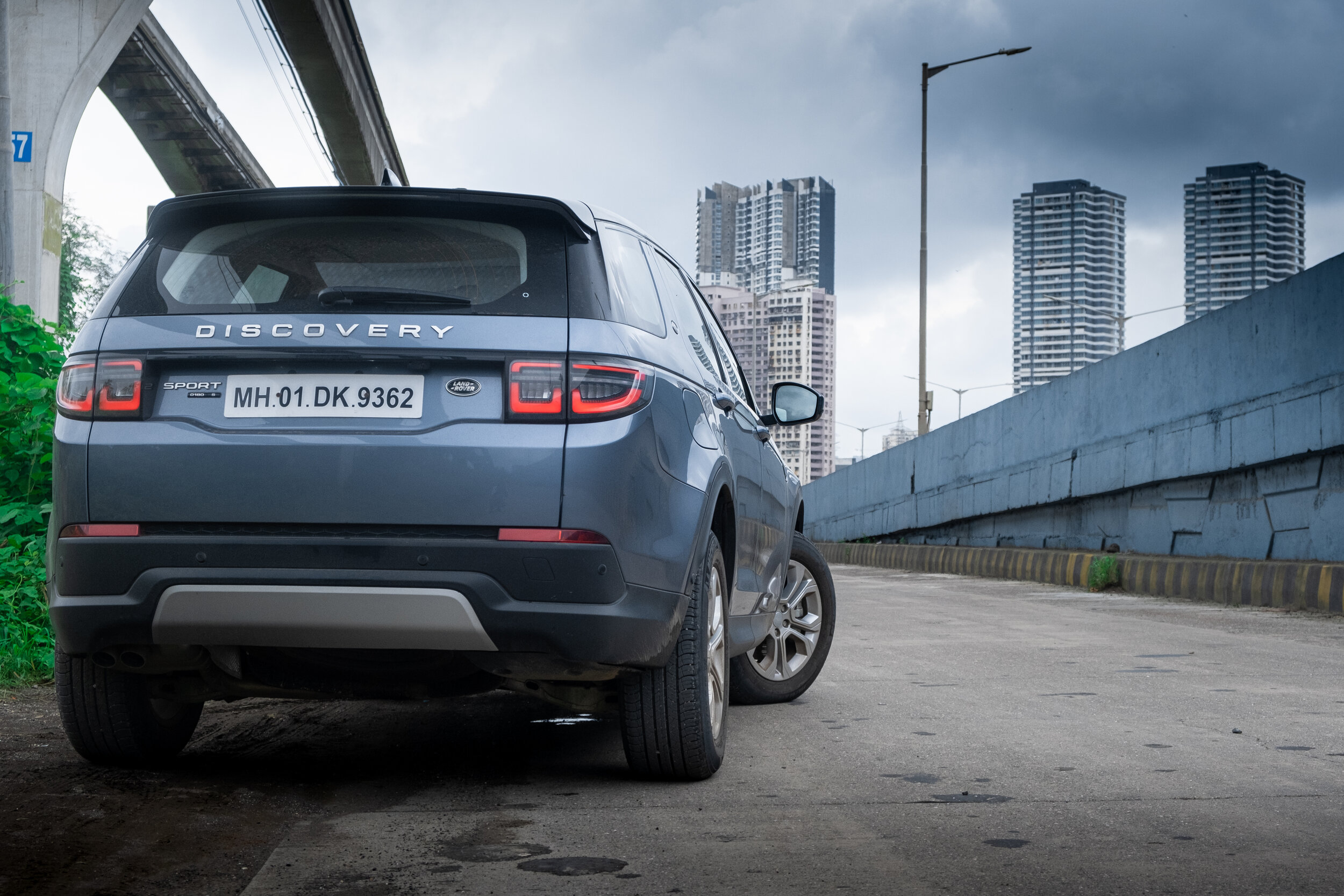
But while it’ll be interesting to see how the next-gen Discovery Sport will be, in the case of the current car, it’s Carpe Diem and all that. It begins with the way it looks: purposeful and with a tiny hint of pretence. It mimics the larger, full-sized Discovery, but thankfully not to a point it’s impossible to distinguish these two. The R-Design model strays away from the rugged appearance in favour of a more cohesive appearance with body-coloured bits. The S version (for the uninitiated, that’s Land Rover’s way of naming its lower-spec model, it’s followed by SE, and then comes the HSE) on test looks far more fitting, considering the positioning of the Discovery Sport; it’s an SUV and it’s nice to have some hard-wearing plastic bits especially on the lower part of the fuselage.
The interior has undergone a heavy change as well. It looks more upmarket, has a lot of space (remember the Discovery Sport is a seven-seat SUV), and feels a lot better than the previous car’s. The inclusion of the new steering wheel and the larger touchscreen display definitely add to that, but it’s the rather balanced use of a variety of materials that makes the Discovery Sport’s cabin more special. I’ve maintained that JLR does a great job with inclusion of wooden inserts in modern dashboards, and the Discovery Sport is no different. Having said that, while it’s certainly not the last word in opulent cabins, the Discovery Sport’s feels like a good mix of space, features, and comfort, not without a touch of luxury.
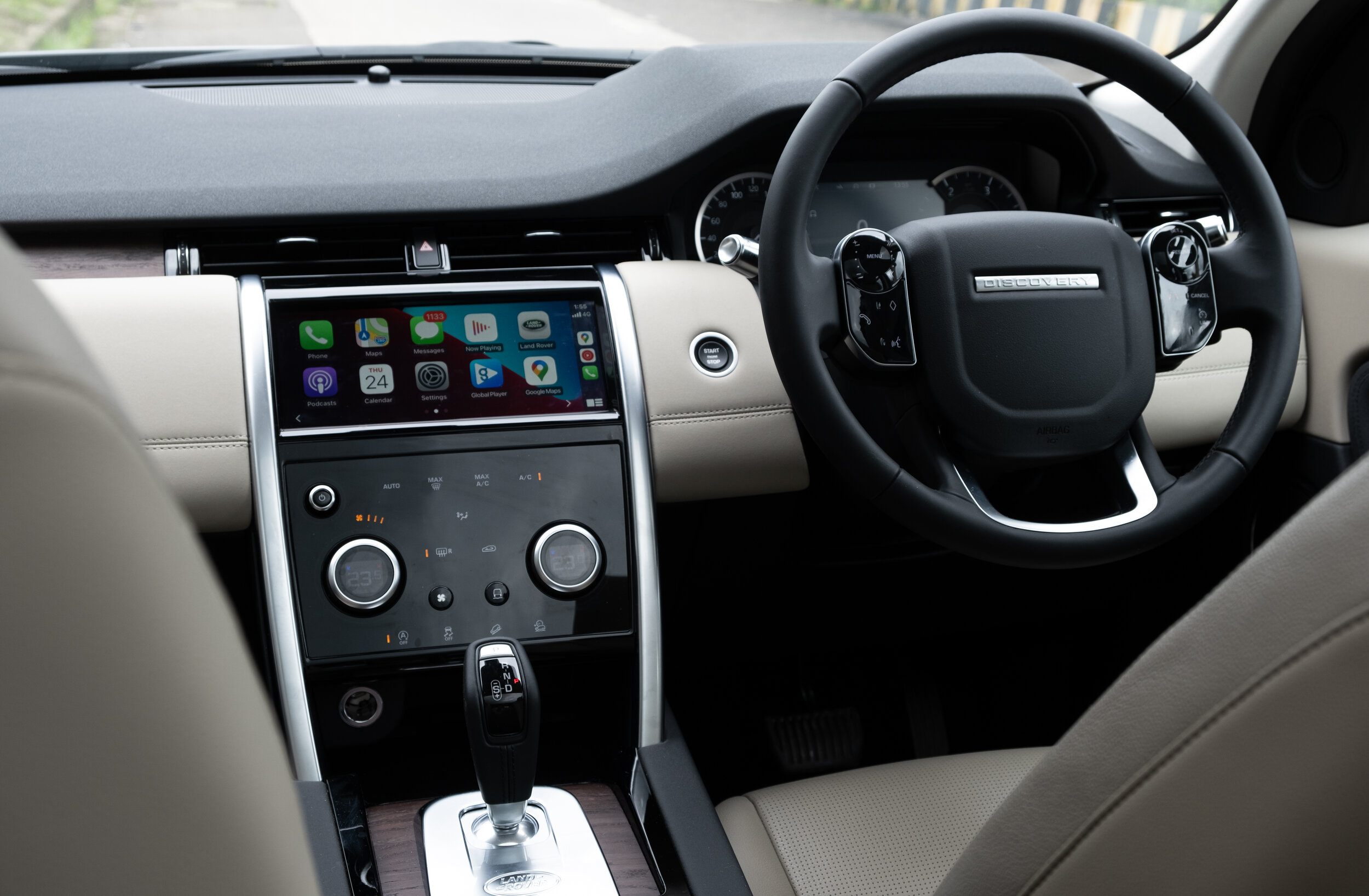
The simplified layout for buttons isn’t bad, but it does have some minor annoyances. For instance, to change the fan speed, you’d need to press the fan button and then one of the knobs will let you change that. I do appreciate that Land Rover hasn’t been daft enough to put the AC controls in the touchscreen system, but fan speed is something I might want to operate more frequently than temperature. The cluster also has the required buttons to access off-road-related features, and while it’s handy to have those in the right place, there seems to be a short delay between pushing the button and the corresponding feature getting activated/displayed on the instrument panel. On the bright side, everything else is responsive — the touchscreen isn’t bad and it lets you enjoy the ability to control your phone’s features without having to instal a Land Rover app like one had to in the past, although I had to select ‘Apple CarPlay’ manually to access the phone and the system didn’t do that automatically. There’s also the provision to charge a phone wirelessly, which is I’m told something popular, although my antiquated phone requires a cable to send power to its battery, so I can’t comment on how quick the charging mat is.

For some reason, my phone showed a tendency to heat up more than usual during charging in the car. But occupants (unless they are battery-powered cyborgs, maybe ) won’t be affected by the heat (my phone’s or otherwise) because the AC is pretty effective. And when the weather’s not being a pain, the fixed panoramic roof’s blind can be electrically retracted to allow for more light into the cabin — and make it appear even more spacious. That’s not to say there’s a lack of space inside. As a seven-seat vehicle, the Discovery Sport shines and how. The second row can even be pushed backwards opening up even more legroom for the occupants. The third row is just about okay in terms of space and seat support. But for emergencies, or when you can compromise some comfort and opt for taking one car instead of two, it’s not bad to have two extra seats. These fold flat, hence making carrying larger cargo items possible. The second row can also be folded by the press of a button, making loading longer items a lesser hassle.
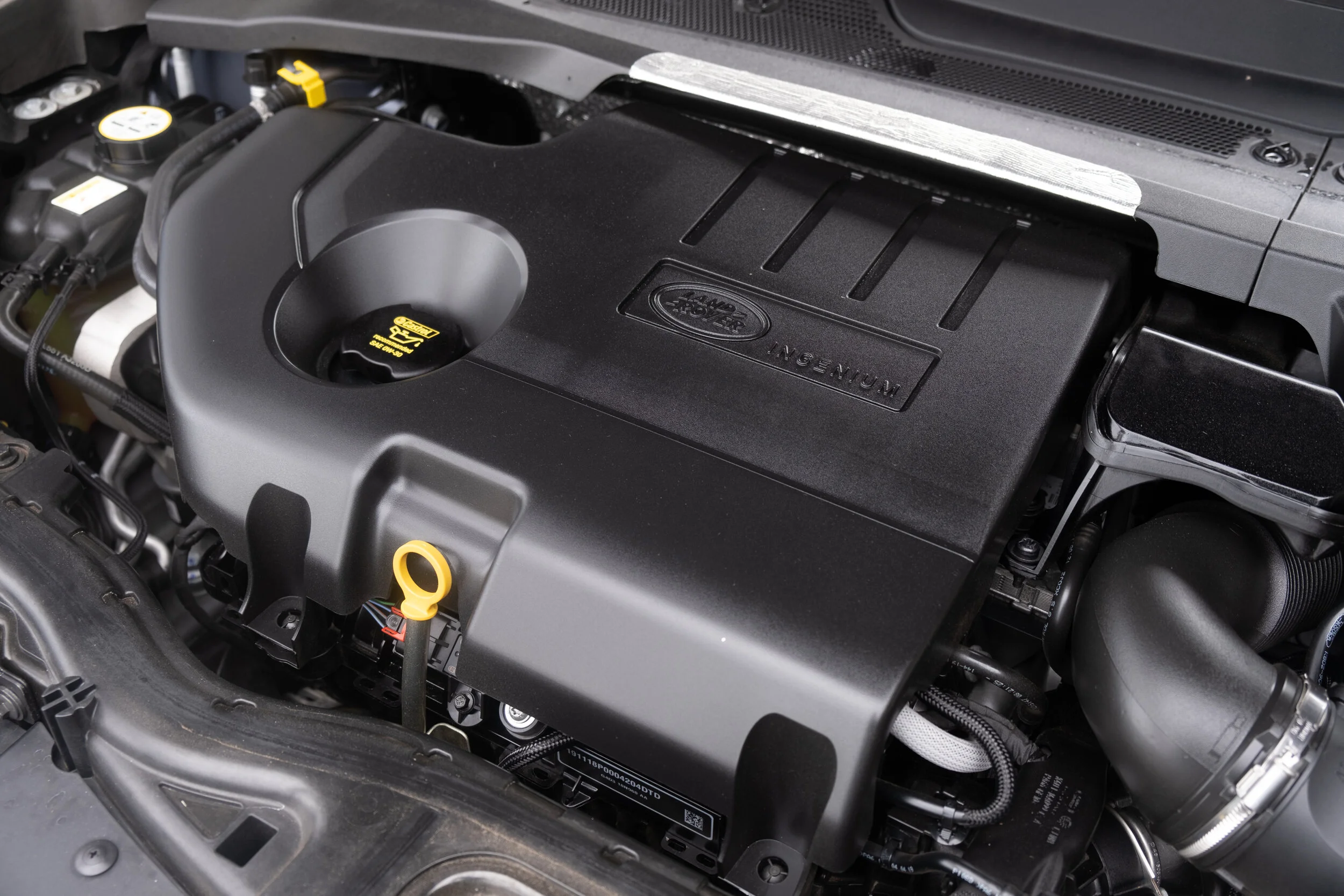
Another thing that makes the Discovery easy to live with is the vehicle dynamics. At 4.6 metres, the Discovery Sport is no short car, but it’s quite manageable. The steering has some reassuring weight, but at low speeds, its assistance makes manoeuvring the SUV a fairly easy affair. At motorway speeds, the Discovery Sport is stable and confident. It stays happy minding its business, but if you were to show it some corners, it won’t give you a hard time for that — provided you keep in mind that despite the easy steering, it’s an SUV, after all. The Discovery Sport now has torque vectoring (by braking), so that’s bound to help in keeping it tidy. The 2-litre turbocharged diesel engine (175 bhp at 4000 rpm; 430 Nm between 1750 and 2500 rpm) comes with a 9-speed gearbox, and as long as you’re driving it like a diesel, it does the job well. Try to take it close to the red line, and you’ll be disappointed by its rather coarse note. Use its mid-range power (and the fairly well-managed delivery) and you can make consistent progress without troubling the gearbox or your ears. There’s a sport mode on the gearbox, which holds the gears for longer, and you can always take over by using the steering-mounted paddles.
Like any other Land Rover worth its salt, the Discovery Sport is, without doubt, something that can handle both on-road and off-road driving with ease. It’s comfortable but not too soft, but introduce it to the largest of potholes, and there’s a strong chance the Discovery Sport will come out unscathed. Unfortunately for me, my time with the car didn’t allow me to venture out looking for trails, but the pre-facelift Discovery Sport was exceptionally adept at tackling difficult off-road scenarios, so I don’t see a reason why this one won’t be able to replicate the previous version’s success. It comes with Land Rover’s Terrain Response System 2 (which varies the vehicle’s driving character depending on the surface it’s bound to traverse) and ATPC (all-terrain progress control), the latter allows you to set a maximum speed while off-roading and letting the Discovery Sport handle driving itself forwards for you — effectively a cruise control for off-road. Depending on the variant, it can also be specced with a rear-view camera that sends a ‘full-screen’ feed onto the rear-view mirror. Another optional extra worth a mention is Clear Sight Ground View. It’s the realisation of a tech that Land Rover showcased sometime in 2014, wherein with the help of cameras, it made the bonnet and the wheel arches (and everything in between) invisible. If you’re into heavy off-roading and don’t have a spotter (not advisable) or have a tendency to nudge the kerb with your wheels, this might be of massive help.
To sum it up, despite the changes that Land Rover has made, the Discovery Sport continues to be an appealing everyday car. It doesn’t come with a hugely powerful engine, a history/badge value (of something like the Range Rover), or even timeless design (among modern LRs, think the L322, maybe). But it doesn’t need to have any of that —I mean no one will mind if the Discovery Sport was more powerful, slightly better looking, etc. — because it’s an accomplished product without depending on any of the aforementioned. And that’s why something so surprisingly ‘ordinary’ deserves as much importance as a halo car. Or maybe it’s time we redefine what a halo car is, especially if the bog-standard version is this good. What a car!
Note: The Land Rover Discovery Sport is available with two engine options: a 2-litre diesel (the one we drove) and a 2-litre turbocharged petrol. There are two variants: the ‘S’ and the ‘R-Dynamic SE’. Prices start at Rs 59.91 lakh (ex-showroom).
Photos by Paranjay Dutt. Shot on the Fujifilm X-T3; car loaned by JLR India. Like in the past, it’s good to see that JLR India has the lesser variant on its press fleet, which helps a lot of us understand how good/bad a car is even without some of the top-drawer features.