

Jaguar XE Review
A few months ago, JLR made a rather momentous announcement that while Land Rover will have six new all-electric variants in the next five years, Jaguar will be reimagined as an all-electric brand. Given the dismal sales performance of the latter, it’s no surprise that drastic decisions had to be made. But for the brand’s fans (including myself) this is shocking, considering Jaguar has been synonymous with glorious-sounding engines among other things equally worth celebrating. And the idea that it’ll all go silent is overwhelming. Now we can either choose mourn about something that’s bound to happen five years from now or enjoy whatever time we have left with new conventionally powered Jaguars. For all we know these could very well be our last few years with the kind of Jaguars we’ve grown accustomed to, as far as new cars are concerned. Let’s start with the Jaguar XE.
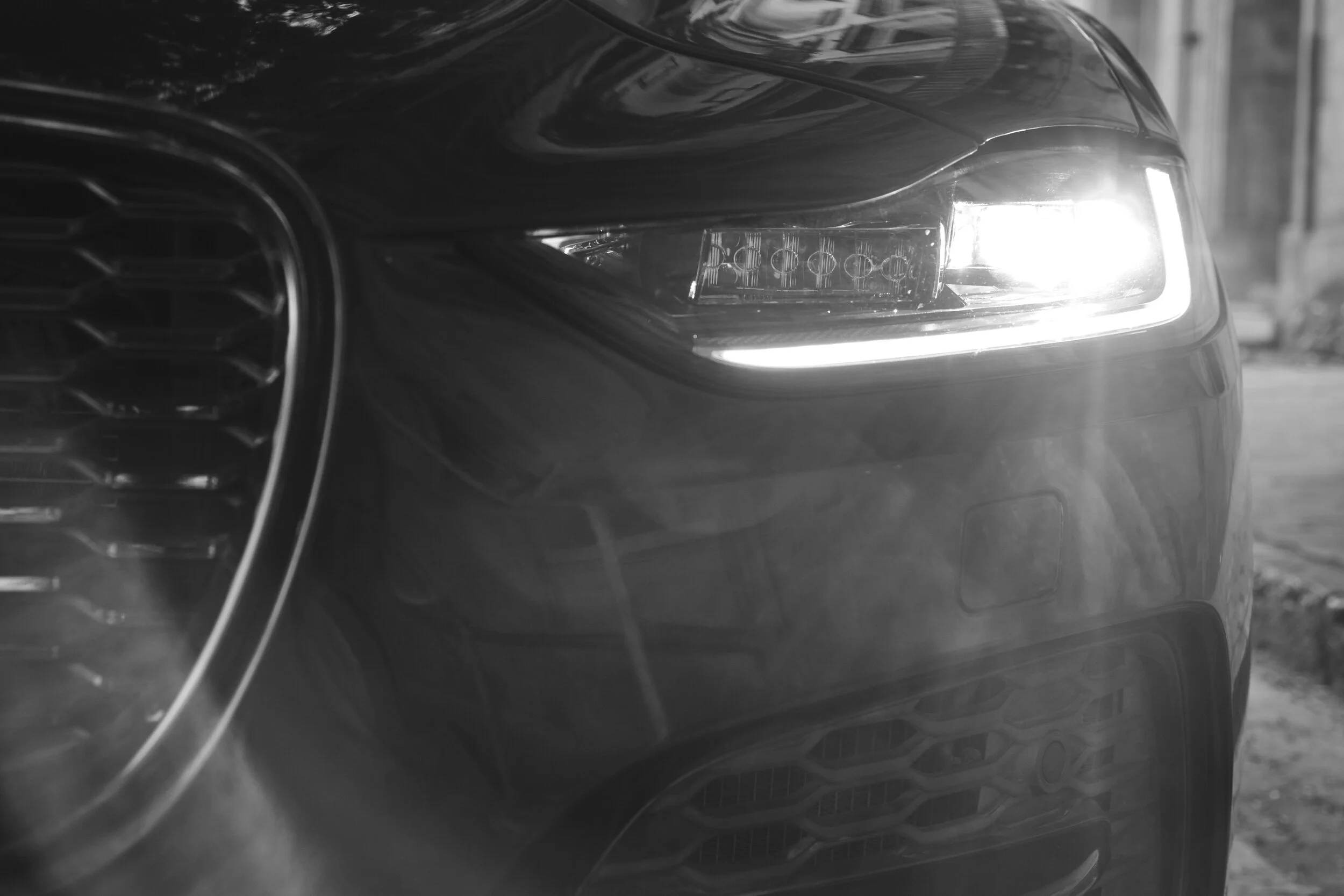
It might just have a four-cylinder engine now (no V6s on the XE; we all saw this coming, didn’t we) but in the right drive mode (read Dynamic), it sounds astonishing for what it is. Considering they’ve made an iteration of the engine available across the range, getting the aural performance right would have been somewhere high up in the priority list, if not at the top.
It’s a do-it-all kind of a saloon, the Jaguar XE. When it was introduced in the mid-2010s, most critics appreciated its driving dynamics, some even preferring it over the F30 3 Series. Sadly, Jaguar failed to make the most of the positive publicity it got to turn the XE into a bestseller. Does that make it a dud? Not exactly! And now, with the midlife update that was given to the XE, Jaguar, acknowledging what went wrong with the original, has commissioned the updated XE to right all that.
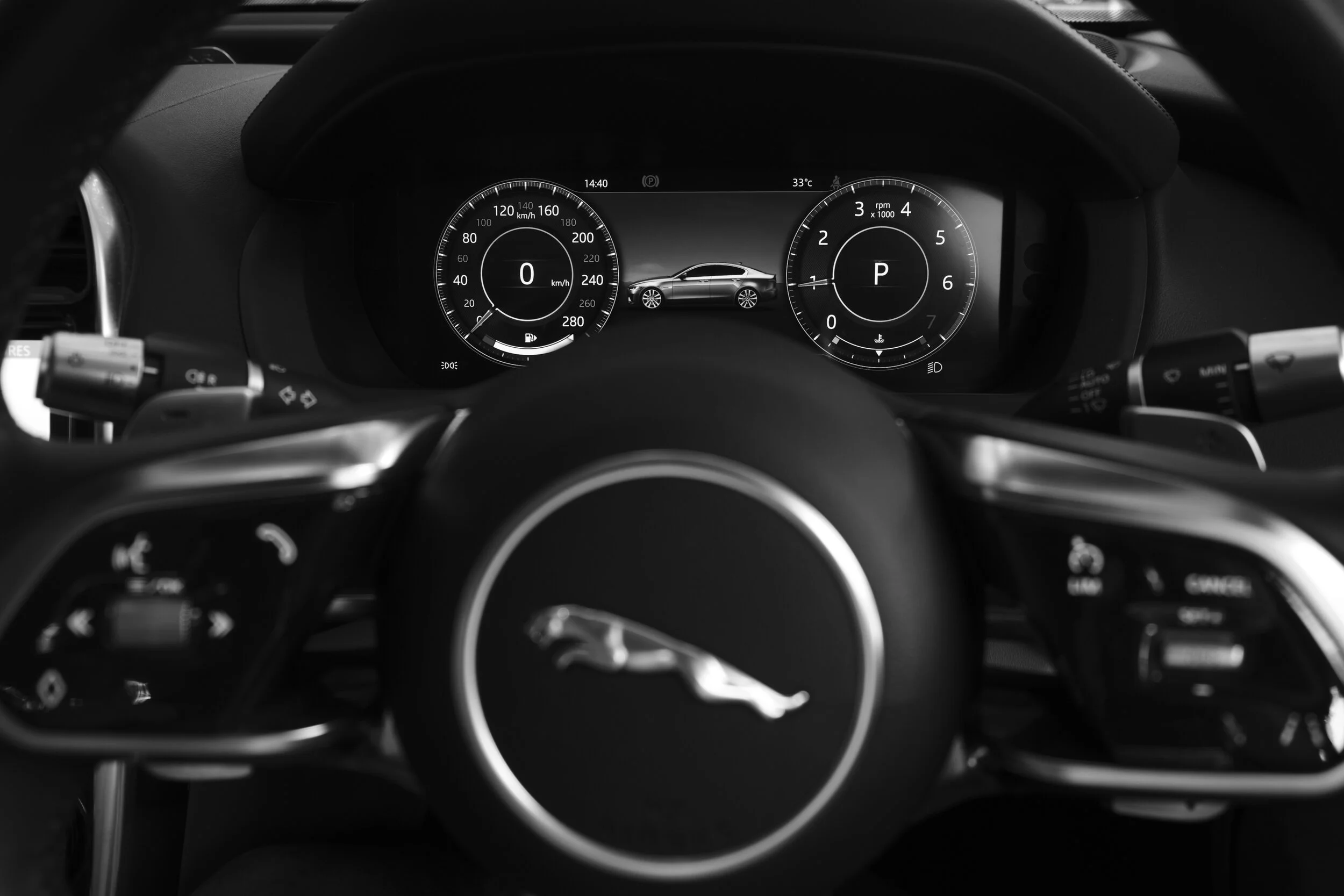
I have been a big fan of the XE, but it didn’t happen until I drove one. The moment I got behind the wheel of an XE sometime in 2016, its sparkling on-road manners captivated me. On the brink of sounding an absolute sell-out, the XE for me actually trumped every other car in the segment. We were shooting a feature for Motoring World, and we had two very different cars: a Jaguar XE and an Audi R8 V10. The R8 was beyond-words amazing in the way it drove a few journalists around a racetrack, braved the Delhi traffic, and right when the lights dropped and traffic stopped, it made its way to the by-lanes of Khan Market for a quick shoot. There was nothing the car couldn’t do that we asked for. But one drive in the XE made even the R8 look a bit out of place; it’s such a well-balanced car, the Jaguar.
‘Wow. What a sell-out!’
Fast forward to 2021, and you’ll see the segment has moved a fair few steps ahead as well. The Audi A4 is refreshed, the S60 is all-new, the 3 Series has moved into a new generation, and the C-Class has been updated, too (globally). Now with a prettier face and more grace, let’s see what extra the XE has.
Not much sadly; it’s fine for everyday use, but if you wanted extra legroom to make your executive saloon seem special, this one’s not going to be the right choice. If you wanted the interior to look futuristic, you might need to wait till Jaguar goes all-electric. And if you were looking for Project-8-aping performance? Well, that’s just a touch too much to ask for.
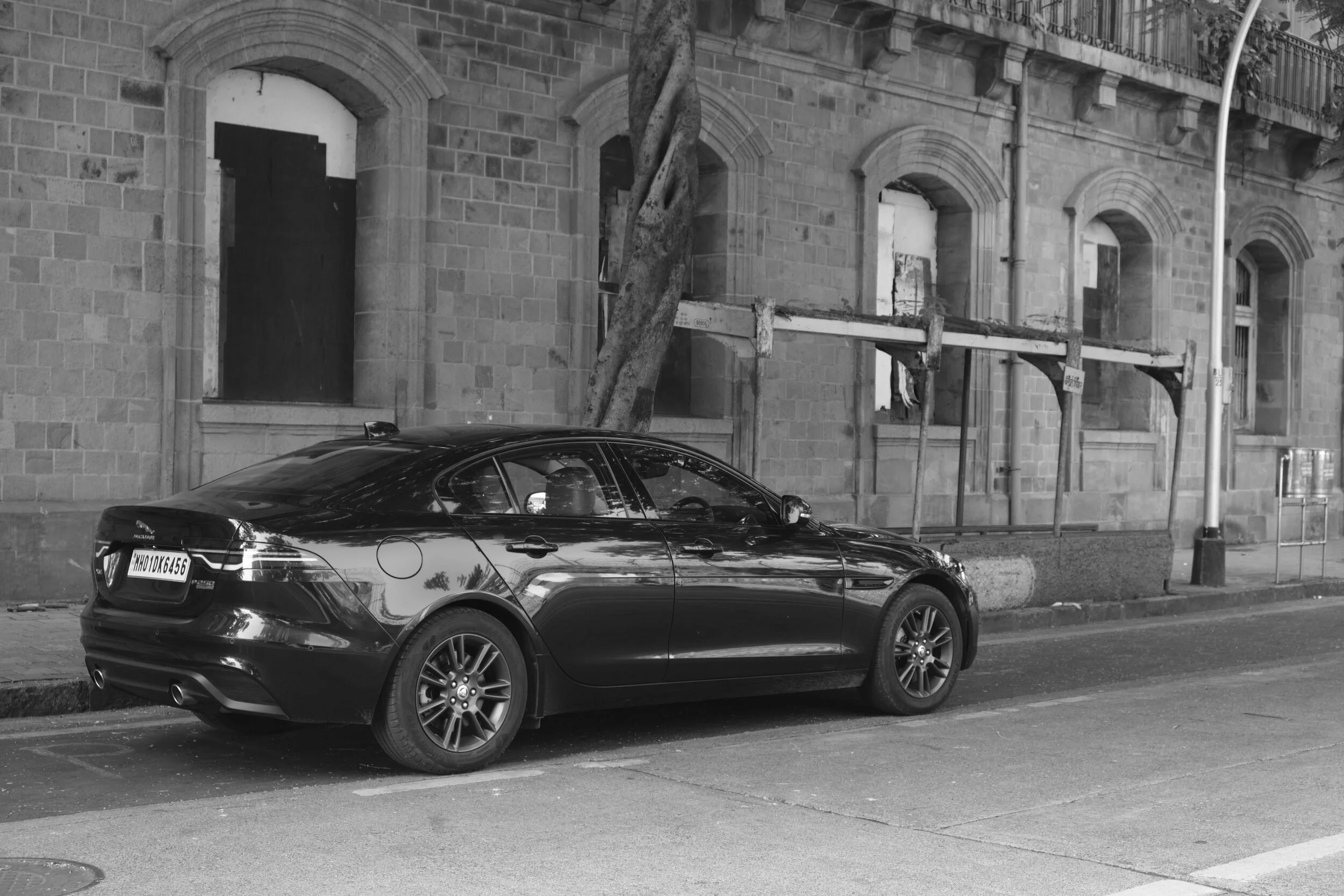
On the other hand, it’s a good thing that Jaguar hasn’t extended the XE for more room at the back. Why? Because the current proportions are absolutely spot-on. Look at the XE from any angle, and you’re bound to like it. Not maybe how a C-Type can make you feel weak in the knees, but it’s nearly impossible for anyone to not appreciate Ian Callum’s work on the car. The original XF was a belter in the way it looked, and it was like the best parting gift JLR could get from Ford. Tata was served that in a platter during the handover, and it’s fair to say the British carmaker has done justice to the XF. The XE is similar but not as ahead of the times. Its new face gives it a unique identity and the right amount of flared surfaces makes it arguably the best looking of the current lot.
The interior might feel a bit dull in comparison to the new cabins out there, but this is going to age better than others I reckon. The trademark rotary gear knob has made for a more conventional selector, which I think works better. The ‘Riva Hoop’ further makes the cabin a more pleasing place to be and gives the impression that it’s designed around the occupants. The touchscreen and the digital instrument panel are legible and work well. The overall quality is far from class-leading, though.
What’s unchanged from the pre-facelift model is the way the XE drives; it still offers the purest driving experience in the segment (in comparison to the G20 3 Series, W205 C-Class, and the B9 A4). The steering is communicative but also makes the car approachable, unlike others. Both at low speeds and motorway cruising pace, the XE keeps it under control and is thus pretty deserving of its ‘growler’ badge. It’s far from the most focussed in terms of body dynamics, but the mix of appreciable handling and the fairly well-sorted ride means potholes and speed bumps don’t turn into nasty surprises.
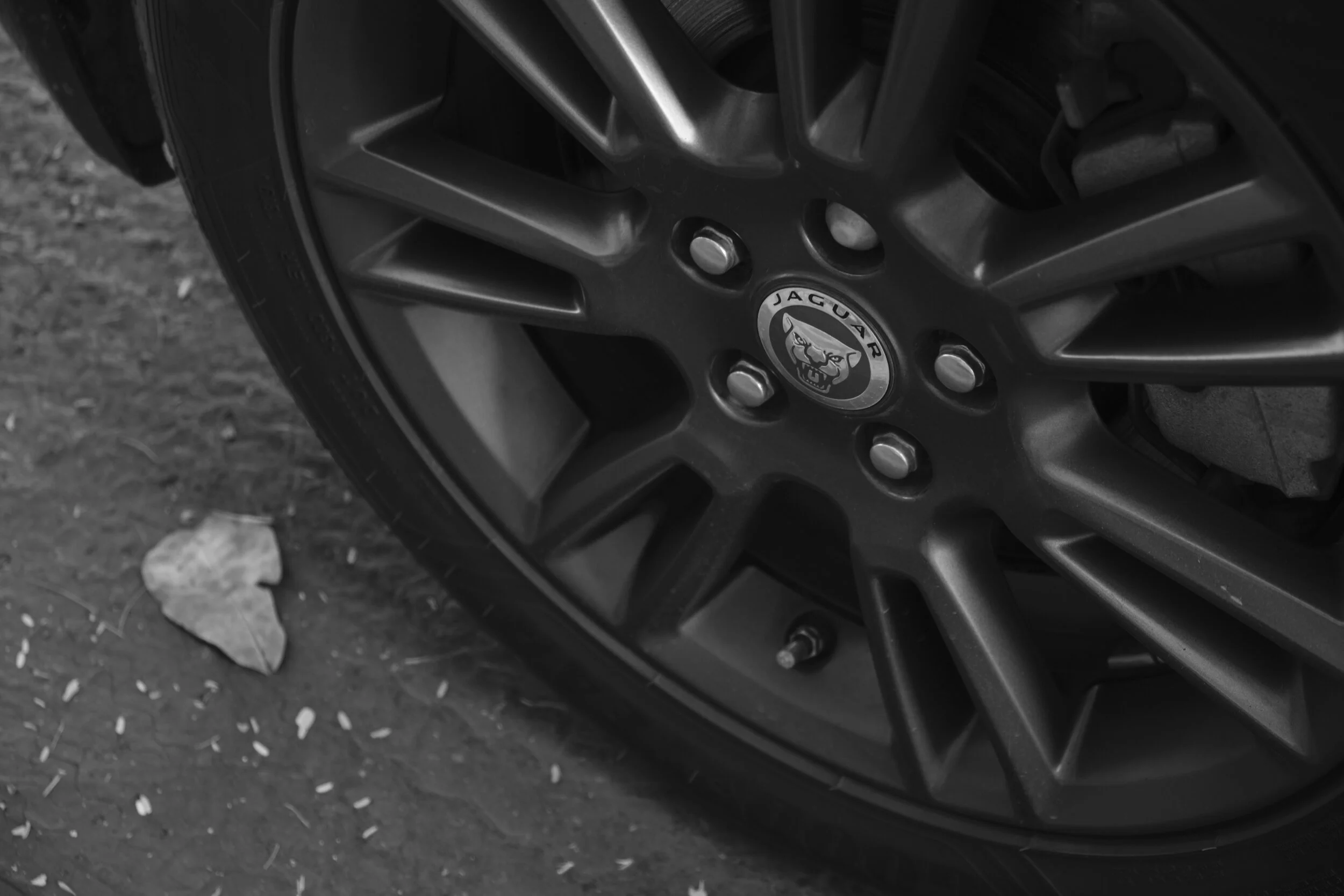
But you’d frequently find yourself reaching for the exhaust button, which appears to unshackles the XE from the slightly serious persona it’s made to carry everywhere. It sounds good for a four-cylinder engine and you wouldn’t mind taking the long way back home, only to enjoy each downshift, while making the XE’s tyres fight for grip. While doing this but not going mental behind the wheel, you’d notice how effortlessly the XE corners — even the tight ones — without getting unsettled. The 246 bhp 2-litre turbocharged petrol engine has enough grunt to power the car out of corners, especially with peak torque available from way under 2000 rpm. An eight-speed automatic gearbox is standard, and it turns out to be okay; not the most aggressive shifts, and certainly not the slowest.
In conclusion, the Jaguar XE is the slightly left-field choice for someone who appreciates driving fun more than the apparent badge value and better residuals that Audi, BMW, and Mercedes enjoy. The XE has much more to offer than Jaguar (especially in India) advertises; it’s a car that needs to be experienced to understand its true potential. And one doesn’t even have to challenge the basic laws of Physics to see where the XE excels. I know I’d be disappointed, but dear Jaguar, can we have more such cars, please?
Prices start at Rs 46.64 lakh for the XE 2.0 Petrol S and Rs 48.5 lakh for the SE trim. Both these are, at the time of publishing the story (October 2021), model year 2020 cars.