
The Balu Brothers’ Mercedes-Benz W124 (India)
I am going to state two facts before going ahead with this story. The first is that there’s a very slim chance that you can have a conversation about Mercedes-Benz without the mention of the W124. The second, and the more important, fact is that regardless of what one thinks of the car, it was, is, and will continue to be quite a special thing.
Mercedes-Benz made its foray into the relatively small (and largely unexplored) Indian market with the E-Class in the mid-90s and it has never looked back. The initial association with Tata, the arrival of a car which was nearing its global departure, and the eventual corrective measures taken to ensure that the prestige and trust synonymous with the brand weren't lost, shaped the German carmaker's future in India. And 30 years later, it's clear that they didn't do too badly. That sentiment is usually also reflected when one speaks with customers, especially those who were lucky enough to buy a three-pointed star in what was undoubtedly the golden era of modern Mercedes.
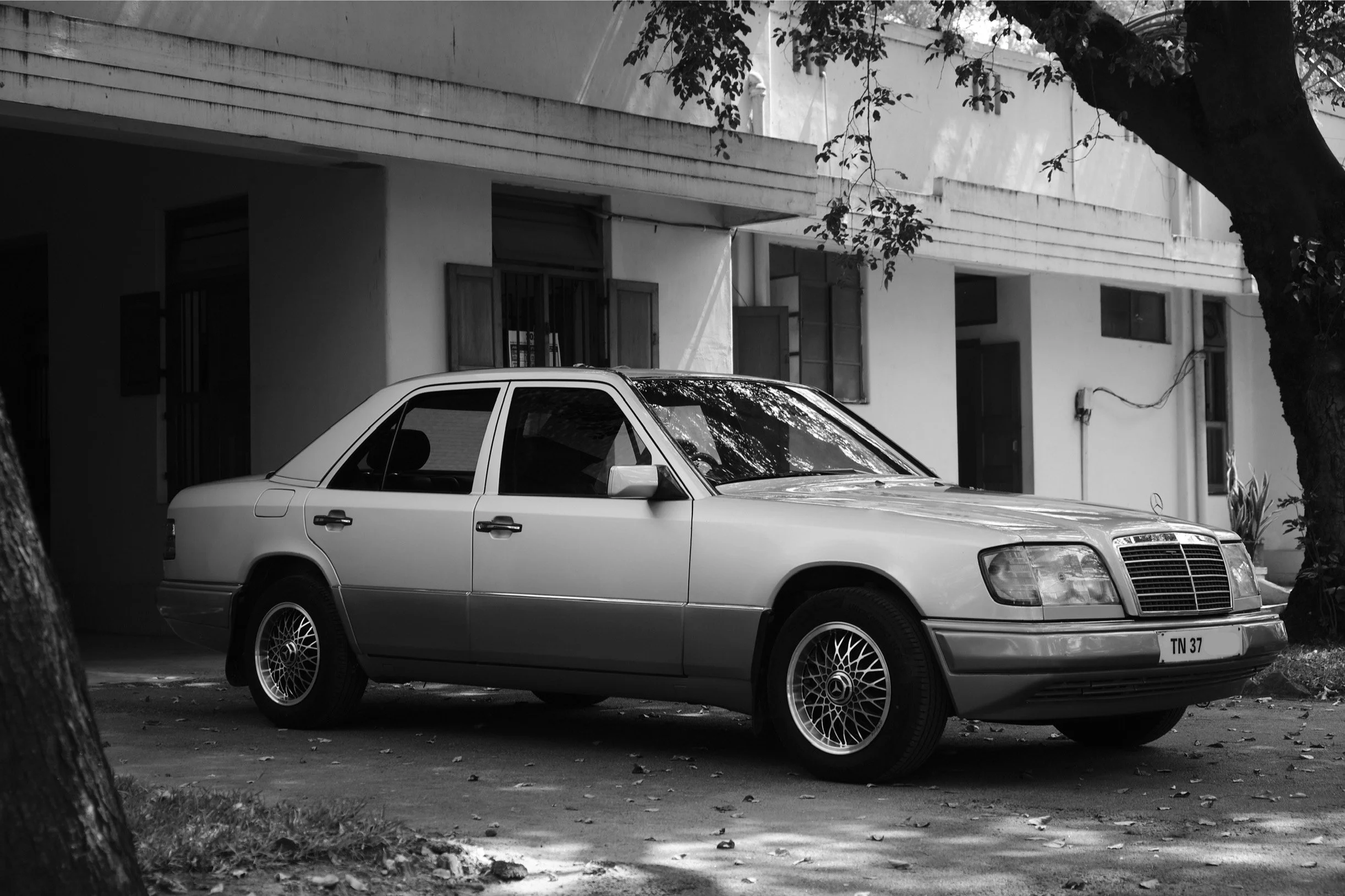
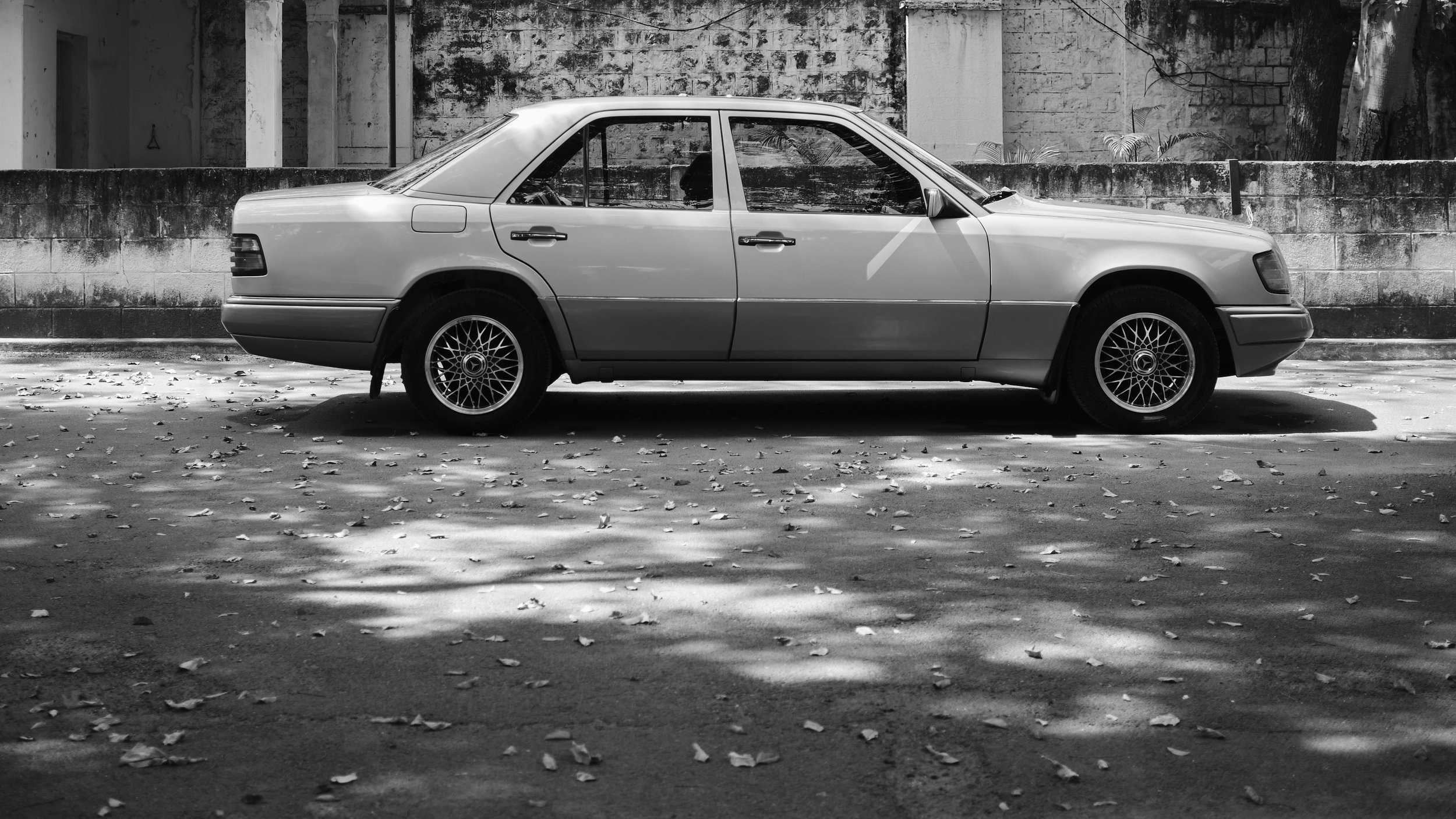
A few weeks ago I had the privilege to have a chat with two brothers who happen to know a thing or two about cars, racing, motorsport history, and Mercedes-Benz. The car they inherited from their father is a locally assembled iteration of the W124 from 1996. It's done about 90k miles, it has aftermarket wheels, and sat confidently under the shade cowering from the Coimbatore sun, it's almost as if its factory paint speaks to you about the timeless appeal of a car like this. Meet Balu brothers, both businessmen by profession and absolute car guys, and their beloved Mercedes-Benz W124 E220.
Would I be wrong to say that the car is straight out of a museum? Yes, because it isn't. But at the same time, it's not a ratty example, either. This is one of the cleanest W124s around; it has been driven regularly and not sat inside a temperature-controlled garage for an eternity. The odometer reads somewhere upwards of 140,000 km (just under 90,000 miles for those weak at Maths) but its near pristine state would never let you be aware of that.
The factory paint has the kind of resplendence that — even finished in this original shade of silver — modern cars fail to showcase after about a quarter of the time this car has been around. Azurite Blue was likely to be the shade of choice until silver won the collective vote of the family. The blue interior follows a similar story driven by a penchant for good things in life. It's presented in what can only be described as the most well-preserved state. I'm told that it hasn't been recommissioned and the timely upkeep using a leather shampoo/conditioner (a family tradition started by Sanjay and Arjun’s father when the car was new) has evidently made a vast difference to how the interior aged.
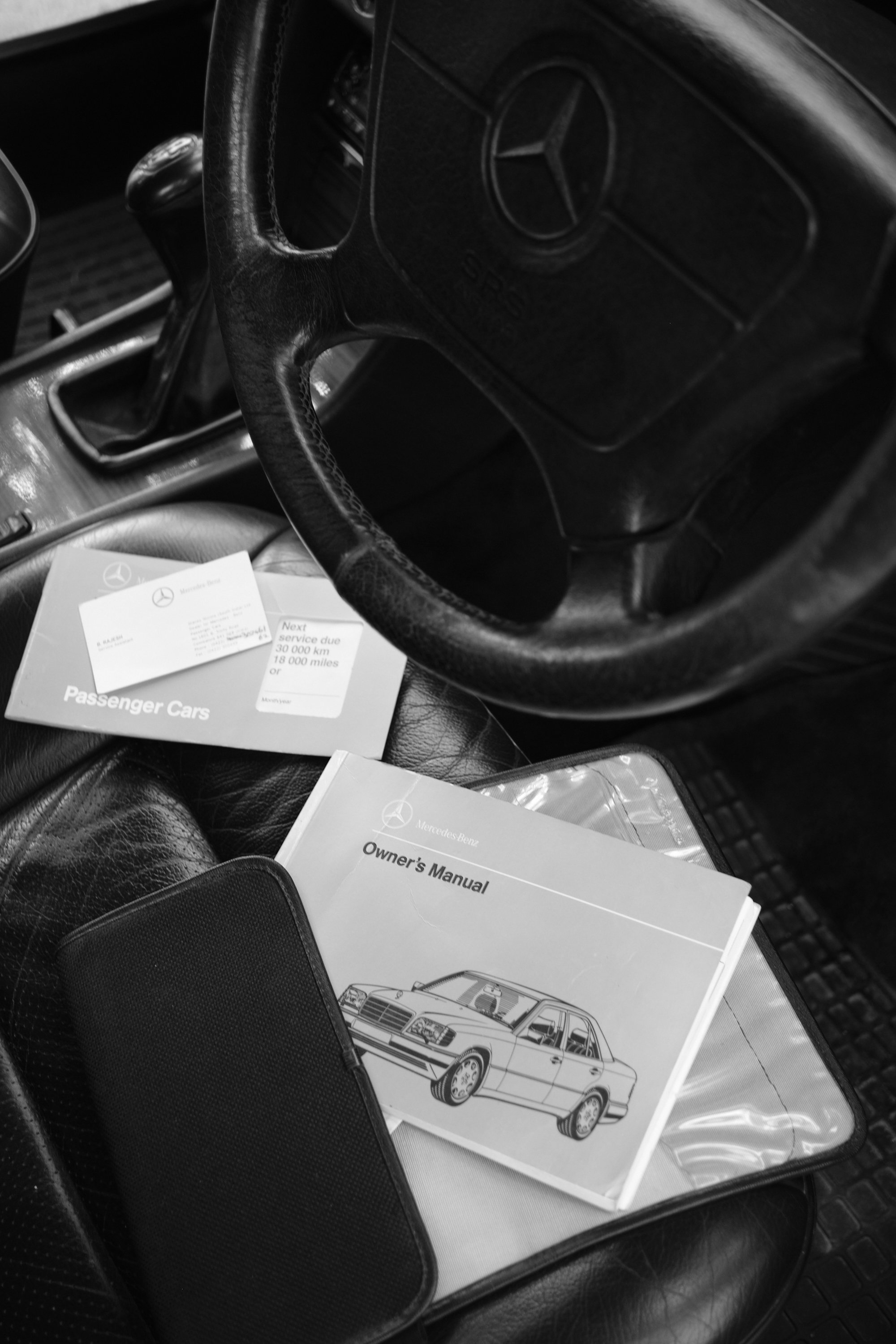
The neat glovebox is very kindly opened for me and out comes a bunch of paperwork including the original booklets, and even a visiting card from a rep at a local Merc dealership. It's not always, especially with the more attainable Youngtimers (or modern classics), that you see such a meticulous approach in keeping the car and its history honest. And when you witness that its keepers and custodians have not only maintained the car in what can be best described as a near-original state, it brings along a wave of heartfelt joy. Even to an inconsequential writer/photographer like yours truly.
A Mercedes-Benz is usually considered a symbol of prestige, it establishes that you've made it in life, and more importantly, it's a clear indication that you haven't let your hard-earned money turn your taste obscene — for the most part. The W124, especially in a market like India, where access to exotic metal was fairly limited and nonsensical modifications weren't as prevalent, was understandably one of the best ways to relish the endless joy that comes from seeing your brand-new car inside the dealer forecourt. Even if it wasn't the family's first Mercedes-Benz or a premium car, for that matter. Quite the reason why both Sanjay and Arjun have nearly photographic memory of the moments they've spent with the W124.
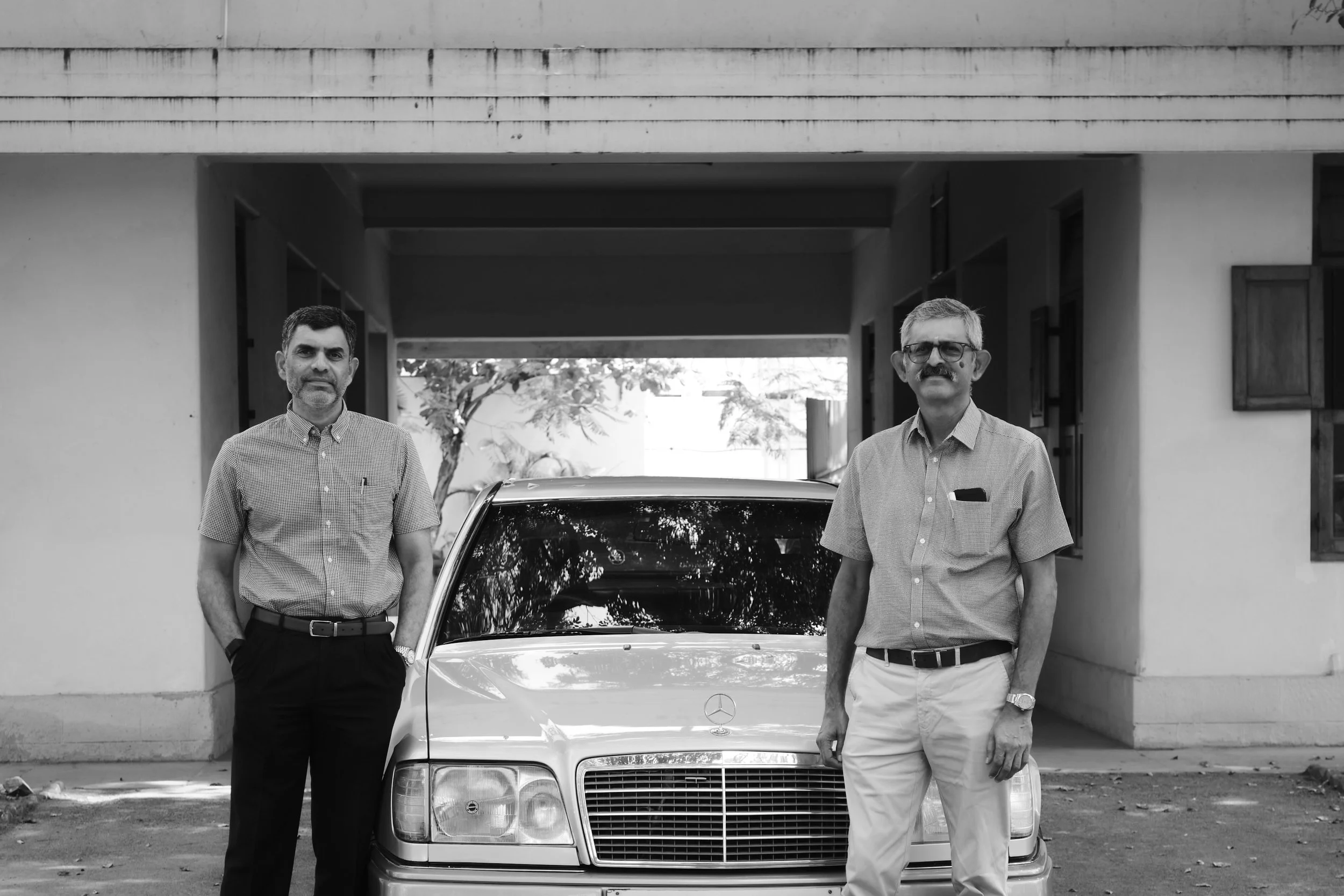
This was going to be the first Mercedes-Benz car assembled in India and the feeling of getting a brand-new, delivery-mileage car must've been second to none. Sanjay fondly remembers that his father and Arjun went to Chennai, formerly — and now lovingly — known as Madras, to get the car. Their E220 soon became an integral part of the family, and it was truly special (dare I say unique) because although only a handful, the presence of optional extras was quite something. That you could add extras of your choice to the car thirty years ago is quite something, quips Arjun, before lamenting how it, while still theoretically possible, isn't the case these days. That's definitely a topic for another day, but it's worth noting that you would often be at the local dealer's mercy re how the car is specced, unless you fancy waiting awhile.
Their previous cars, even the relatively more exotic ones, weren't driven out of a dealership, unlike the W124. This was the first time you selected the colour, the interior, and got its delivery at zero-zero-zero... on the odometer. 'It was a huge feeling of happiness and pride for my father, and that obviously rubbed off to us...'
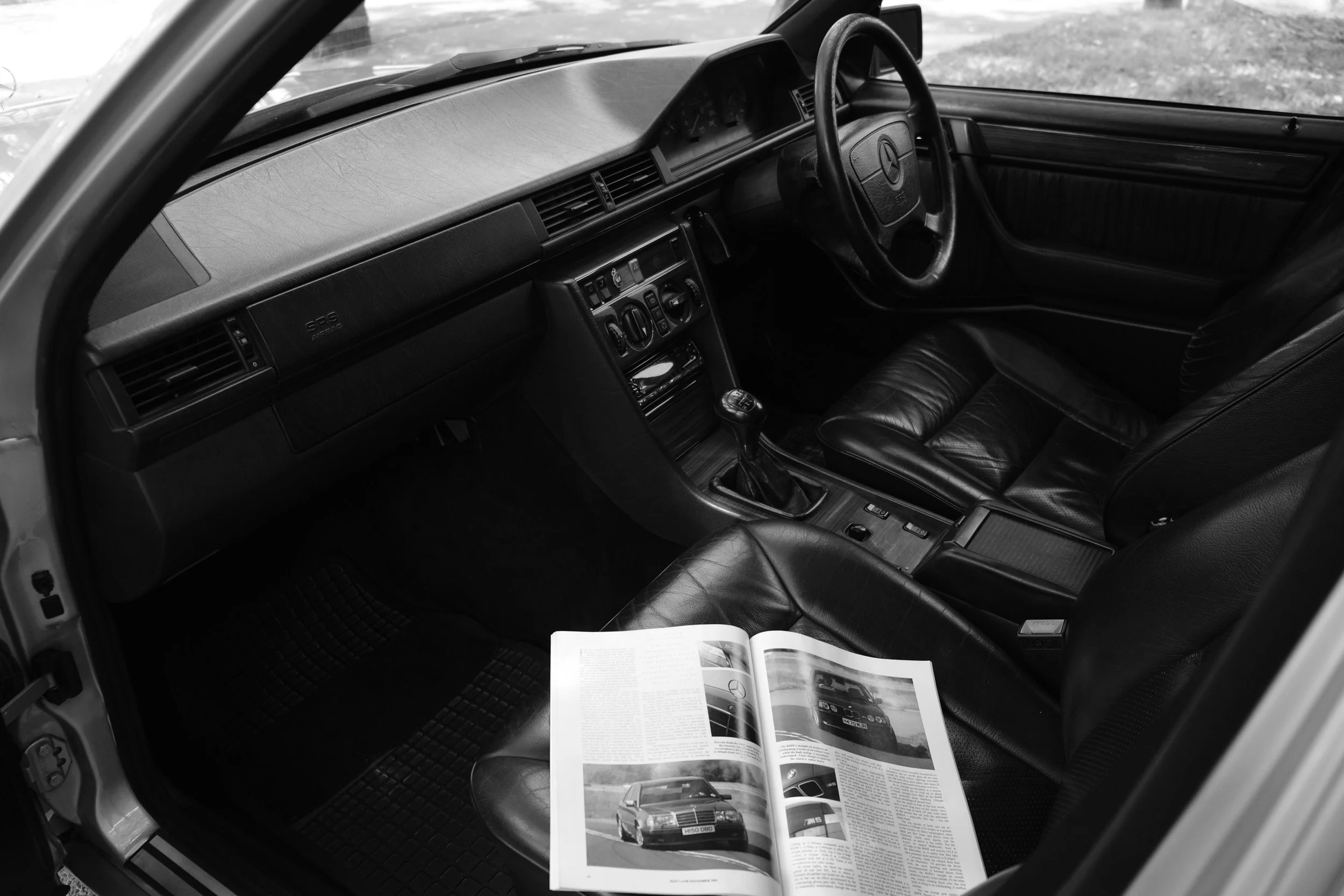
Sanjay mentions how his father not just appreciated good design (clearly a trait passed on to both Balu brothers), he also took great care in ensuring the car stayed in its top shape. As I carefully crouch to take a peak at the interior, I'm taken aback by its originality. Like I said, this isn't an extremely low mileage that wouldn't look out of place in a museum, but rather a brilliantly well-maintained car that's spent more time on the road than as a garage queen. The blue interior, which works exceptionally well with Mercedes-Benz cars, is a treat to look at and feel. The wood has aged beautifully, the dashboard still looks like it's ready for another three decades of use, and even the Pioneer radio appears to be made just for the car. The interior feels factory fresh, and it also serves as a great example to Mercedes-Benz's robust build. Mercedes-Benz makes sought-after interiors, and if you look after them, they just hold up really well, adds Sanjay.
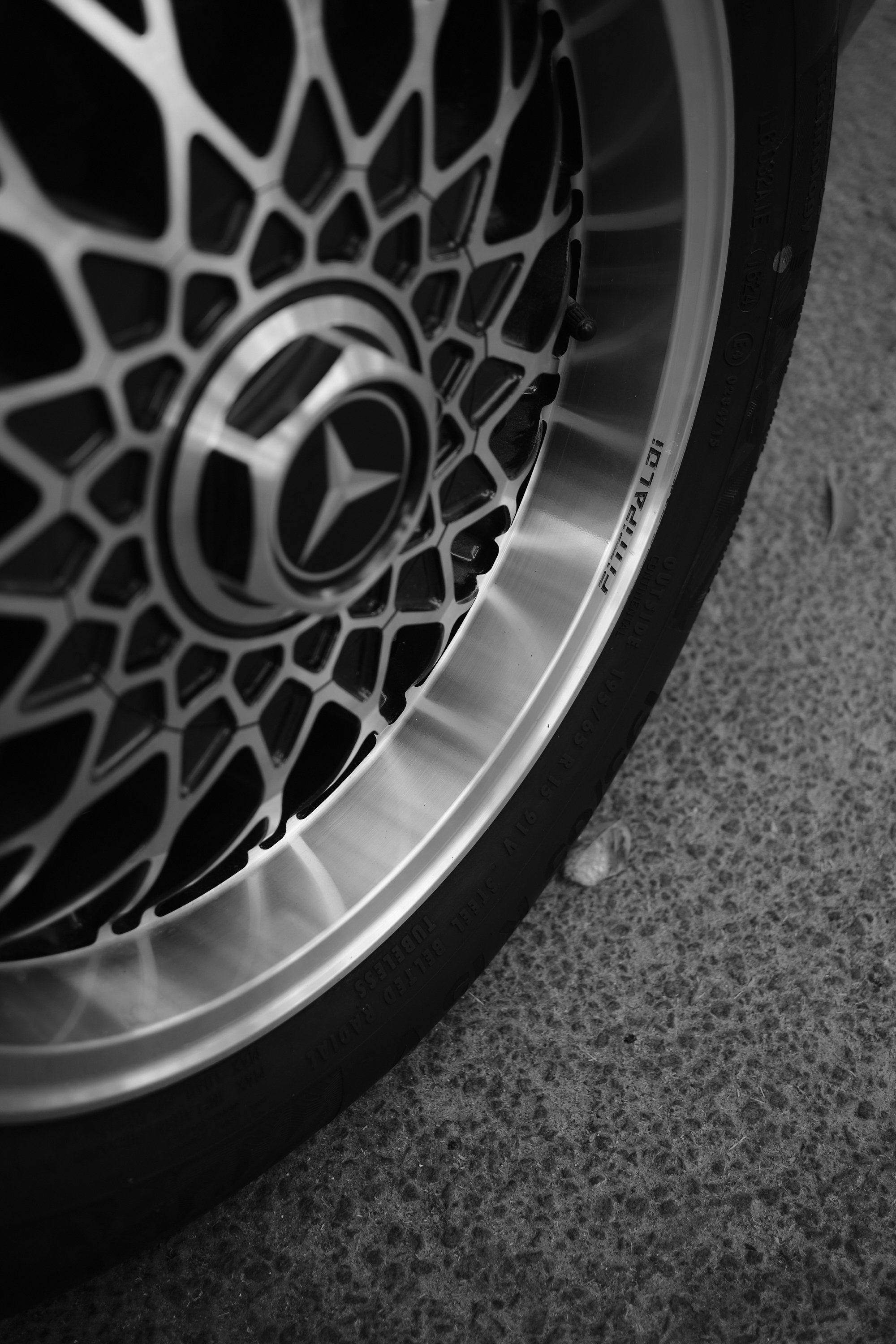
Unlike other cars in the household (both from before the 124's arrival and after), the E220 didn't get alloy wheels. The OZ-made Fittipaldi wheels that you see in the pictures were a recent inclusion on the car which stayed on its original steel rims and full Mercedes-Benz wheel trims till about a handful of months ago. I personally think the design works, and creates a nice distinction between this 124 and a large variety of others running on AMG monoblocks, BBSs of some kind, etc.
The Indian-spec W124 might have not been given a power bump (not that it needed it, to be honest), its suspension was uprated to tackle the typically poor road conditions. Sanjay, who's had access to better cars, finds that to be a bit of a double-edged sword. The rough-road package did rob the 124 of the more rounded ride quality as witnessed on the Euro-spec car, he adds. Though the original set of dampers lasted fairly long, he believes a better-tuned suspension would have made their family drives with the W124 even more enjoyable. Plus let's not forget that the family was used to Peugeots and better-balanced cars like the 123-Series, so the Indian W124's overall ride was a bit of a letdown.
Earlier, Sanjay wanted the diesel iterations of the saloon because he felt it would be the more future-proof of the duo due to the engine. As anyone who's experienced the Indian-spec car would tell you, the E220 was far from slow, but Sanjay was apprehensive about Mercedes-Benz opting for the default/safe parameter for mixture and ignition settings. He further adds that while that took away some of the four-cylinder engine's spirit, it probably enabled it to live a longer, better life on the locally available fuel.
Arjun mentions that Mercedes-Benz engines, like this one, would suit an automatic more. 'BMWs are a hoot as manuals,' but a Mercedes-Benz car, especially something like this, with a heavy clutch and flywheel sits at the other end of the spectrum. Sanjay says that ideal spec would've been one of the 300s; the ultimate of course would be a 400 or a 500...
He continues, ‘the 124 felt like it was made out of a single piece of billet, very akin to a 911’. Everything else felt 'softer' in comparison to its extremely well put together, tank-like build. The oft-discussed over engineering is evident in everything from the single-arm wiper (what a thing to behold that, isn't it) and the way the W124 just 'cancels' all kinds of outside noise with its excellent sound-proofing. Even when the local dealer offered the succeeding W210 in exchange for the older car, the Balu family would have none of it. For Sanjay, a Mercedes-Benz had to have its excellent Zebrano wood and an oil pressure gauge, too...
It decidedly marked the peak of Mercedes-Benz craft, even though this was JUST an E-Class. While it might not have democratised the luxury saloon, the 124 did mark a big change in the Indian automotive industry. So much so that from anyone with a smidgeon of interest in classics to people with extensive experience in motorsport and cars in general still love the W124 for what it was. For the Balu household, the 124 was yet another memorable car in a wide list of really appreciable metal, but one that has earned its permanent place in the collection.
Do you still wonder why the 124 is special?
-
See above.
-
According to Autocar India, just under 2,500 cars were despatched from the local assembly unit.
-
The four-cylinder petrol engine for the E220 was claimed to produce 143 hp in the Indian spec. The UK version of the E220 saloon made about 150 hp.
-
That’s a brilliant question. While I don’t have a buying guide ready for the car, I can suggest going back to Autocar India for their feature on the W124. Perseus wrote one not too long ago, if I remember correctly.
-
Because despite being 30 (or 40 globally), it is an excellent car. Buy it because you want to experience what a brilliantly designed, exceptionally well-put-together car feels like.
Buy it if you want a classic that you can ‘daily’. Buy it if you want the slab-sided bodywork to match with your favourite Brutalist building. Buy it to run it for miles and miles without worrying about anything. Buy it because you appreciate good things in life.
-
If you’re looking for a car that pushes you to drive fast, the W124 is definitely not that.
While it’s pretty modern in many ways, some parts might take a while especially in a market like India.
So, don’t just toss the keys of your boring crossover SUV away for a W124, unless you’re ready for the commitment.
Don’t listen to me, I’m not your mum. Just buy it! :)