

Inimitable: MGB
It was exactly a hundred years ago that 'MG' started getting emblazoned on Cecil Kimber's creations marking a distinction between these and the parent company Morris's products. So, in some ways, while the brand celebrated its centenary in 2024, I think the celebrations ought to have extended to cover 2023 and this year, too. Irrespective, there's no doubt that Kimber's brand went on to live a dramatic life, marked with nearly unending support from its fans, despite often getting embroiled in the political cockups that British car manufacturing presented, multiple ownership changes, and eventually being reduced to what might appear as an everyday car maker. The latter isn't entirely true, but there's no denying that the new MG never quite got the kind of love and attention that it received in its heyday.
It's as if MG from that era is inimitable, and the one car that epitomises that feeling has to be the MGB.
Born as a roadster, the MGB was a huge improvement over the preceding but much-appreciated MGA. The MGB came with an uprated B-series inline-four, but benefitted from a host of improvements including a new monocoque construction, synchromesh gears (synchro on all gears was standard from the MkII onwards), disc brakes, modern steering and suspension, etc. It was applauded for the way it drove, and unsurprisingly, it didn't take too long for the latest British car's appeal to swim across the pond. Over the next 18 years the MGB was in production, it was responsible for garnering over 500,000 sales — out of which, the Pininfarina-designed MGB GT coupe was responsible for a little more than 125k units. None of the other models produced by MG ever came anywhere close to the absolute sales success the MGB turned out to be.
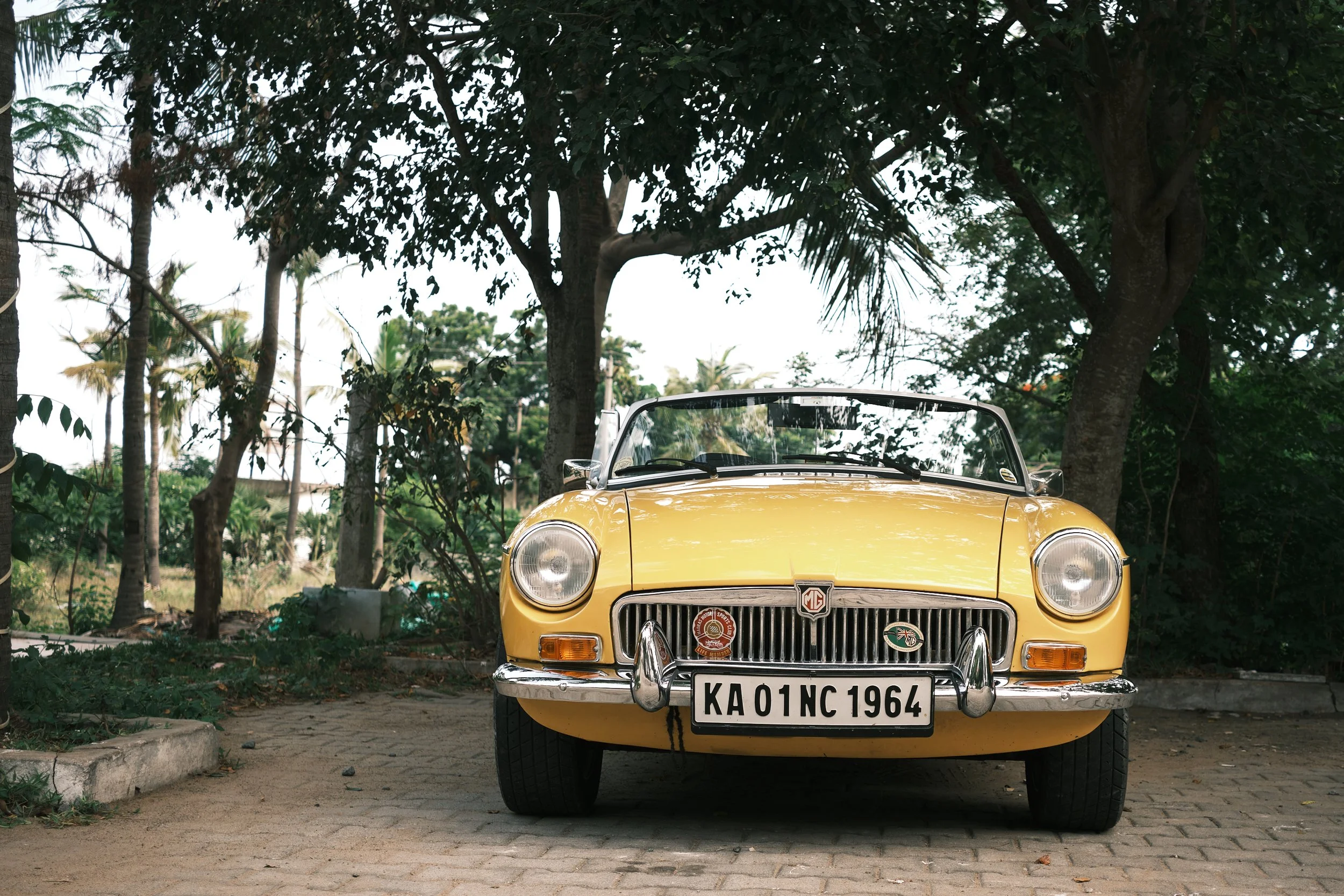
Stateside, somewhere in the middle of its life, the MGB received what could only be described as an ungainly set of plastic 'rubber' bumpers. The federalised model didn't last too long and MG reverted back to the use of chrome items as the original. The newness of the updated models wasn't always in the right direction, and the desire to go back to an early MGB wasn't absent. The car featured here is a prime example of that feeling. A late-model, US-spec, left-hand-drive MGB, this was bought new in the mid-70s, but a later keeper decided to turn the car into how it would have looked as it rolled out of the Abingdon factory in the 60s. And it would be fair to say that this one turned out to be quite a solid conversion.
Chennai-based Vijay Sundaram bought the MGB during his time in the US, before eventually bringing it and his beloved Mini Cooper back to India earlier this decade. It might sound race-ready in the way it emanates an extremely pleasing exhaust note, but he commends the GT nature of the machine, which is a stark contrast to the Mini's fervent attitude. He notes that apart from the inclusion of extra fans for cooling (he wasn't going to take a chance with the harsh Indian summer), the MGB has remained pretty much unchanged since he bought it roughly fifteen years ago. Like it was the case when Vijay was in the USA, he follows a weekly drive ritual. This ensures the car stays in top shape, while also getting the unmatched satiation of classic motoring on well-paved tarmac. It's an inimitable feeling that, especially when the car in question seems extremely willing to provide surprisingly adequate performance, excellent stability, and a complementing orchestra that never fails to uplift the mood.

Even from the passenger seat, I could tell how exciting it can get, a quick drive in the MGB. The biggest takeaway was how the engine settled once in overdrive, but it was equally impressive the car's ability to cruise at triple digit speeds. Slowing down for intersections and picking up pace again repeatedly never felt like a challenge for the car. The bright Chennai sun was nearly completely offset by the abundance of wind, but carrying speed in and out of corners was never unnerving.
The inherent feeling of being in something that's five decades old is usually a novelty. I say that because let's be clear that a car, regardless of its age, is supposed to be driven. And that's how you tend to get the most fun out of it. But since a vast majority of classics are either too valuable to be used like everyday cars or too slow to keep up with modern traffic, it usually becomes more a wondrous experience than an exercise to appreciate the car itself. The MGB is different. It's as if it doesn't really care what an onlooker thinks about it, the statement it makes is usually with how content its driver's heart is, after a long, engaging drive.
Back to the MGB, so how did it happen?
'I was looking for a convertible; it had to be either the MGB or the Triumph TR4. And I saw this MGB, which, had an 'for sale' sign on it, so I talked to the guy...
It's got an interesting story, this MG. The car came to Chicago as a US-spec MGB with its original rubber bumpers. Its next keeper, brought it from Chicago to LA, but he didn't like the look of the car, so he wanted to convert it into an older MG. He was the local MG club's president and had a wide variety of MGs including the MGB GT, MGA, TC, Magnette, and of course, this. An older MGB he had was beyond recovery, so he put the essential parts into this and restored it to look like a '64, with chrome bumpers and all that. The car was eventually sold.'
The chap who owned it afterwards had become a serial collector and with about 30 cars and nowhere to park to them, he had walked into a situation where he had to let go of one of his prized possessions. That one happened to be RHD which nobody in the US was interested in...

As mentioned above, Vijay was on the lookout for a convertible, especially a right-hand drive, since the long-term plan was to get the car back to India. The deal went through and parked on Vijay's drive were clearly two British icons, both with a nice tale of their own.
He continues that the MGB's previous keeper also had a late 60s Beetle and a red W113 250SL on sale. Talking about the Pagoda, he adds, 'It was a drool car. And the rarest of the lot'. But at $50,000 (in 2011), it was four times what the yellow MGB changed hands for. A no-brainer, really!
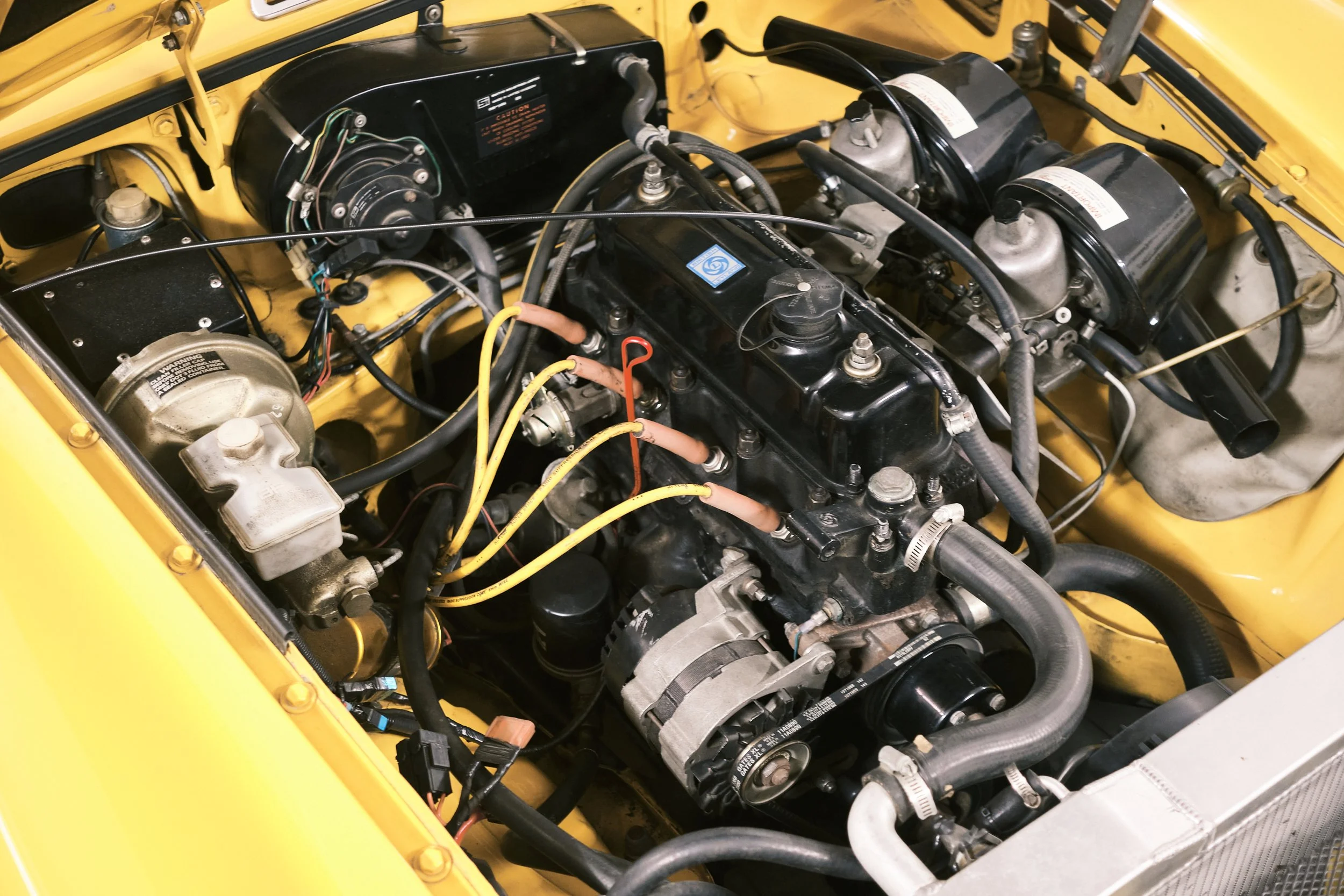
"I haven't changed anything major with it, unlike in the Mini, apart from the alternator and maybe the starter. The carbs are still the original SUs, the paint, upholstery, etc., too, is all original"
By original, Vijay means what the car got in 2008 or so, once it was backdated. To his knowledge, it was originally BRG but the LA owner changed that to Chrysler Prowler yellow. He also makes a mention of the lower panels (the apron) being -- very ridiculously -- painted black, but he got those colour-matched to the rest of the car, and the resulting look is, as you can see, quite something.
'I like small four-cylinder cars; when you are doing 50 mph, it feels like you are at 80. The sound, the noise, the vibrations all that add to the experience. You don't want to go to 100, you want to feel that you're doing a hundred...'
Wiser words haven't been spoken!
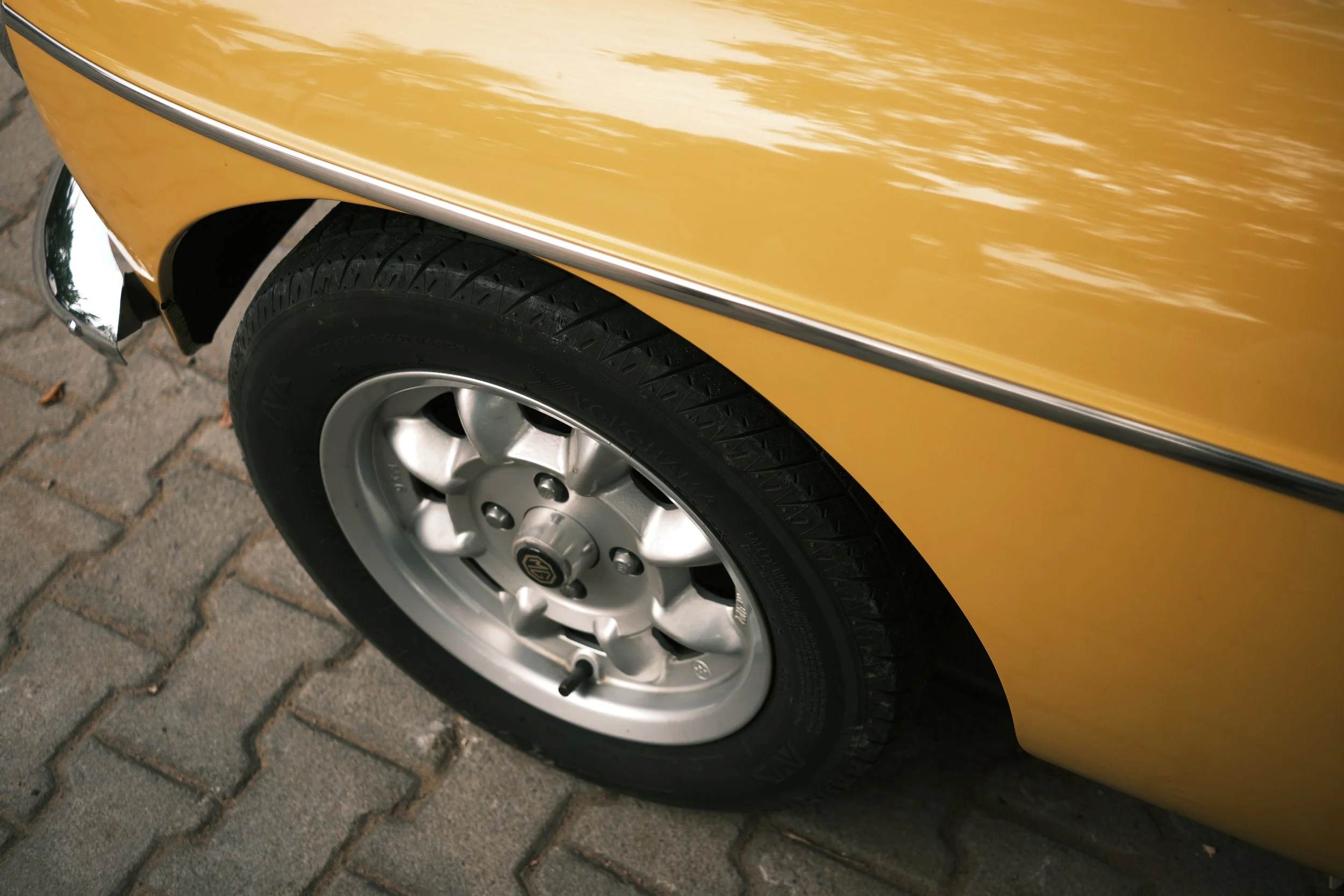
'Can you imagine how these must have been brand-new? In the US, it used to keep up with the traffic. Freeways in LA? No problem. But the most fun I've had driving was through the canyons in Malibu. The echo of the exhaust was unbelievable. Mulholland Highway is a fabulous road!'
Vijay also has a very cool Mini Cooper 'S' — it was originally an Oz-spec Cooper, which was restored and uprated to match the S spec. You'll get to read about that feature soon, but this chat also gave me a chance to ask him how different the two are, his MGB and the Mini.
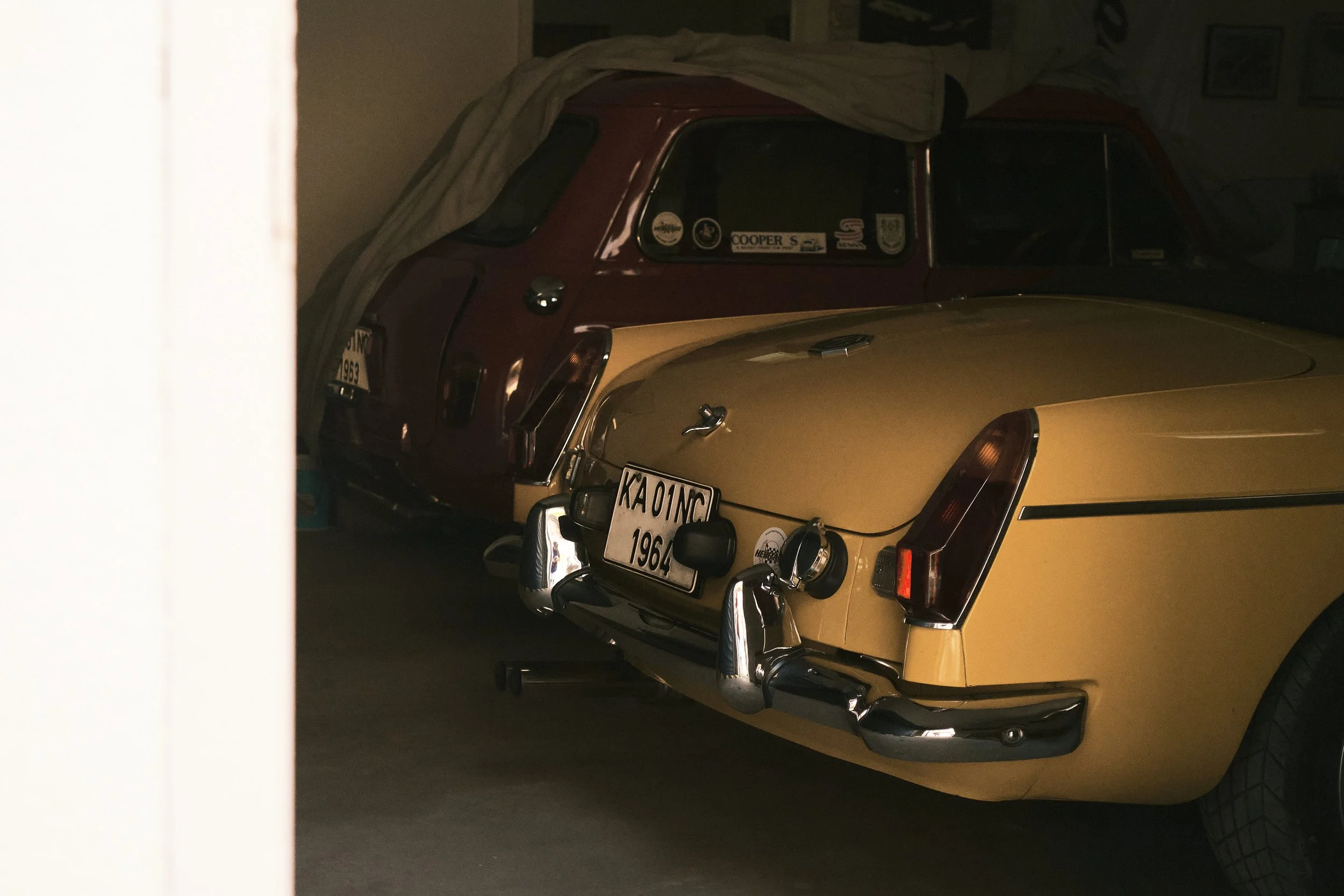
'The MG feels like a normal car, the Mini isn't. The steering on the Mini is like on a bus, but its reaction time is much quicker — you turn the wheel and the car turns. If you are attacking a corner, you have to be very sure on when and where to turn. Get it right and the Mini's gone around the corner before you know it. The MGB corners like most other cars, but mine has a firmer suspension, so it can corner a little quicker, but it's still got body roll and all that.'

The MGB's overdrive function is most impressive when you've just found a long straight after hunting for a bunch of corners. Vijay continues how the engine that usually does 70-80 mph in 4th at 4000 rpm drops to 3000 rpm in overdrive. 'The engine is so smooth and comfortable at that speed, it's really fun. You just flick a switch and it settles down for cruising. It's a very nice feature.'
Before bringing the car to India, Vijay had the chance to send it to Florida for a V8 conversion. They would put a Ford V8 engine along with a new transmission and a diff. But he wasn't too confident in further meddling with the car, plus at about $40k, it wasn't going to be cheap. 'It makes a nice noise already, it feels good, and with the current traffic conditions, I don't think I need an overly powerful car.'
Vijay says that it really needs an MG expert to know that this isn't a '64. Which is true, although you don't need to be an MG expert to see the appeal of the car. Especially when it makes its exhaust sing as it continues unabated on an early morning drive, not too far from the endless expanse of the sea. And the formula works quite effectively, whether you're on the PCH in the US or on ECR in namma Chennai... That last line is a bit poetic, isn't it, just like the MGB!