

Mezger; Isn’t that an engine?
There's no way you've been to the pub to discuss Porsches with your mates and not uttered the hallowed term 'Mezger'. It's not a brand name; pretty much like Porsche itself, it's the surname of someone very important. Someone without whose know-how Porsche, and crucially the 911, would've been very different — in the engines department, at least. Someone who made it possible for the German carmaker to win at Le Mans. Someone whose choice of wheels was a G-modell — that alone makes him my hero. The name is Hans Mezger, and his four-decade-long contribution to the world of Porsches includes — but is not limited to — the creation of extremely successful racing Porsches like the 917, and probably more importantly, the venerable flat-six engine’s design.
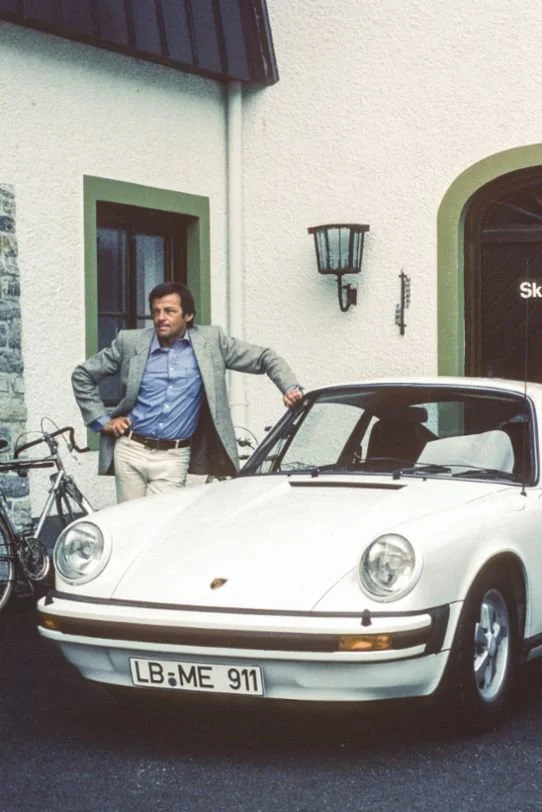
It's been five years since Herr Mezger passed away, leaving behind an unmatched legacy. He was loved by Porsche themselves, the carmaker’s fans around the globe, and anyone who’s ever heard a flat six on full chatter. He left without seeing his personal 911 being brought to life, and while that story is worth checking out (more on it below), here’s a reminder of what made Hans Mezger such an important personality. If you think the answer to that is the seemingly random combination of three numerical digits, you mightn't be wrong.
Mezger joined Porsche sometime in the mid-50s, went on to become the brains behind the 901's engine — and was subsequently responsible for devising the engine which the multitude of air-cooled 911s that were launched afterwards came with. It’s said that the move to a flat-six (from the pushrod flat-four of the 356) was decided already but Mezger (along with a certain Ferdinand Piech) was the reason behind the use of an overhead cam and a dry sump.
It didn’t take too long for Porsche to the limitless talent this man possessed, and hence he was soon made in-charge of the company’s race-car programme. This led Porsche to win in a variety of formats, including hill climbs, endurance races, and even Formula 1.
It’s worth noting that the TAG turbo from the mid-80s which powered McLaren’s F1 car was a result of the hard work put in by Mezger and team. The 1.5-litre turbocharged V6 won races after races, and enabled McLaren to fill their trophy cabinet quite quickly.
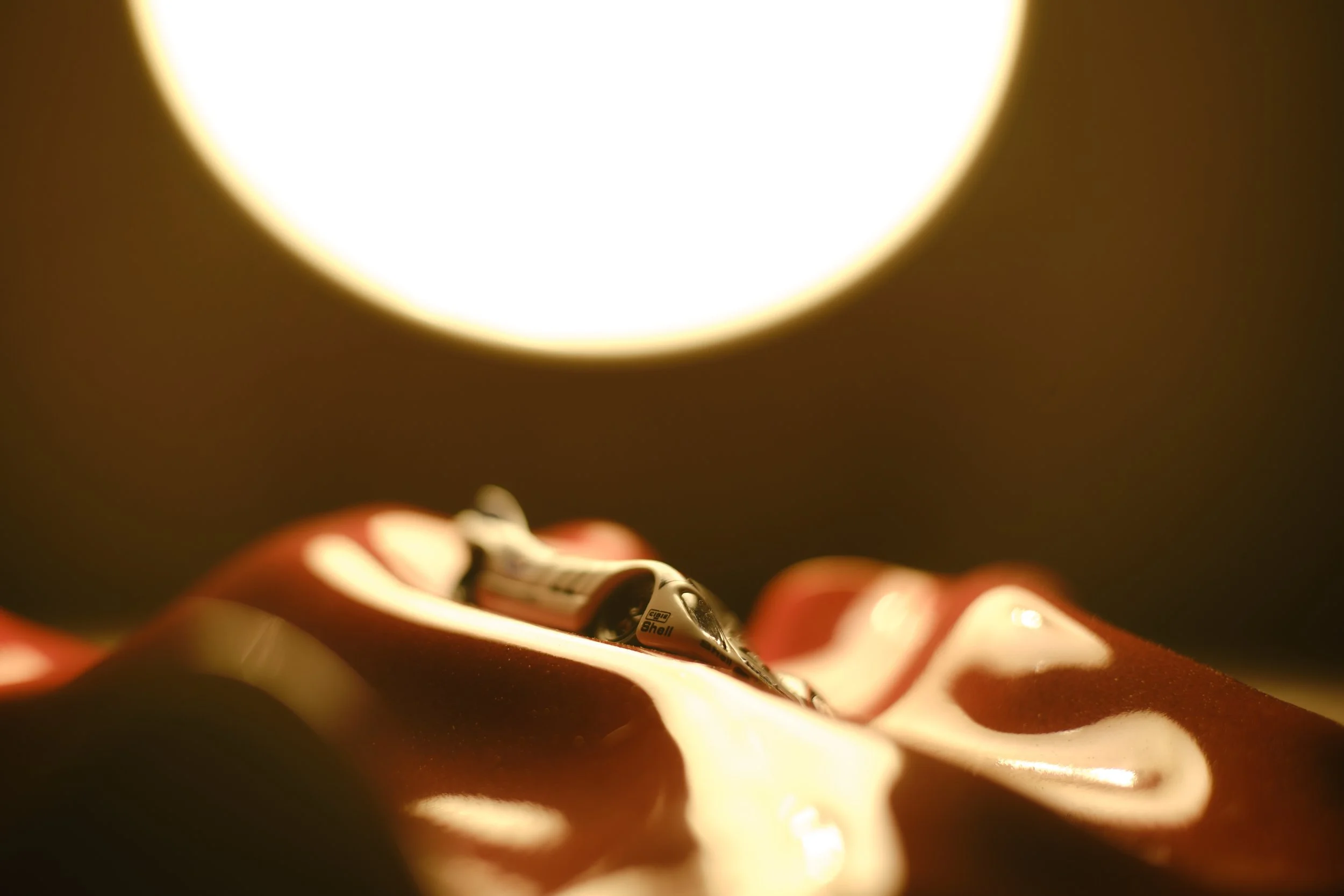
As many readers must be aware, Hans Mezger was also responsible for the 917, a car whose milestone status remains unchallenged. Porsche first won Le Mans in 1970, and repeated the successful outing the following year, again with the car whose development happened under Mezger. Of course, the 917’s racing didn't stop there, and neither did Porsche's supremacy on the race track. It raced across formats and even got a 16-cylinder engine at one point.
We’ve established that Mezger was responsible for the air-cooled naturally aspirated boxer engine in the 911. But do you know under whose direction was the engine made momentous ‘Turbo’? Answers on a postcard, please!
And when Porsche decided to fundamentally change the 911's engine to a water-cooled one, the engine for the Boxster and the Typ 996 911 moved away from Mezger’s design. That was of course for the standard iteration of the car; for the more track-focussed models like the then-new GT3, GT2, their RS derivates and even the Turbo, the engine, despite being water-cooled now, was chosen to be that of the Mezger units of the past. You can read more about that in the Magneto piece by John Simister and Andrew Frankel’s story published in Motor Sport magazine.
The last of the road-going 911s to be bestowed with a Mezger was the near-500-bhp 997.2 GT3 RS 4.0, while the first-generation 997 Turbo was the final non-GT iteration of the 911 to get a Mezger. Everything that came after that, whether in the Carrera-spec 911, the GT cars, or even something like the 718 GT4/GT4 RS isn't a Mezger.
But what did Hans Mezger drive?
Herr Mezger’s personal choice of wheels was a 911 3.0 Carrera finished in Grand Prix White, bearing the registration LB ME 911. The G-modell was previously used as a test car at Weissach and had done just under 28,000 miles when Mezger bought it by the end of the seventies. As Porsche's records point out, its odometer was set to zero, after which the car was driven another 10,000 miles or so. Mezger wished to see his 911 back on the road, and while that couldn’t happen earlier, a year after Mezger’s passing, his son Oliver Mezger got the car roadworthy again, now with a ridiculously cool vintage reg LB HM 917.
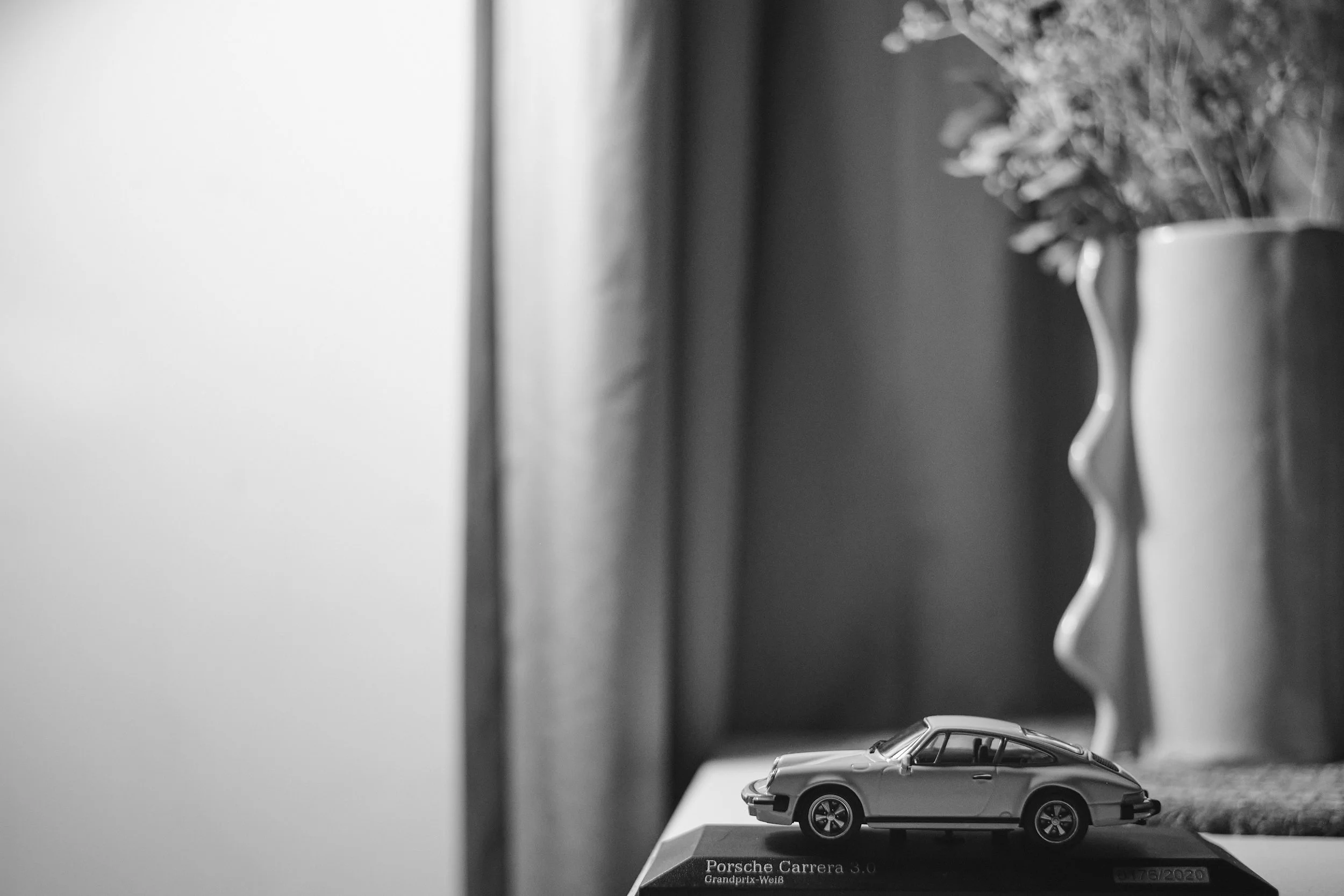
Minichamps (for Berlin Motor Books) did a 1:43 scale model of Mezger's personal car in limited numbers (2000 examples), complete with the new registration. It is worth adding to your collection, especially if you are a Mezger fan, although I feel the seats and details can be improved.
For those who’ve driven a Mezger-engined Porsche, Hans Mezger provided a tangible reason to be his fan. Without him, who knows what the 911 would’ve been like — quite possibly characterless. He stayed at Porsche for 37 years and in that time shaped the carmaker that many of us love today.
It’s been five years since Mezger left but like I said, there’s no way you can talk about Porsche without name-dropping him — or indeed the engine.
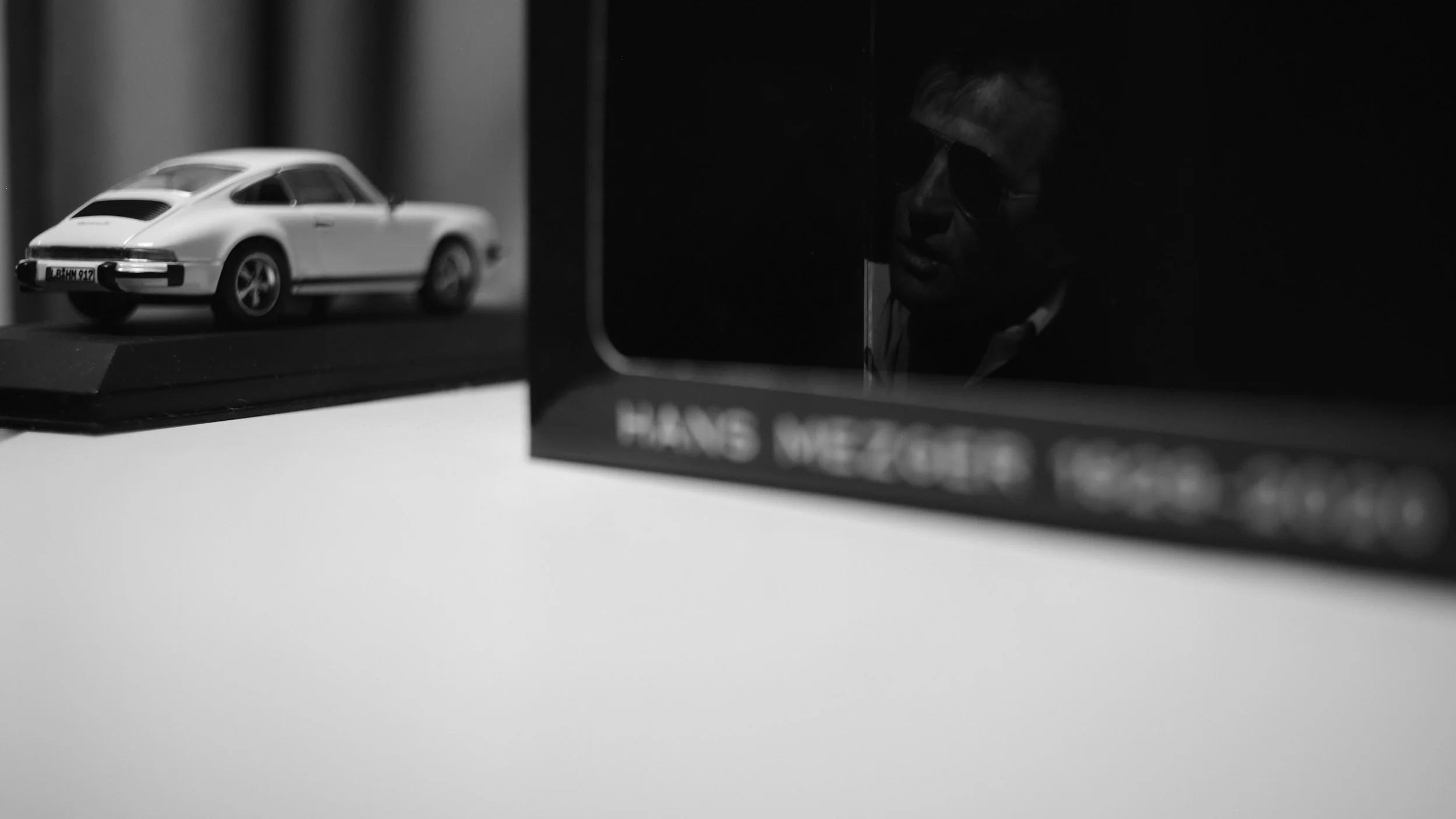
Hans Mezger portrait by Porsche
917 model: Curitiba64/IXO (Buy from Tarmac Works or Modelmatic)
911 model: Minichamps (Buy from Elferspot)