
Tarmac Works - Ford RS 200
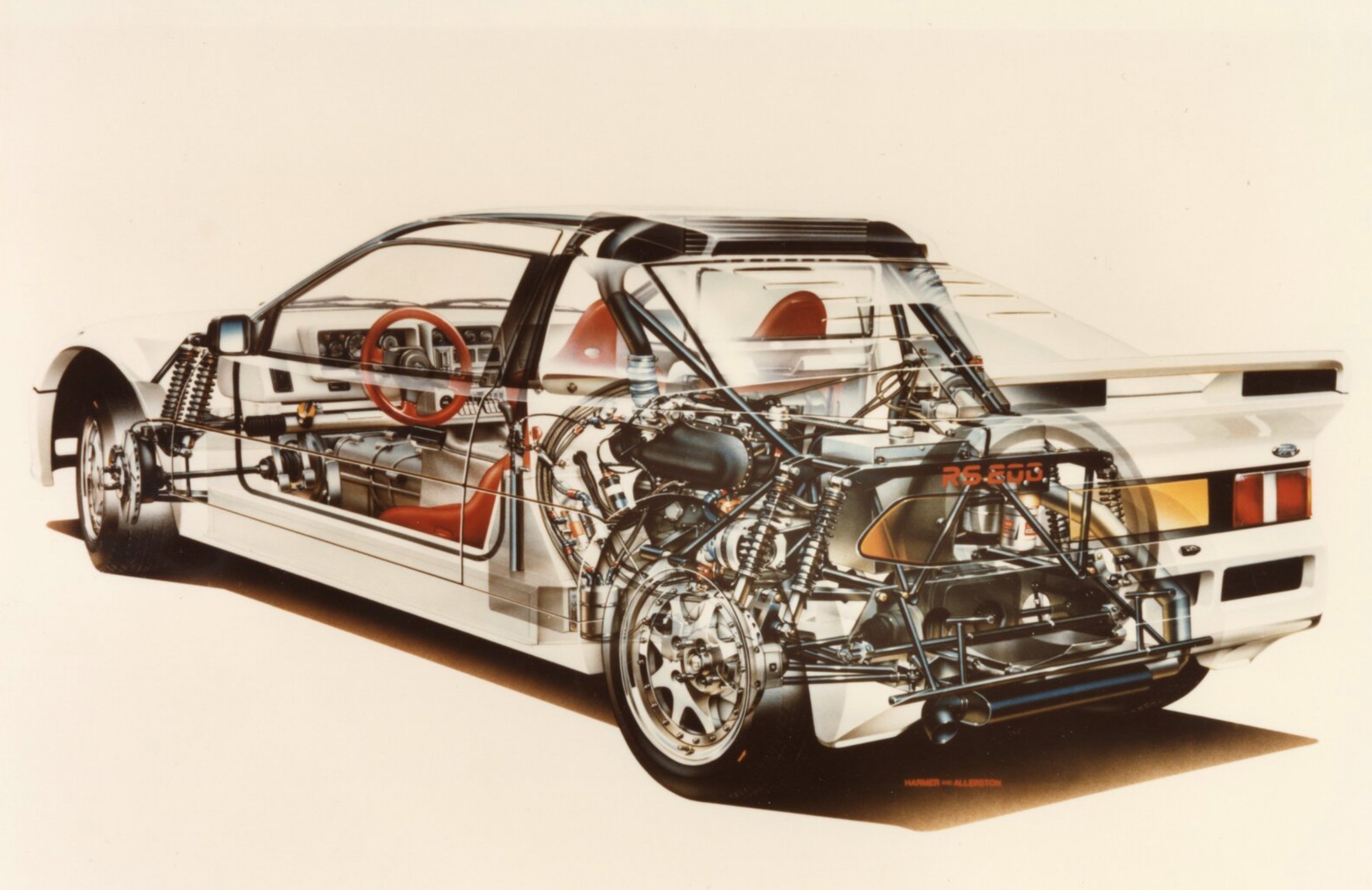
It's the mid-80s, and you're desperate to make a mark in FIA's hottest category, Group B. The competition is already a few miles ahead of you, and you've just had an epiphany that your company's purported next big thing needs to be more special than even the hugely promising RS1700T. What would you do? If you too think going all guns blazing — getting a midship Cosworth BDT connected to a gearbox at the front with power sent to all four wheels in a car that looks like nothing else on the planet — makes sense, you might as well be someone from the Ford HQ. Because that's how the elusive Ford RS 200 was created. It's a car whose true potential was never explored; it might've reached hero status in no time, but it wasn't around long enough to prove itself. Those who appreciate the RS 200 (‘RS’ and ‘200’ written separately as the original documents suggest, although nearly every modern report or Tarmac themselves don’t include the space) know that while there hasn't been an absolute dearth of scale models, it isn't the most widely reproduced race car. So when Tarmac Works dropped a hint last year that there would be an RS 200 (or two... counting), it was a reason to celebrate. Now that the first of the models is here, we take a look.
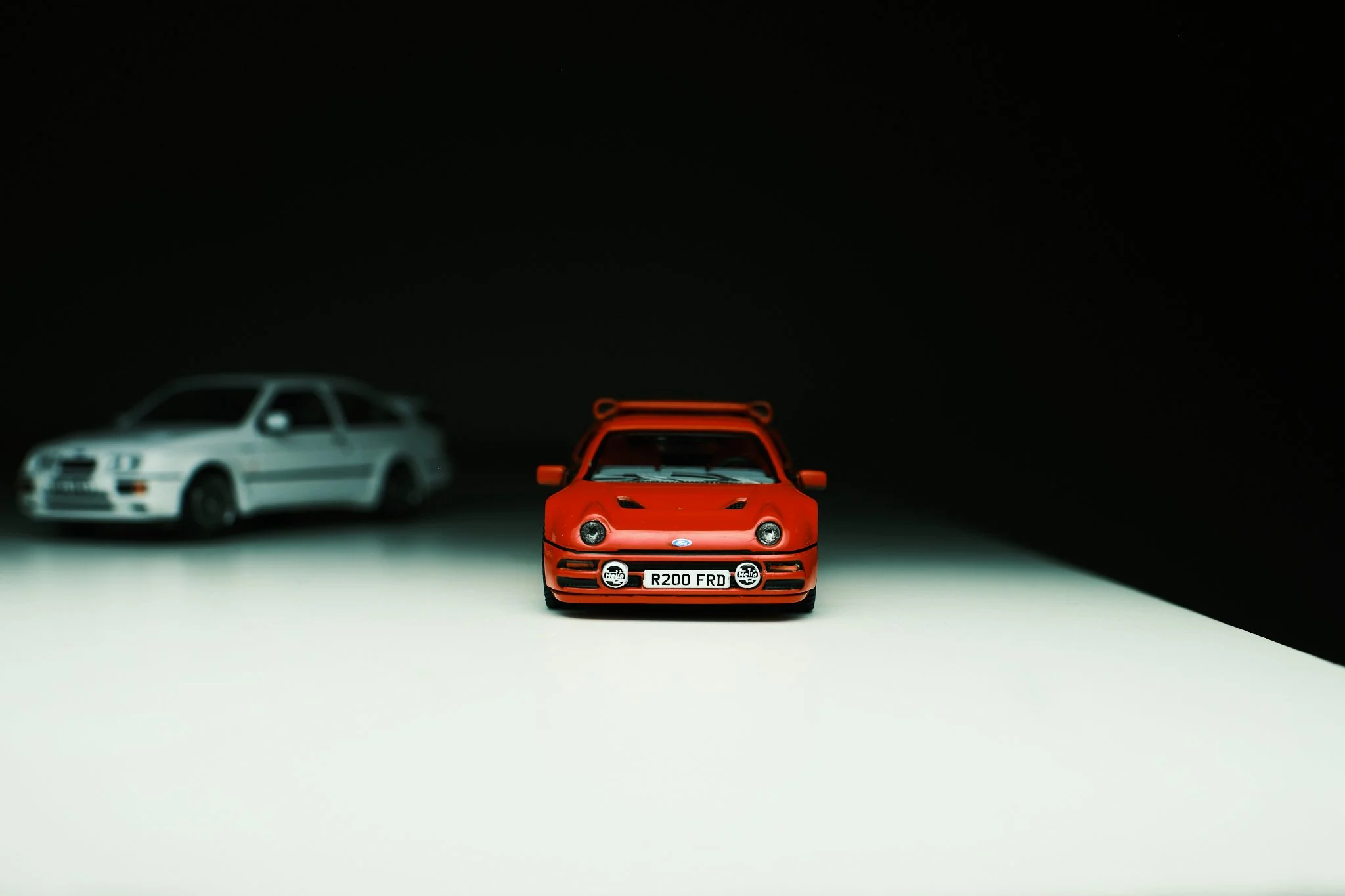
It is from Tarmac's Hobby 64+ line, which means it gets top-class build along with opening panels and extra bits. Finished in red, the RS 200 comes with a plastic base, an acrylic top cover, a detailed outer packaging with a cutaway of the profile printed on it, and a numbered limited-edition card. Neat attention to detail, especially since it's a small scale (said to be 1:64) example, but that's been a consistent trait of the model line. The Ford RS 200 was designed by Ghia, its chassis designed and mastered by Tony Southgate, and the car eventually assembled at Reliant’s, who had a fair bit of experience with fibre-glass. So it might feel weird that the scale model is diecast, although devoid of any quality issues that the early examples of the real car presented, the model looks undeniably handsome.
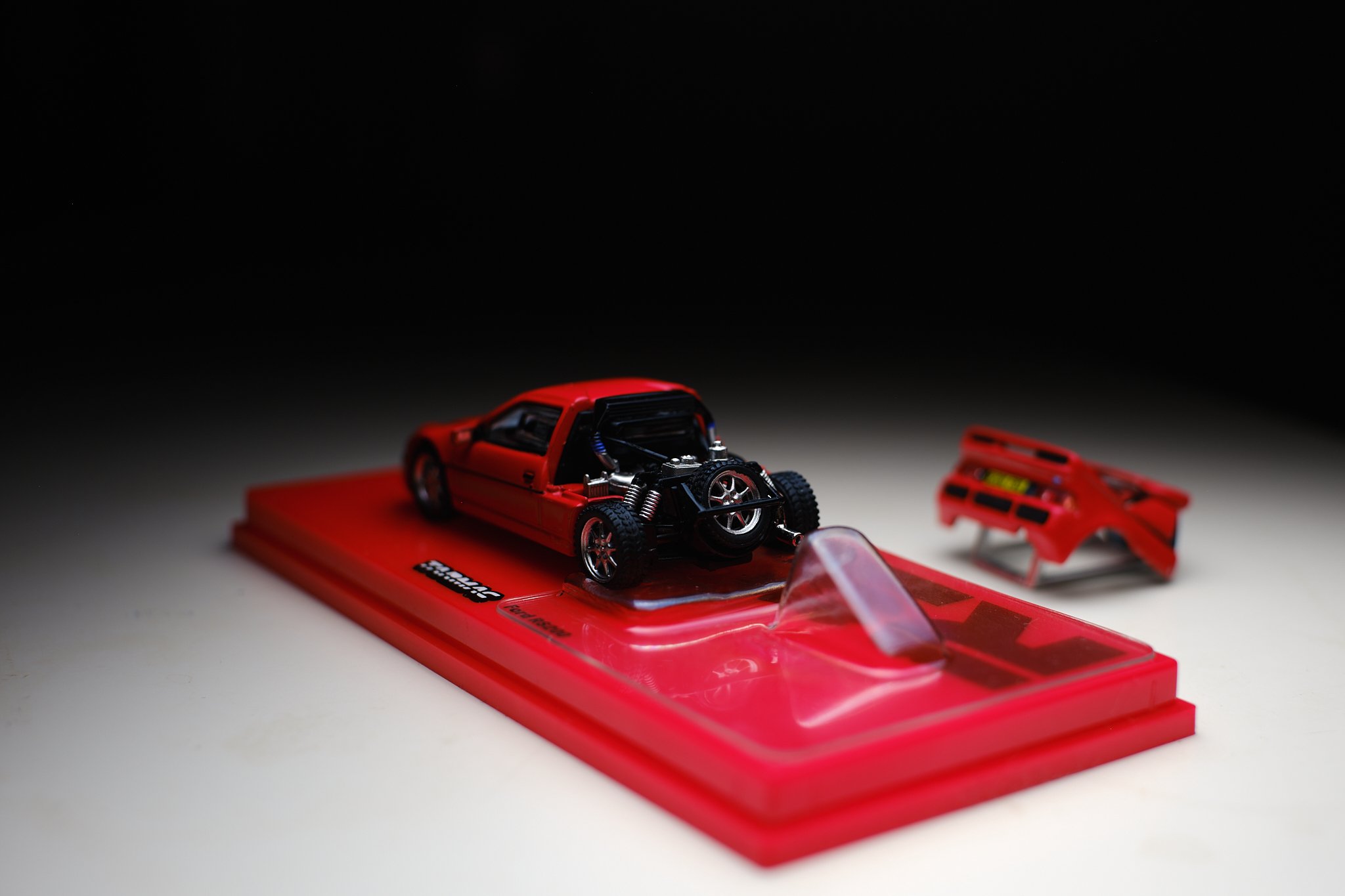
Also included in the package is a stand for the rear clam, which is a separate unit. The body-coloured clam needs to be carefully placed on the car if you want to display it, or if you’re brave, and don’t mind dust on the car’s fairly well-detailed internals, you can indeed leave the rear section open.
The large window allows you to see the 1.8-litre Cosworth BDT engine, which was carried over from the 1700T. This engine, in the road-going form, made 250 bhp, the competition-spec cars made around 400 bhp, while the later Evolution model saw the capacity of the engine rise to 2.1 litres — with the possibility of producing around 600 bhp. With a certain Stig Blomqvist behind the wheel, the RS 200 Evo did 0-62 mph in 3.7 seconds, a Guinness record that was stayed unchallenged for more than a decade.
The standard road-going car, on the other hand, was far from slow; it was claimed to hit 60 mph in under 5 seconds. But it’s a race car at the end of the day, so it shouldn’t come as a surprise that with competition and serviceability in mind, Ford aimed at making it possible to change the gearbox in just 10 minutes. The front placement of the gearbox helped them achieve the perfect 50:50 weight distribution, the aero package meant that the car was far from a buff body (its drag coefficient was a very respectable 0.40) and the intelligent torque split between front and rear was rated to be 37:63.
Although far from the most successful, the RS 200 was right there when Group B was canned, and who knows how things would've been if regulations weren't changed. The car's racing career, albeit short, was full of ups and downs, but its hero status remains to this day. A total run of 200 cars was planned, to comform to FIA’s criterion, but it’s said that only 70 per cent of that figure was achieved. The RS 200 came as a result of a massive budget by Ford, some prominent personalities involved in its development/success/posthumous image, and it’s good to see how well it has been received by car lovers now. Long may the RS 200 continue to rule hearts, especially of those who were way too young to experience the absolute thrill of spotting something as mental as the RS 200 — let alone drive one. For many of us, it remains a dream to be around the RS 200, and the Tarmac Works model makes it possible.
For those interested in the model, while Tarmac Works mentions the model is sold out, at the time of publishing this story, both Modelmatic (UK) and Miniature Toy Shop (IN) appear to have it in stock.