

Guilty and charged: BMW iX1 LWB Review
There must be a YouTube clip somewhere of Tim Harvey, John Cleland, and Steve Soper coming together in a gusto-lined aggro BTCC battle, with the inimitable Murray Walker commentating as two of the aforementioned drivers ended each other's chances of clinching the top spot in that race. There must also be a video of a young lad called Hans Joachim Stuck driving an E46 M3 GTR around what's known to be one of the most challenging tracks around the world. His dubbed commentary steers on the lines of how a specific section on the track separates 'the men from the boys' as he continues to decimate the tarmac aboard a fine-sounding racecar. If that isn't enough — of course, it isn't — one can also look up Tiff Needell lecturing how BMW's absence from a particular segment has made them (and potential buyers) miss out on a wonderful chance to increase UK sales, only followed by some of the best footage ever seen on the telly of an E39 M5 going absolutely ballistic (I might have paraphrased Quentin Wilson's words) in an infinitely cool showcase of what a BMW can do in the right hands. Do you see a pattern here? BMW are known to make cool cars, and our definition of cool has largely been around something that involves going fast, preferably around a race track, with some measured hooliganism, and even sometimes flipping the bird to sensible behaviour. BMWs are for mavericks, they aren't for the mundane. So, it would be quite an epiphany if their least expensive (and, going by the power figures, probably the least exciting) electric car turns out to be a cool car. Here's presenting the BMW iX1 LWB's first drive review on The Car Cult.
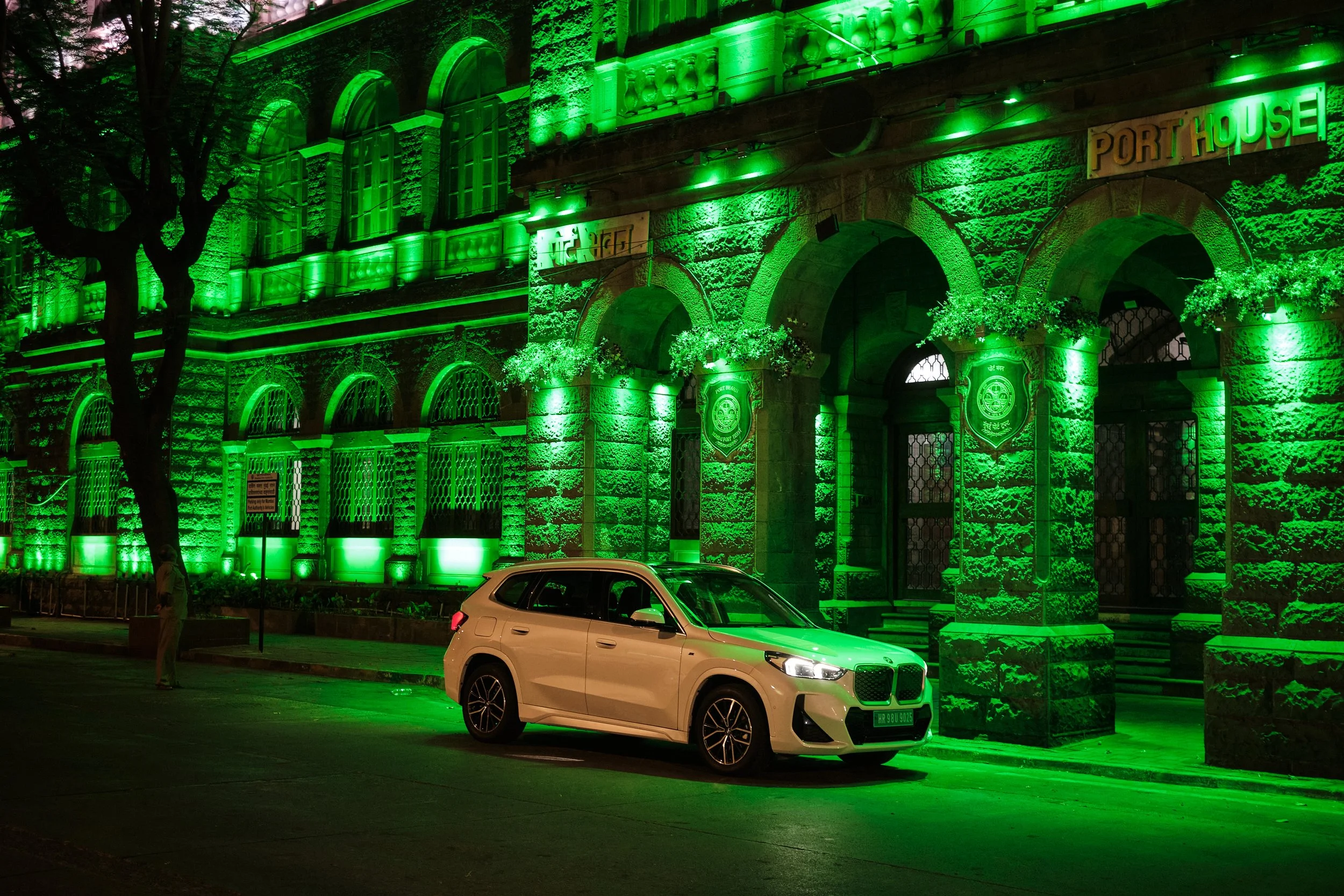
We are looking at an entry-level BMW, which promises to do 531 km/332 miles on a full charge, has just 204 PS to play with, is based on a front-wheel-drive architecture, and to make it worse, is skinned in a crossover-shaped outfit. It might be a challenge to like this thing, I thought, but we ought to give the iX1 a chance to prove itself.
It occupies the same space as current-generation X1, although with the novelty of a longer wheelbase and an all-electric powertrain. Historically, that would've meant proceeding with caution because there’s no running away from the fact that the X1 has always been a budget-focussed offering. As the most approachable BMW, it can be forgiven to not include the highest-quality material, the largest engine, or even the best-looking wheels. But will that take away from its coolness?
On the one hand, I desperately wanted the iX1 to work well — for not many conventional premium carmakers have got the entry-level EVs right, and this is BMW's chance to prove themselves. On the other, I was also slightly apprehensive. The possibility of cheap materials, bad finish, or even underwhelming handling would definitely make me dislike it. Thankfully, though, none of that happened.
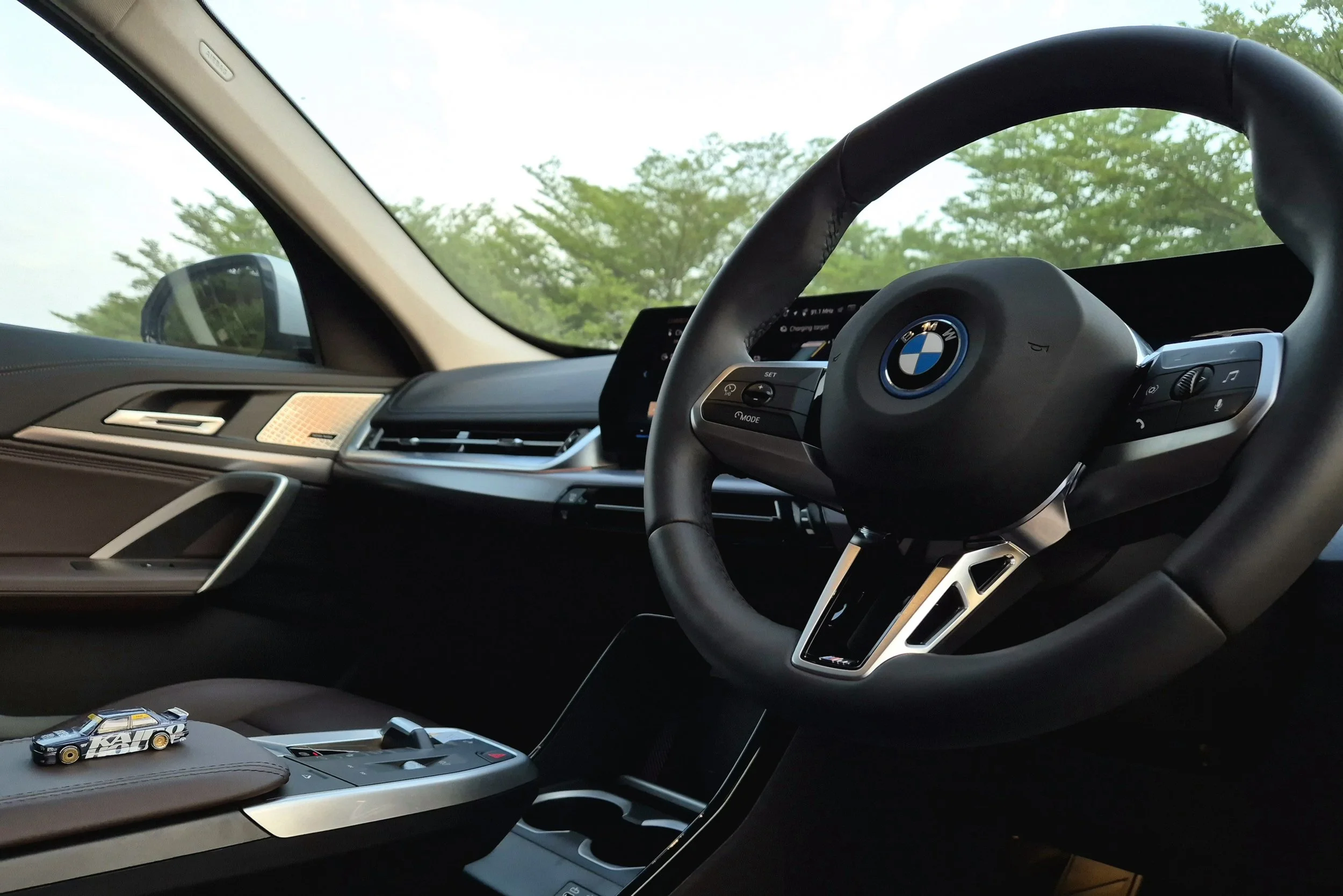
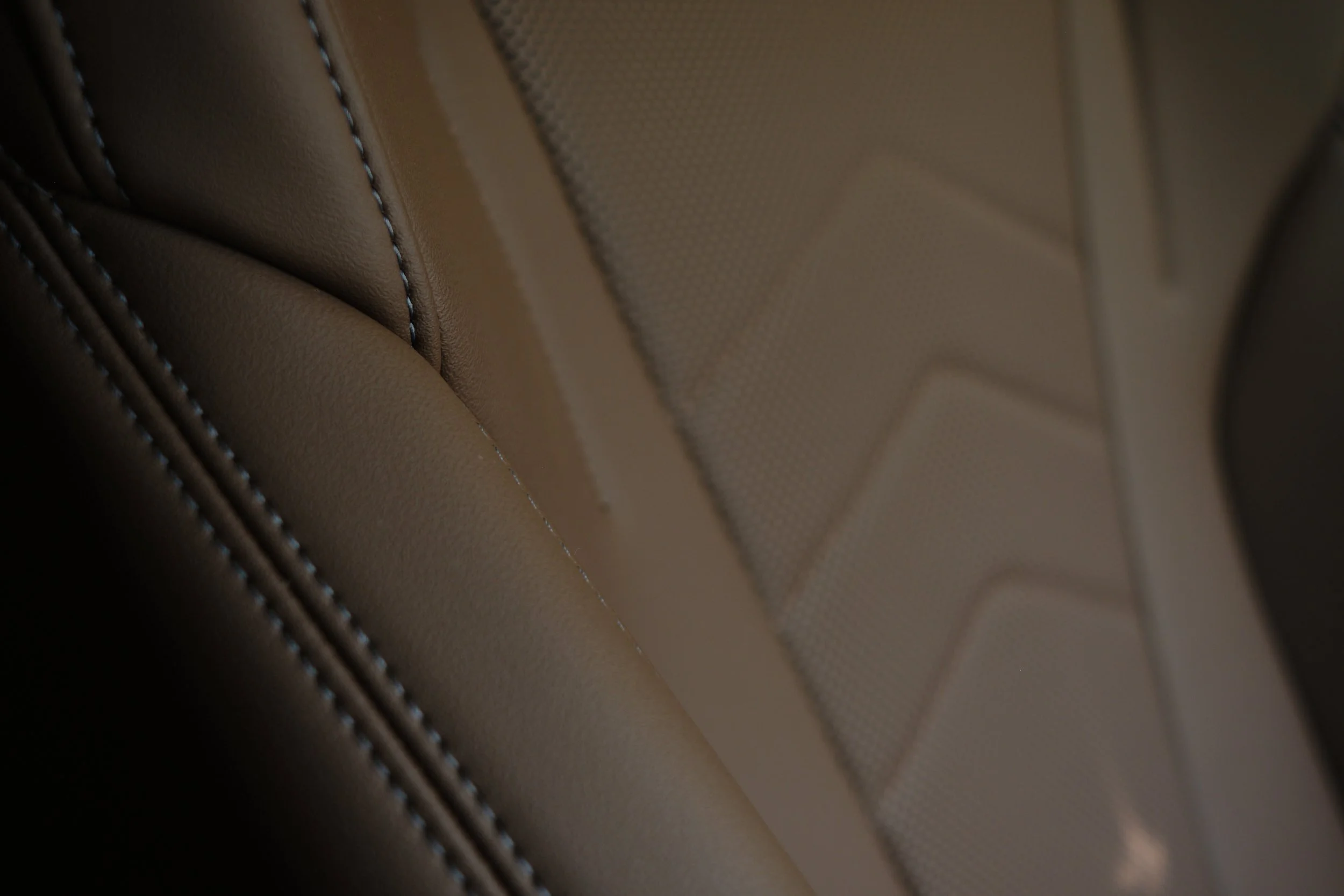
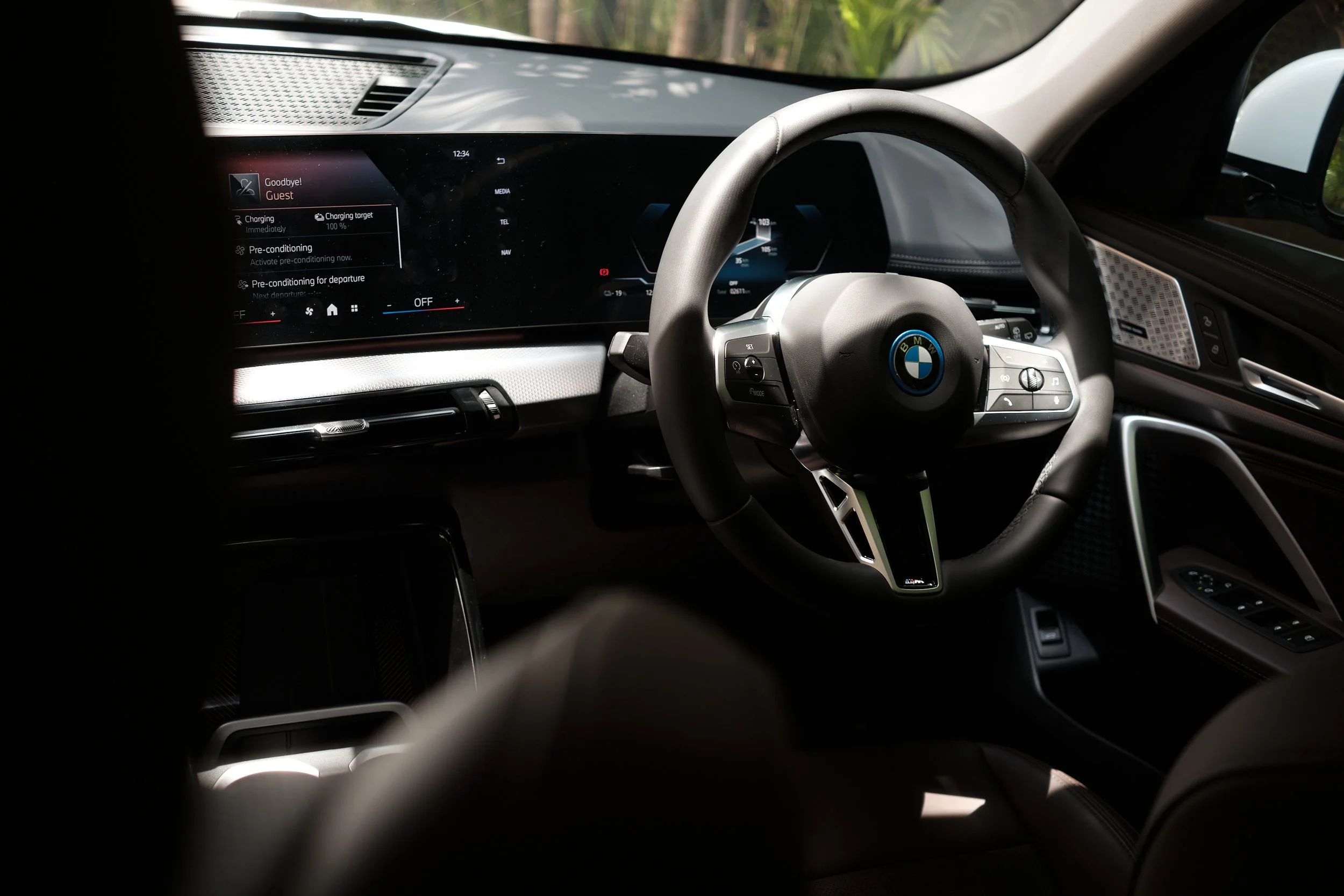
The interior speaks quality. Swathed in vegan leather, the seats are nice and comfortable. There's decent bolstering, too — it's not too intrusive and hence, it doesn't jut into your rib cage. The driver's seat doesn't quite go low enough, but I guess people like this sort of 'commanding' driving position. The steering isn't the thinnest out there, but it's decent to hold. And rounding the first impressions up from the driver's seat is the large horizontal screen setup. It looks good, has some customisation options, and the infotainment unit is easy to operate. The centre console is a bit of a double decker, with a grippy mat on the lower ‘shelf’ and an openable storage section atop it. The wireless mobile charger pad at the bottom of the dashboard is vertical, which I like.
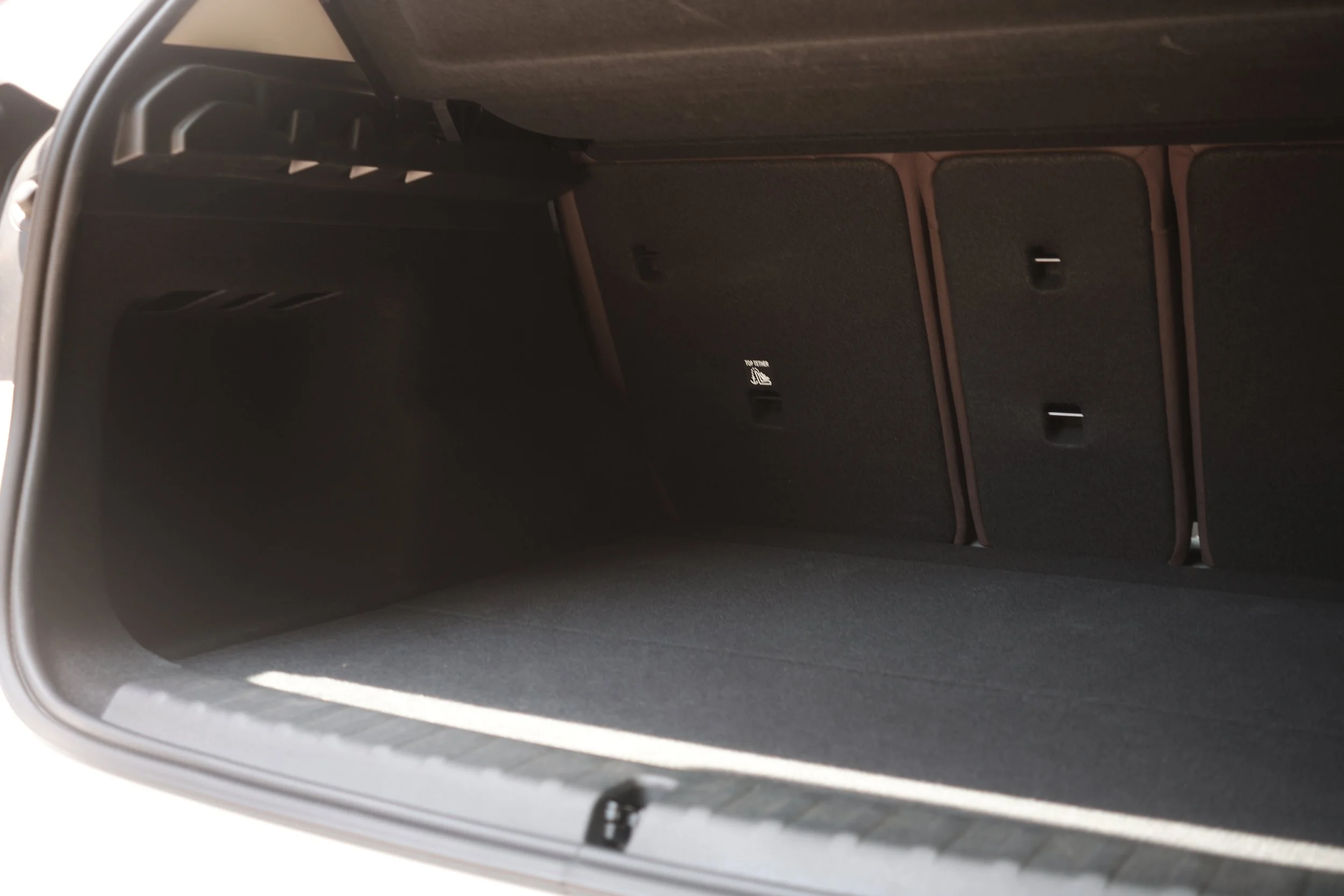
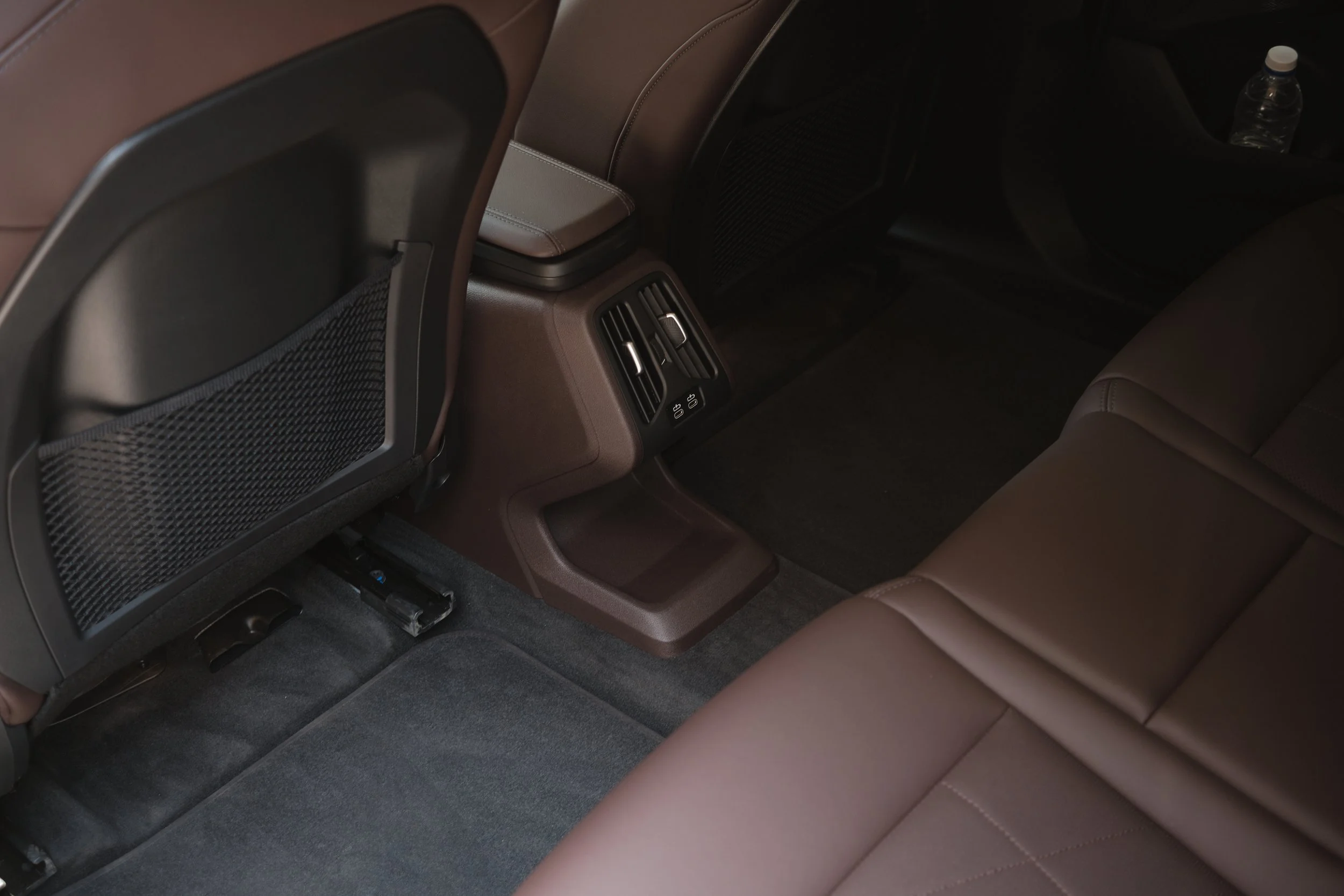
The interior space at the front poses no issue whatsoever, and the deep boot only complements that. But it’s the rear seat space with which the iX1 makes other similarly priced cars seem a tiny bit worse. The seat itself is all right but it's the added leg space that counts. It doesn’t get window blinds, but with the sunroof shut, the cabin isn’t exactly unnecessarily bright. The interior is decently cosy and the rear seat comfort adds to it, making the iX1 LWB ideal not just for leisurely drives but office commutes, too.
That you get to travel without burning any fuel only makes it an even more tempting proposition. From behind the wheel, the iX1 LWB doesn't feel disappointing. In the eDrive20L trim (also available in the UK, albeit without the extended wheel base), the iX1 powers only the front wheels, sometimes overpowering them, if you step on the throttle, but never feeling unruly or too quick to handle.
When I picked up the car from BMW in Mumbai, it had 90 per cent SoC and an indicated range of 400 km or so. At around 300 km, Bombay - Karad is the kind of distance one would typically cover in a day of outstation drive. And the iX1 showed no issues with that, plus it had just about enough range left to drive half the distance back; indicating a real-world range of about 450 km on a full charge.
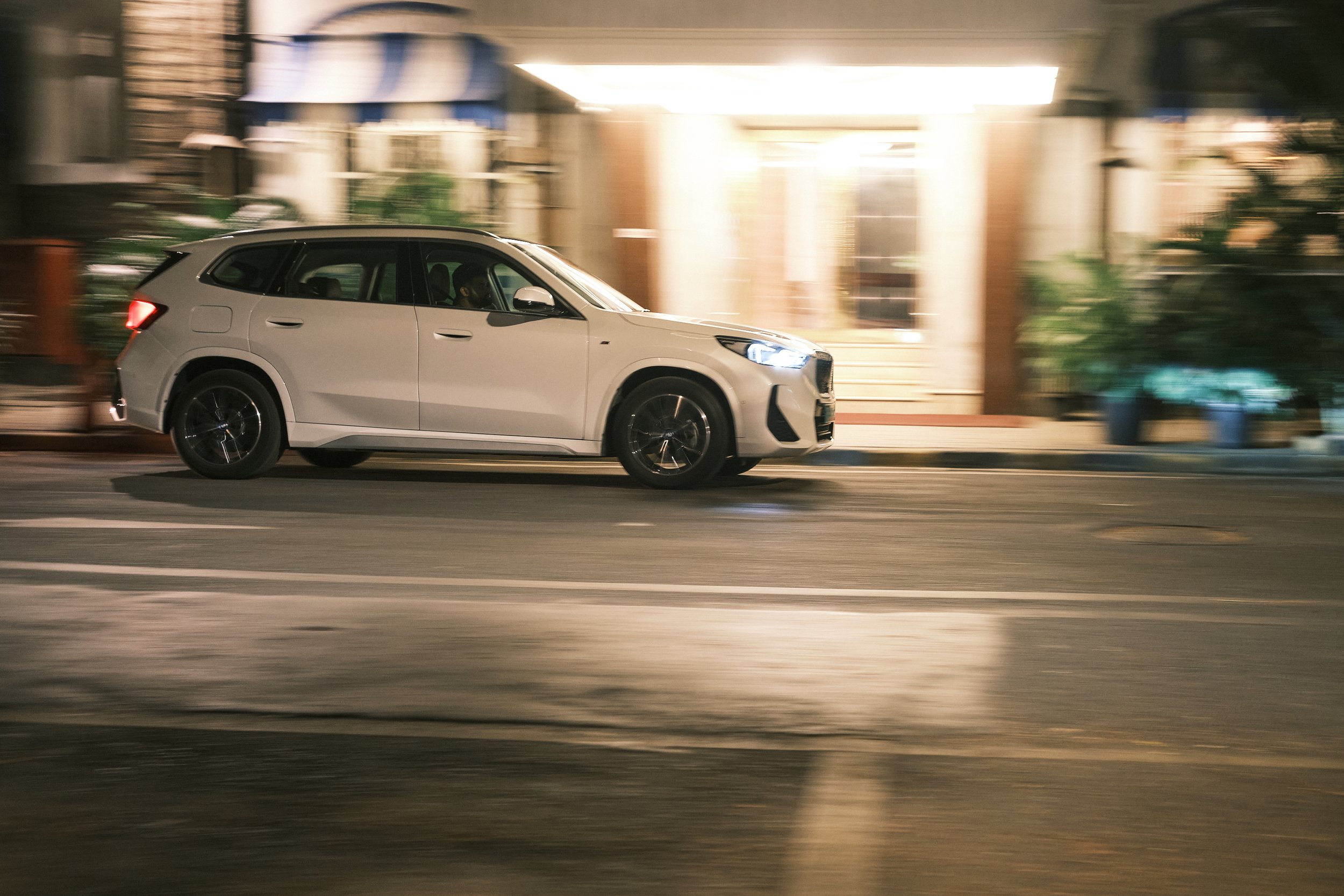
I personally enjoy driving electric cars, and there are two big reasons why. First has to be the ability to see more, drive more, listen to more in-car radio without any tailpipe emissions or 'burning' any fuel. This presents the kind of freedom I've always yearned for, probably since the time I stopped borrowing money from mum/dad for my two-stroke moped to engulf all of my pocket money.
Reminiscing my tryst with two-stroke motorcycles, the suddenness of whacked-open throttle translating into what seemed like an immeasurable force is a joy similar to the instantaneous power delivery one experiences in EVs. That’s the second reason.
And despite its humble specs, the iX1 delivers. Cruising at 80 km/h or 100 km/h (depending on the speed limit) is like in any other car (except in near-total silence) but the urge or need to overtake helps a car like the iX1 show its true potential. There are no gears to switch and no change in noise (not that I'm particularly against either, mind) but only what seems like an endless flow of power.
Filtering through traffic isn't as big a task, either, because the iX1 is responsive to the driver's inputs. It feels confident enough to do a slalom run, but it’s far from the sharpest-handling BMW. Overall grip levels seemed solid, and it was only on a bad stretch of tarmac that a strong dab on the throttle made the car squirm a little as the front wheels struggled to find grip. Also, as expected, there’s not much communication happening through the steering. It offers decent stability and confidence at motorway speeds, plus it’s always ready to dart from one corner to the next.
Under braking, the car loses speed well, but you can’t turn off regenerative braking completely, and I feel that away a bit of the pedal feel. The 'B' mode on the gear selector enables single-pedal driving, which soon becomes second nature. Unless you don't want your car to behave like it's got no flywheel...
In my experience, regenerative braking set to ‘adaptive’ was the way to go if I wanted decent range, even on the motorway.
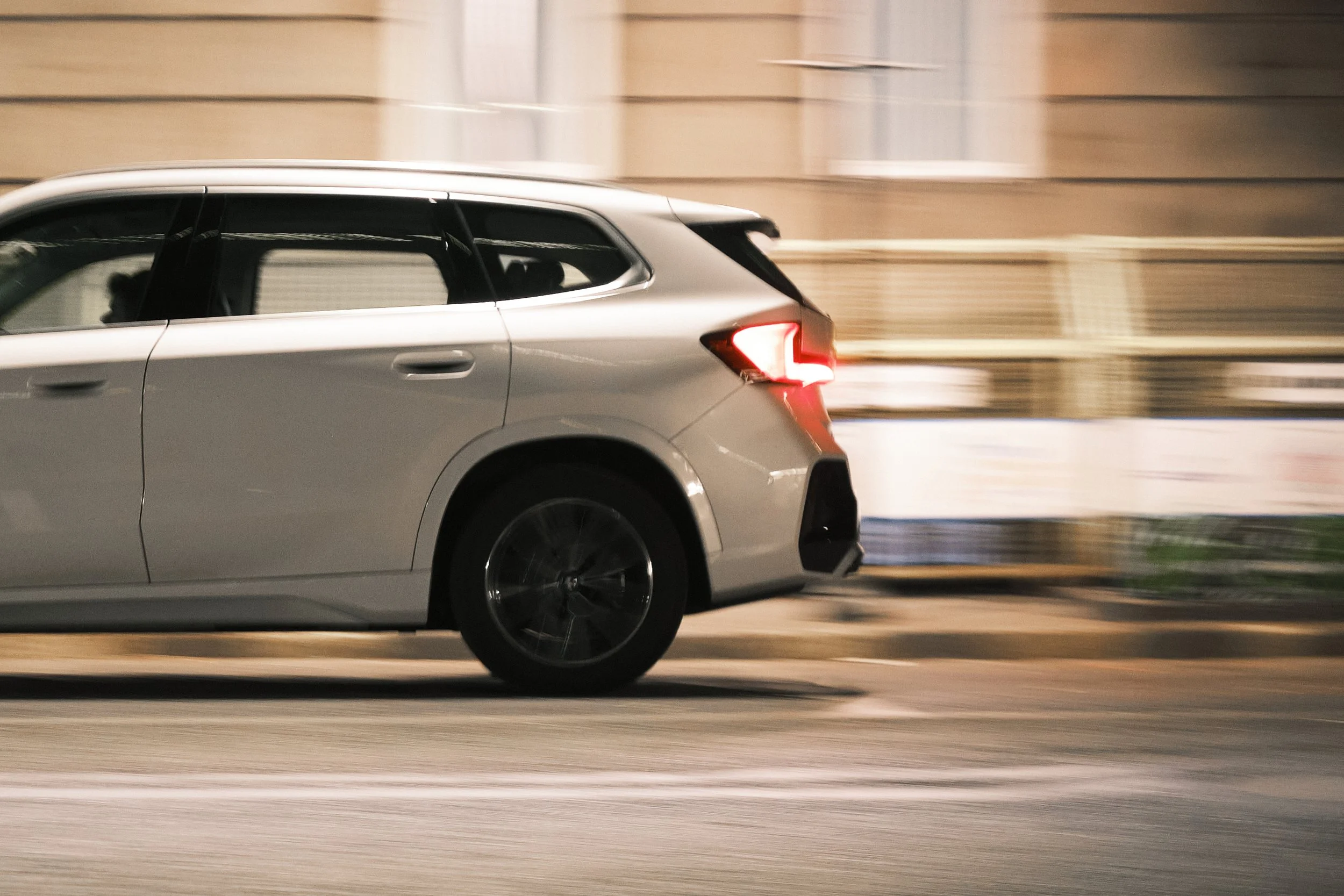
Like in any well-set-up car, the suspension in the iX1 is undoubtedly happier as you drive faster. The car stays settled, unless the road suddenly disappears. When driven over rough patches, the suspension would crash a little, detracting from the otherwise well-balanced setup. Does it take away from the overall ride comfort? Slightly.
The iX1 feels at home on busy urban streets and negotiating tight parking spaces. It’s not overly large, measuring roughly around the same size as many five-seat crossover SUVs that the modern Indian automotive landscape is filled with. This means it doesn’t get too much of unwanted attention and you don’t even have to worry too much about scraping its underside while traversing illegally made speed bumps.
There aren't many complaints, but the infotainment system (largely slick in the way it operates) used to forget my phone connectivity choice unless I was logged in as a user. The ADAS features had to be manually switched off every time, probably because of the same reason. And the driver's seat height, I think, needs to be slightly lowered.
It's definitely not the most exciting car to drive, but it does commutes really well. It's an easy choice over a half-arsed conventionally powered iteration that has a similarly potent petrol or diesel engine but doesn't stand out in any way. Plus, the appearance is sharper than the X1 has ever been, especially at the front. I wouldn't mind better-looking (not larger) wheels, but that’s just me. And the shade of white doesn't look as bad as it sounds.
And the price? As of May 2025, the 2025 BMW iX1 LWB eDrive20 L is priced at Rs 49 lakh, ex-showroom. Owing to the fact that you are just going to pay the car's insurance over this, the on-road price comes up to about Rs 52 lakh. In comparison, the BMW X1 with a measly 1.5-litre petrol engine costs about Rs 10 lakh more whereas the diesel X1 is about Rs 65 lakh,on-road. The Mercedes-Benz EQA costs roughly 20 lakhs more than the BMW iX1 LWB (on-road), and the Volvo's all-electric crossover SUV is about Rs 6 lakh more expensive.
While the M340i, which has made a lot of power accessible to a wide variety of buyers, usually gets widespread appreciation, I think we ought to praise the iX1 LWB more, for it has democratised the luxury EV. Yep, it won't get the hair on the back of your hand raised every time you depress the accelerator. And it definitely won't be the ideal choice for your Sunday morning drive around the twisties. But for the rest of the week, this has all the makings of a good car.
Probably my everyday new BMW of choice, if you were to ask me...