

Just Get it: Suzuki Jimny Review
Not many words are needed to be said about the Jimny, on the brink of sounding a bit sanctimonious, these three will do: ‘just’, ‘get’, and ‘it’.
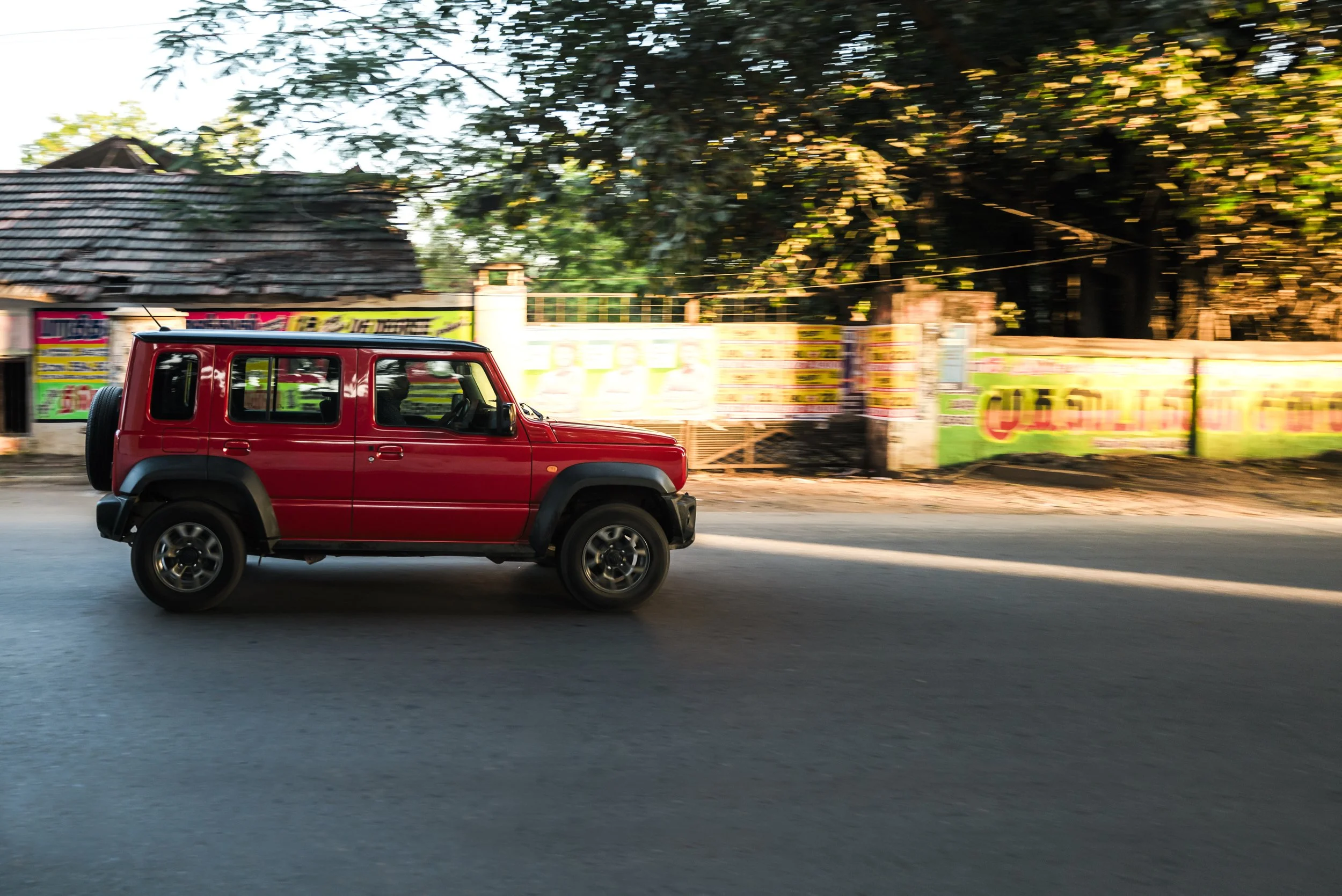
It's taken four generations and five decades for ‘Jimny’ to become what can be best described as a familiar name in the Indian car market. Its arrival last year was a tiny bit late in comparison to the rest of the globe, but since the Indian model — like the one sold in Australia and South Africa, among other places — got two extra doors, there wasn't much to complain about. What became a topic of contention was the car's original list price and the subsequent discounts offered first by the carmaker themselves and then later by the dealers. Currently — that is towards the end of 2024 — the five-door Maruti Suzuki Jimny can be bought with discounts of about Rs 2.5-3 lakh on its ex-showroom price, effectively making it not just an even more irresistible proposition but also a brilliant value-orientated product. And I am sure anyone who bought it at full price isn’t exactly disgruntled either, for the Jimny is a superb car to live with, and by now they'd have most certainly realised that. But how does it fare as a primary mode of transport? I don my pretending cap and try a Jimny out for a few days; here's a quick recap.
I don't want it to force a product placement here but Maruti Suzuki has been instrumental in giving wings to grassroots motorsport and attending a one-of-a-kind motorsport-related event in a Jimny sounded like a good idea. So what it wasn't a rally or a track outing, but just the screening of a film (SEE BELOW) made on Indian racing?! Plus another chance to drive the Jimny? Count me in!
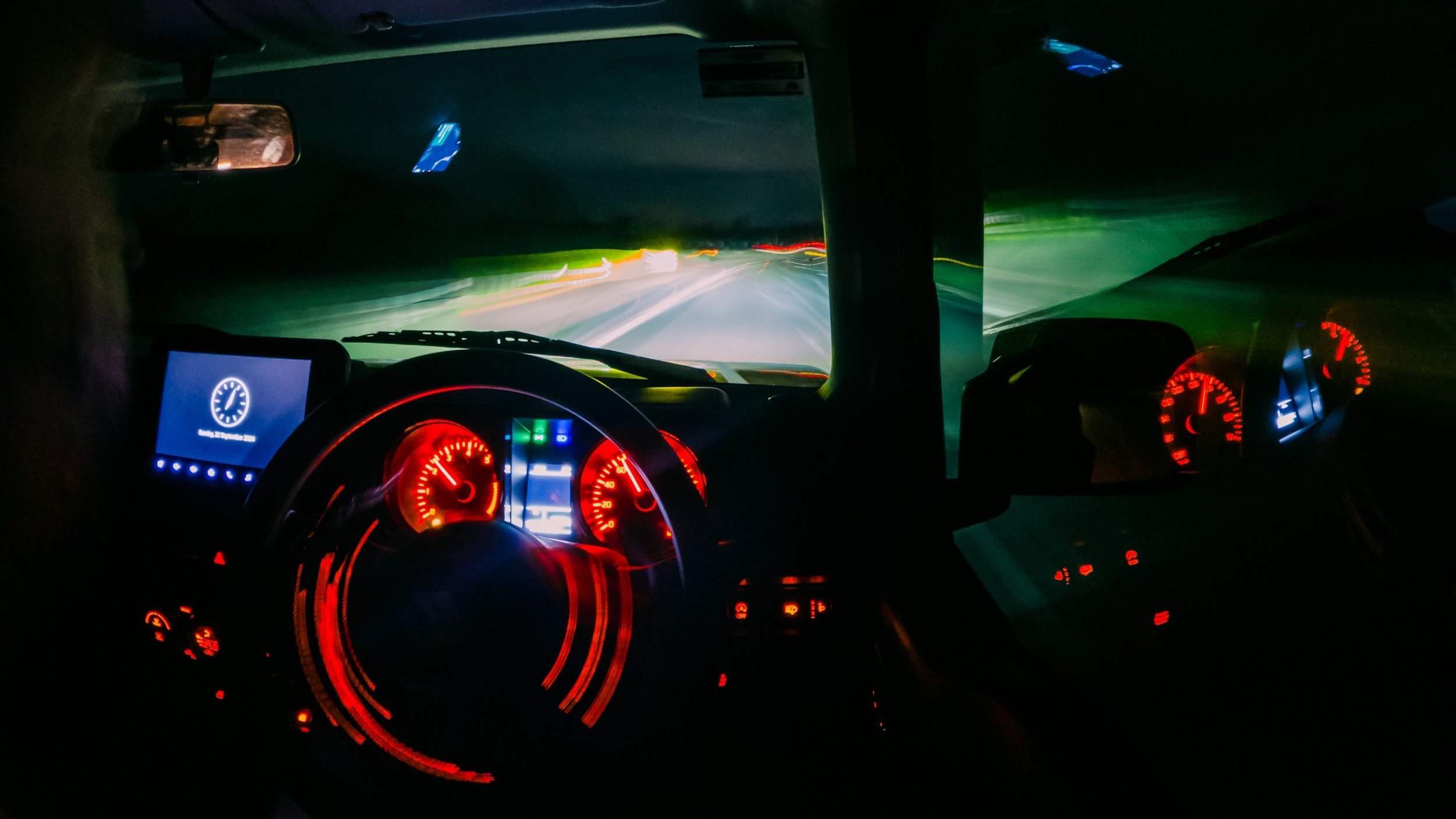
We started from Bangalore, a little later than we ought to due to logistical screwups, and made it to Coimbatore in about 7 hours or so. The infamous Bangalore traffic was thankfully avoided to a large extent, if not entirely, and the Jimny sailed past its first checkpoint without any drama. Switching lanes quickly, making emergency manoeuvres, and maintaining half-decent motorway speeds, the Jimny did it all without apprehension. This wasn't the first time I drove the Jimny, having reviewed the automatic gearbox model previously, so I wouldn't say the car was a revelation, but I haven't seen an everyday car offer such a widely different character based on the gearbox choice.
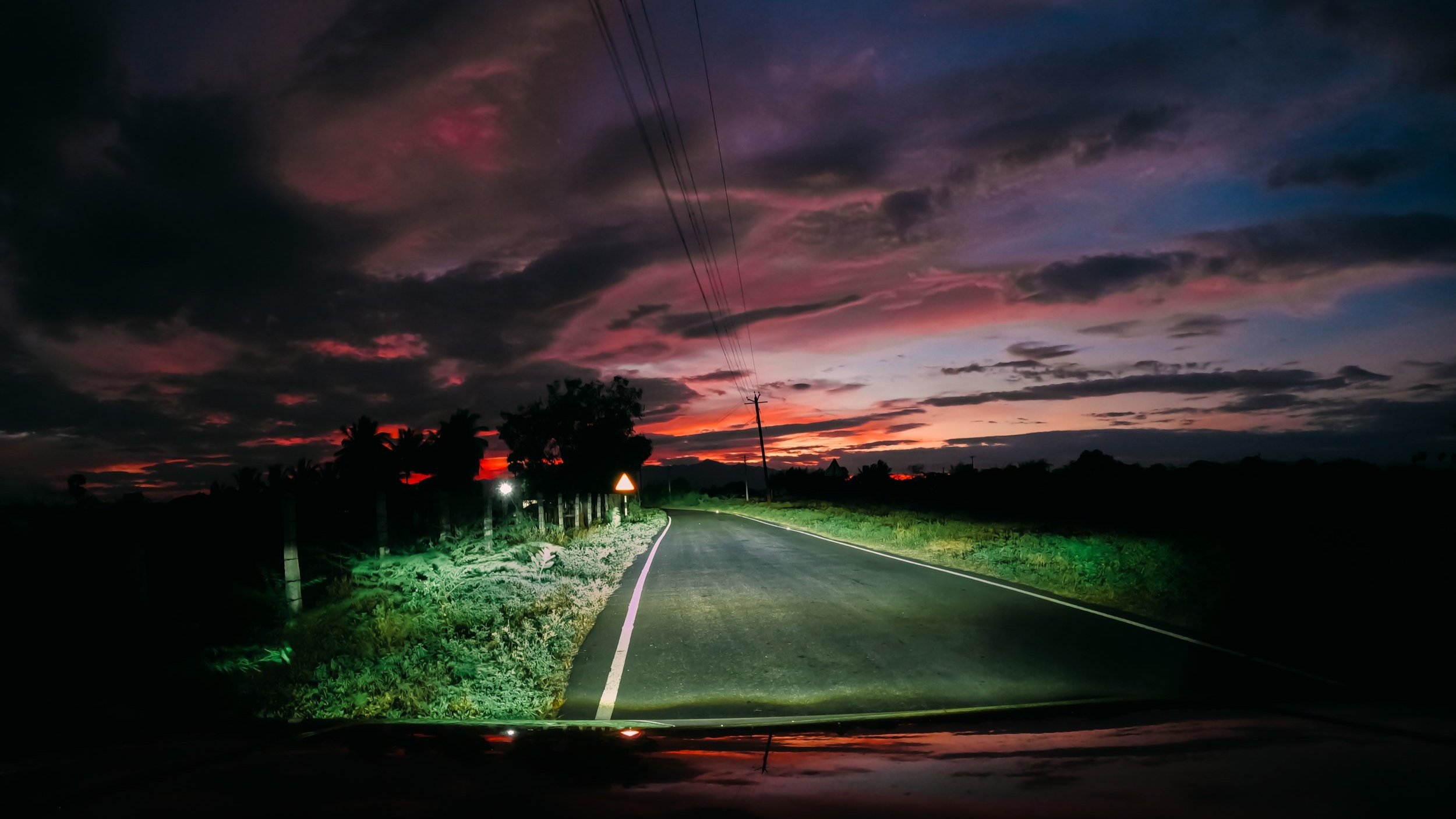
The 5-speed manual on the Jimny is a delight to use (despite requiring a touch more effort to slot in than on most everyday cars, and it matches the rest of the car's personality quite well. It gives you more control, which while being crucial in Jimny's sole area of expertise (off-roading), makes everyday driving better, too. Especially on the motorway where its alternative, a 4-speed automatic, is best suited for a bit of laid-back cruising. The auto is not a terrible gearbox, but the kickdown and shifts both are leisurely at best. The manual on the other hand allows you to sync better with the unending the orchestra this car is: there's the perennial transmission whine, the increased road and wind noise (it's not that bad but the aerodynamic abilities of a Tonka truck don't help, I presume) and the engine loves to sing, too.
As anyone familiar with Suzuki's 1.5-litre four-cylinder engine will tell you that it starts to get vocal from about 2,000 rpm onwards. At around 3k rpm, you begin to witness the surge, but it's not until 6,000 rpm that its peak power of just over 100 PS is achieved. Maruti Suzuki's spec sheet mentions that the K15B's peak torque (99 lb.ft.) is achieved at 4,000 rpm, but in practice, you don't have to work the engine super hard to get to a liveable speed. Having said that, it's not going to set your heart racing if you looked at the speedometer, and that's mainly because the car sounds like it has achieved about 20 per cent more speed than the speedometer readout. It's not strained or powerless at 100 km/h (or 62 mph) but it seems distinctly happier there than say at 120 km/h.
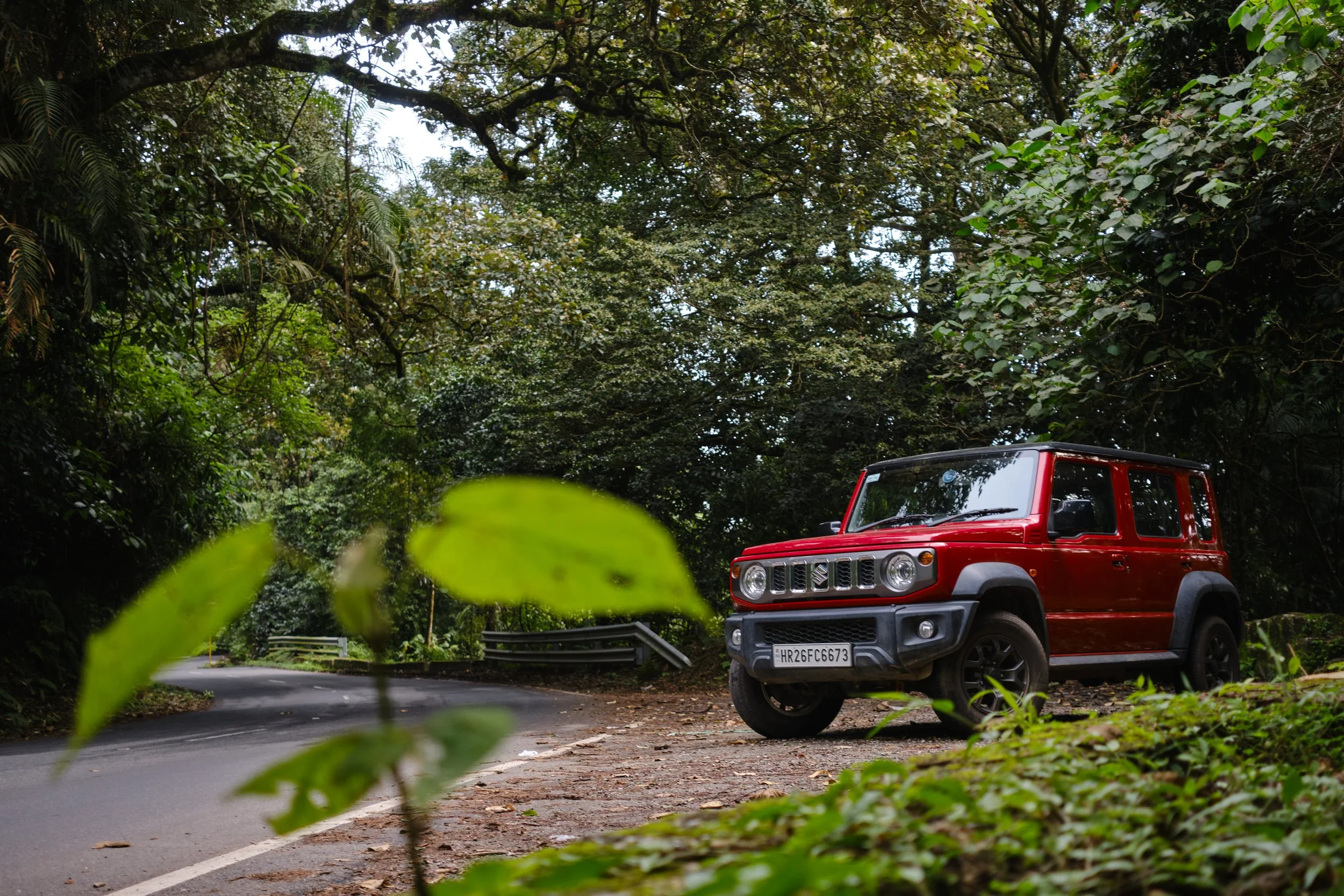
In terms of body control, you have to give it to Suzuki engineers because, despite its off-road focus, the Jimny doesn't feel completely out of its comfort zone on the tarmac. If you're coming from a more modern car (read anything launched near the end of the noughties onwards), it's best to acquaint yourself with the Jimny before venturing out. Because it's fundamentally different from modern metal: the high driving position, an overall tall body, and lack of weight mean it's a bit more susceptible to moving around. At slow speeds on unpaved surfaces, it's fine, but at anything more demanding, it needs a different approach than just point and go. The lifeless (electric; power-assisted) steering is a touch slow and the geometry is such that the turning radius isn't the smallest; these are just some of the quirks. It has rigid axles at both ends with a coil spring setup, which in the little time I spent with the Jimny, turned out to be quite fitting for the car. As I said earlier, upgrades do work well, starting with the tyres, so if you want something more handy off the road or are even looking for a more road-biased setup, just keep an open mind about getting rid of some of the stock parts for higher-quality aftermarket ones.
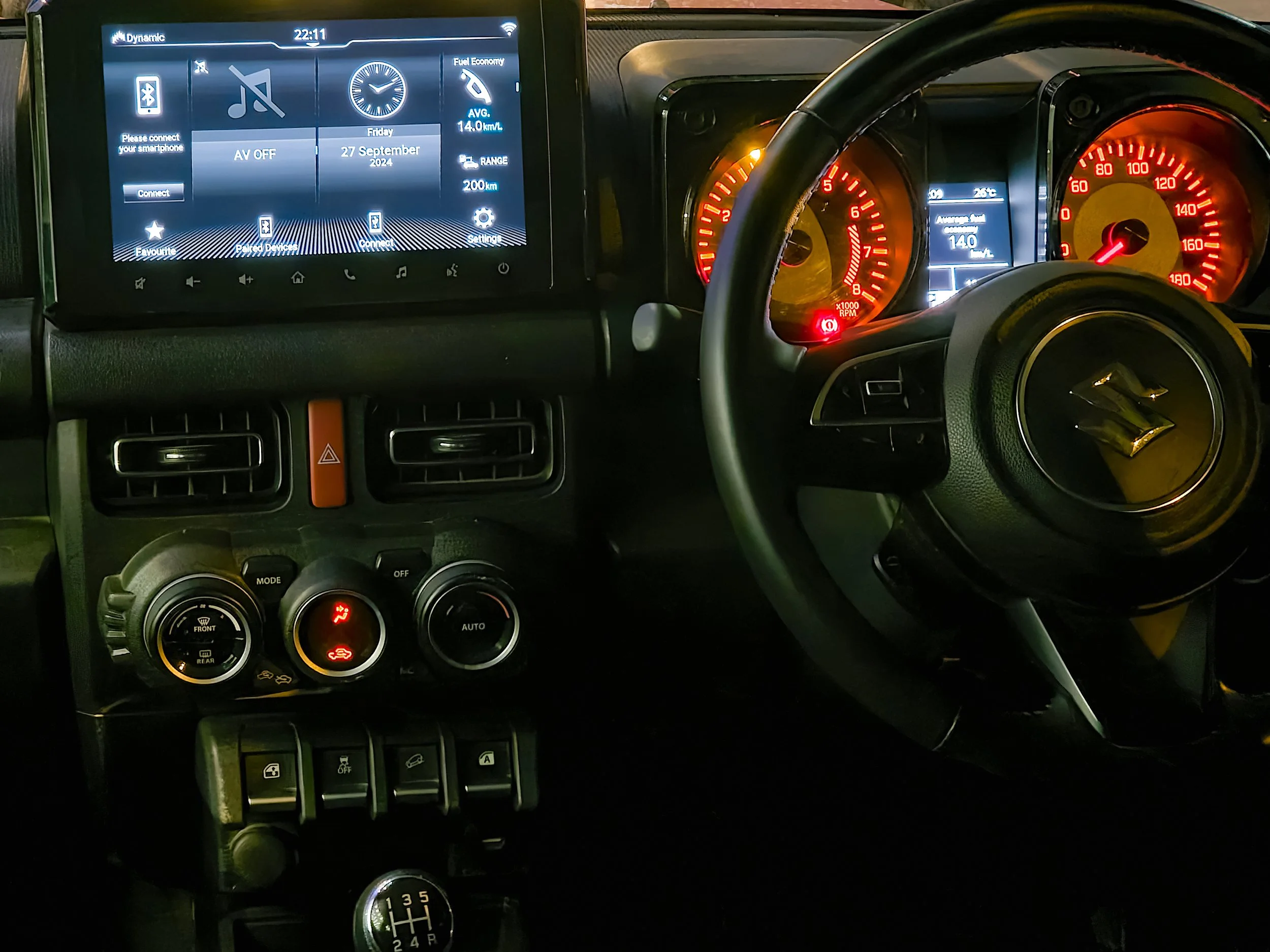
Elsewhere not much can possibly thwart your plans of using the Jimny as an everyday runabout. There are six airbags, regardless of the trim you choose, a touchscreen audio system (again two versions, the lesser spec gets a smaller screen), fairly supportive seats, a decent climate control system, and a short list of driver aids. The higher version also gets cruise control, LED headlamps, and darkened windows. The power window switches are on the centre console (which takes about a day to realise — and multiple attempts at dabbing a non-existent switch on the thin door card), there's no USB-C, and the steering can only be adjusted for tilt. The rear seats don't fold flat, which is a misery, but the front ones can be reclined nearly flat (with the headrest removed) to essentially turn the two rows of seats into a makeshift bed. Pretty neat for when camping out in the wild is too much of a risk and your ego doesn't allow you to get an actual hotel on a trip in the wilderness. When venturing out, you’d also notice that Hill Hold works as it says on the box, there's a brake LSD, and the Suzuki AllGrip Pro 4x4 system (complete with a 4L for the stickier of the stickiest conditions) makes sure that the Jimny is potentially the most accessible 4x4 on the market. I can also confirm that the Jimny’s rugged nature starts to rub off on the driver quickly, and you tend to become a little more adventurous than usual.
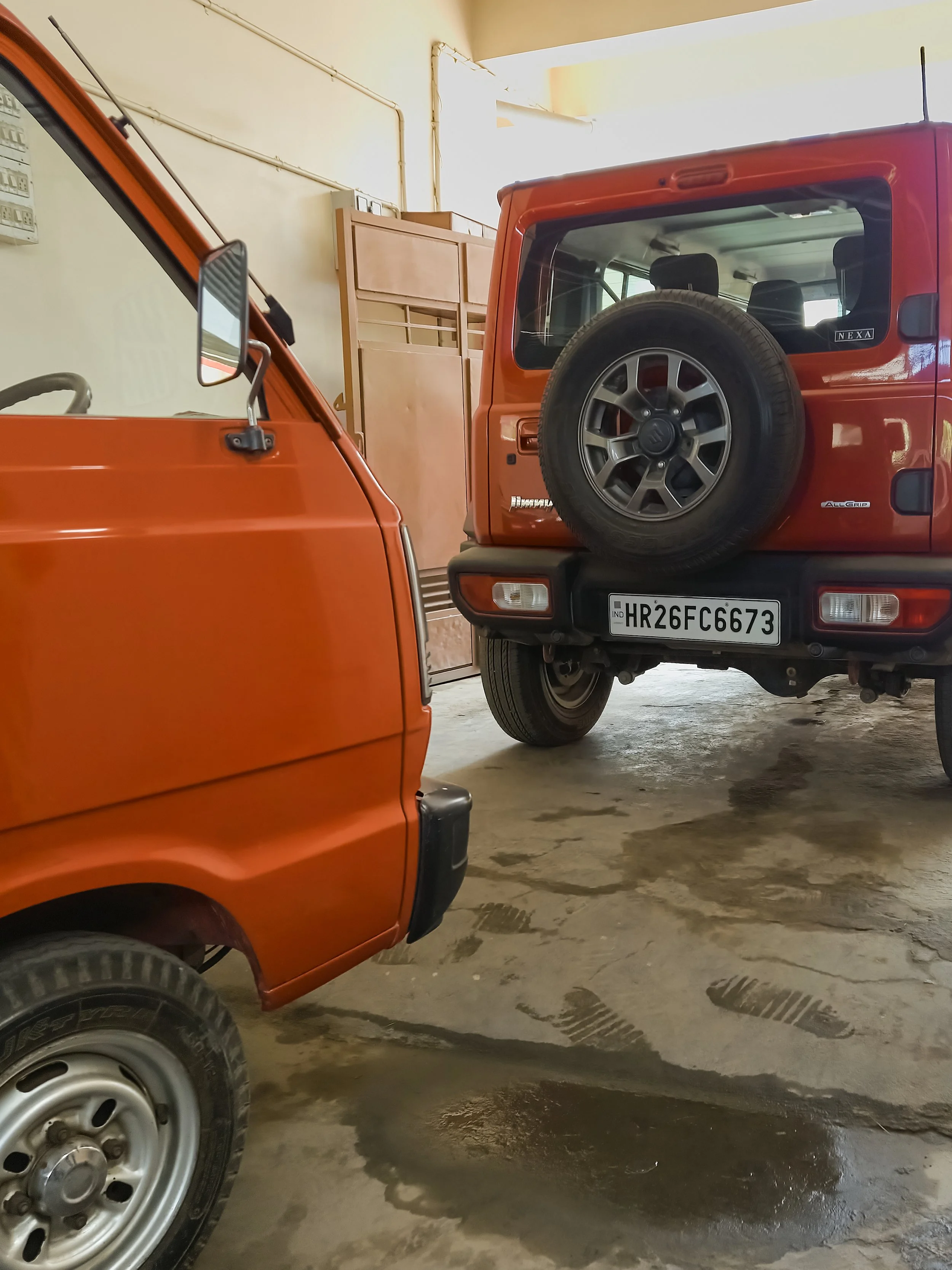
It is hence my new favourite contender for the 'one car that does it all' title — without breaking the bank. Enamoured, I texted a friend of The Car Cult (who also happens to have a Jimny in his collection) that there was absolutely nothing the Jimny couldn't do. To which he promptly responded that maybe it couldn't be a racing car. Well, I'm sure a few years down the line when we've run out of more interesting cars to shoehorn a large engine into, a lowered Jimny with all the paraphernalia removed and more power added will just about do the trick. Or maybe not, because the car is near perfect the way it is; it has its limitations but its capabilities outweigh those. At the current prices, there's absolutely nothing like it, which further convinces me that despite its flaws, the Jimny has a use case in nearly everyone's life.
Photos by 5anket and ParanjayYou can also read my first-drive impressions of the automatic-gearbox-equipped Jimny published on CarThrottle by clicking this.

Breaking The Barriers
It's a docu-film series which chronicles the Indian motorsport scene, right from its inception. It's awaiting a digital release and the aforementioned screening of the theatrical version included the early era of Indian racing. According to its maker's website (you can check them out by clicking this), having covered the initial history, the multi-episode series will focus on key events as motorsports got democratised, how F1 and India's paths crossed, and eventually a 'season' dedicated to what's happening currently.
Full of anecdotes, the film covers many stories that are always refreshing to hear to anyone who's heard them already and surprising to those who might've missed the rare media coverage in the early days of Indian motorsport. The fact that it was screened in Coimbatore (a few weeks after a premiere in Chennai) is fitting, because this city went on to become the motorsport hub of the country. The film is for the lack of a better word unmissable and I can't wait to see the chapter dedicated to the local motorsport legend S Karivardhan's contribution to Indian motorsport. When that happens, there will obviously be a mention of Maruti Suzuki in the film and hopefully a few more Jimnys in the theatre parking lot.