

The Stitch: Where Automotive and Apparel Collide
The demise of Arcadia Group here in the UK has prompted thoughts around the future of high-street brands, and the rise of the ‘’re-make, re-model’’ mentality among 21st Century apparel brands. Many of Philip Green’s (Sir omitted on personal grounds) companies have struggled to keep up with the change in consumer spending habits – the incessant rise of digital distribution. Not forgetting the pension scandal hanging around Green’s neck; the pandemic has also been the final nail in the Arcadia Group’s enormous coffin. The brands in this coffin have become synonymous with the British high street; not only that, but they have come to represent the darker side of the fashion industry.
Being one of the biggest polluters and exploiters, the fashion industry is not particularly noble on many levels. Nevertheless, the past few years and the coming years will mark the progressives from the archaic, consumption focused brands that we are all too familiar with. Arcadia group’s network comes under the latter – synchronised sales spilling out of the doors into the hands of the general public, lured in by the prospect of a sweet bargain, only to be thrown out the following Christmas. This is the high-street of the past. This is the fashion industry of the past.

Image Courtesy of Patagonia
The drive to recycle materials, use alternative fibres and to encourage people to buy less are just a few values now sweeping the fashion world. New and existing brands with these core values are starting to displace the archaic high-street giants - a similar phenomenon to the EV insurgents rising in numbers on our roads. In 1993, Patagonia pioneered the use of recycled plastic bottles as the basis for many of their different product ranges. They also replaced all cotton with organic cotton in 1996. Patagonia now operate a Worn Wear range and in 2019 repaired 100,000 pieces of clothing globally. They also offer over 50 repair guides for those looking to fix their own clothing.
In Austria, the Lenzing Group produces Tencel/Lyocell material – a form of viscose made from tree cellulose. Their Refibra fabric is made up of 20% cotton scraps. Why is this significant may you ask? To grow cotton requires a substantial amount of water – one t-shirt requires 2700 litres of water according to the WWF. A staggering amount of water considering the number of people who still don’t have access to drinking water. Recycled and organic cotton is just one of many attempts by the fashion industry to move beyond their traditional methods.
Worryingly though, a recent by the Global Fashion Agenda found that the apparel and footwear industries’ progress on carbon reduction and ensuring living wages, was 30% slower in 2019 compared to the year before. Tracing the authenticity of ‘sustainability’ claims is now top of the agenda, as only 5% of the top 100 global fashion brands can declare they can verify the credentials of those producing their textiles. Recent developments involving blockchain technology allows brands to issue tokens with a digital fingerprint, enabling the security and traceability of the fibre-to-retail journey. This all sounds very complex, but this same issue of origin will be faced by car companies; particularly in Britain where manufacturers import almost all of their lithium-ion batteries. More on this another time.

Image Courtesy of Patagonia
Other brands leading the way by creating high-quality, recycled clothing include Deadwood Studios. The brand rescue deadstock vintage leather clothing, revitalising the material into new, chic Rock n’ Roll unisex garments for the climate conscious rebels. The company will also use offcuts from other manufacturers or hides that have been rejected from tanneries. There are no qualms about stretch or stress marks here. When you observe the detail and quality of construction, you would never know that the jackets are made from reclaimed leather hides and jackets of a previous era.
Footwear designer, Helen Kirkham, has become globally renowned for separating and gutting vintage trainers. She carefully selects pieces from trainers of different eras, to create her own finished product. Her work is symbolic of the need to make the most of waste by reimagining the contents for everyday uses. An integral part of the process involves hours and hours of cleaning piles of trainers, preparing each shoe for the first stages of dismantlement. As a designer, she works entirely from the pieces available - In a recent interview with Highsnobiety she states that ‘‘I don't know how a shoe is going to look until it's finished.’’ Each finished trainer is uniquely bespoke to that of the customer, resulting in a contrast of styles and colourways. Helen makes each item to order, avoiding a backlog of stock that would normally be fought over in the January sales.
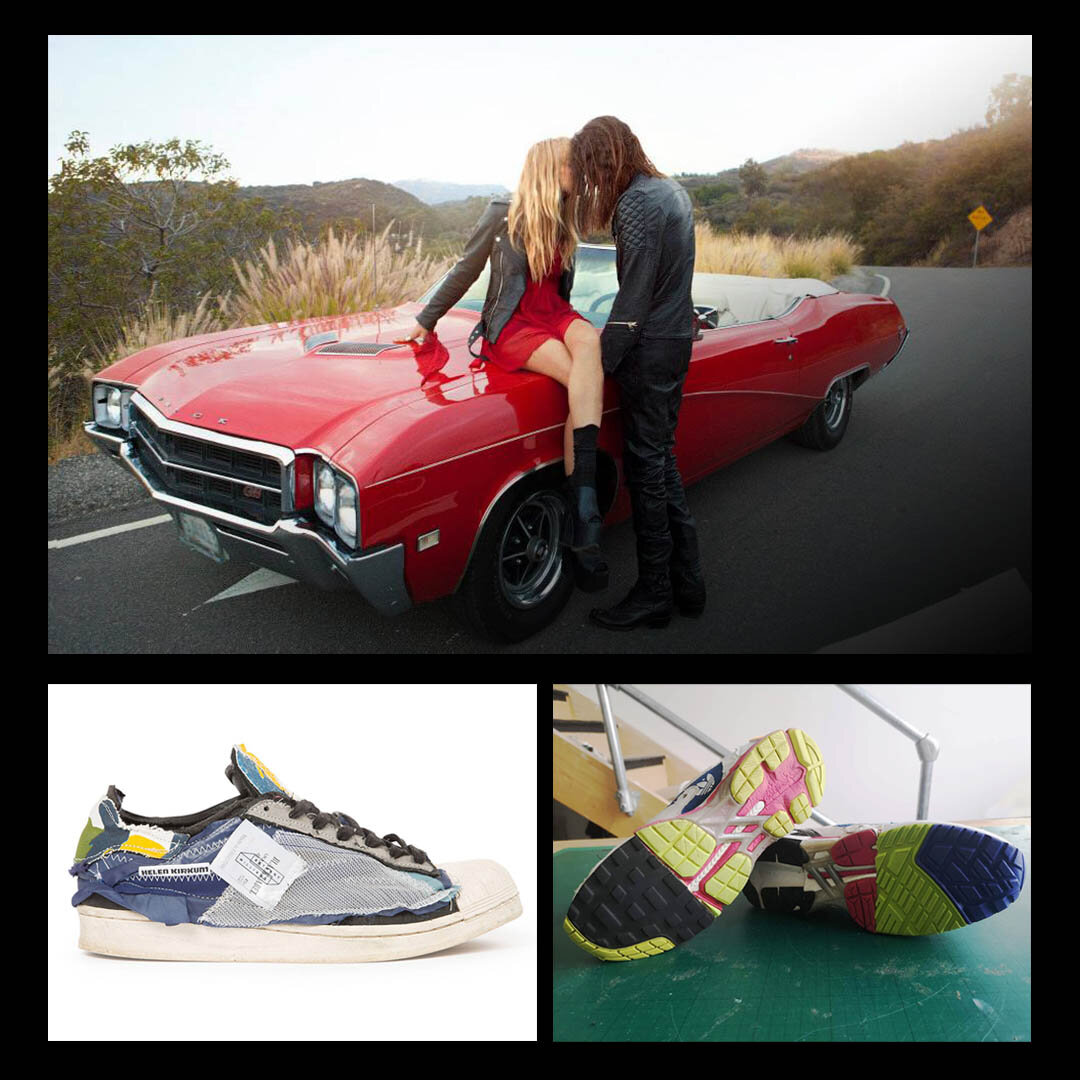
Deadwood Studios Top; Helen Kirkham Below
This is where our point lies - the fashion and automotive industries should influence one another. Some areas of automotive still see luxury and quality as synonymous with ‘newly’ acquired materials. Rolls Royce for instance, pride themselves on rejecting leather hides with ‘stress’ marks, with only one in five hundred hides commonly being good enough. Whether these rejected hides are used by other companies is unknown. But this mentality of rejecting animal skins is somewhat archaic and at odds with the need for progressive products. Rolls Royce with its authority should be leading the way in the use of alternative materials. The luxury consumers of the future will be the entrepreneurs of eco-focused organisations, where excess will be thrown out in the name of innovation. Innovation being the craftmanship required to transform something old and ‘perished’ into a new, usable and luxury item. A Deadwood Studios jacket fits perfectly into this category. Whereas a Rolls Royce interior is quite the opposite – an obsession with the past and perhaps an inability to see the importance of reformation. As cattle farming declines under the pressures of climate change, an alternative to animal hides will have to be sought.
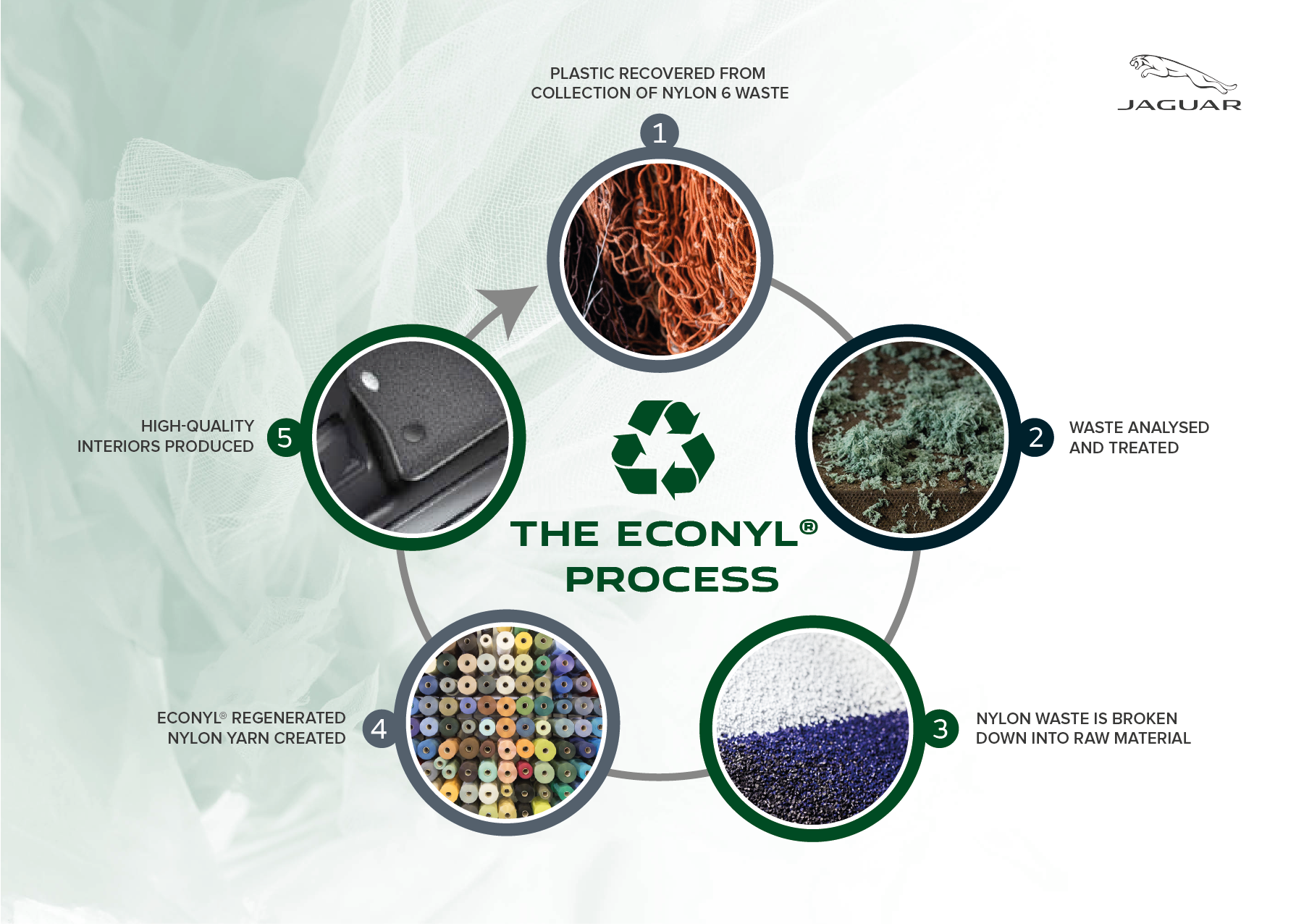
In the automotive world, the End-of-Life Vehicle (ELV) Directive has outlined that 95% of each vehicle must be reused, recovered or recycled. This increase from 85% in 2015 has been difficult to meet, with the UK achieving an 85.2% reuse/recycling rate in 2018. Recycling has come a long way with the ELV directive – engines, tyres and oils are just a few elements that are repurposed. Recycling companies can now separate the glass element of a windscreen from the two plastic sandwich layers. Clearly then, there is a lot going on to turn the formerly beloved family wagon into reusable products. The trend of recycled plastic is becoming more common in the automotive industry too; with JLR announcing that all of their new products will feature Econyl® Fibre. This fibre is made from plastic recovered from the ocean, old fishing nets lurking in the sea and fabric off-cuts from the clothing industry. Whilst the use of recycled plastic helps reduce the impact of other industries on climate change, the most common plastics (PET) can only be recycled 1-2 times. This means they are only delaying plastic pollution. The plastic is removed from the sea, repurposed for an interior dash, eventually ending up in a landfill somewhere else. Likewise, removing the plastic from the oceans for other multi-national brands (Coca Cola, Nestle and Pepsi being the top polluters), only endorses their ‘stuck’ mentality and obsession with plastic as irreplaceable.
What The Car Cult would like to see, is diversity. A new era of eccentric interiors, utilising alternative materials and fibres as well as the repurposing of old interiors for new ones. Drawing on Patagonia, Deadwood Studios and Helen Kirkham, the automotive industry could inspire waves of new designers to side-step the common trends. A buy-back scheme could be one method for the industry to utilise existing interior components. Rather than depending on a private recycling industry, car companies could create a ‘revitalisation’ service, whereby they take old interiors and utilise the material to create something new. Existing car interiors often get shredded or reworked for home furniture. Why not reuse the materials for new cars? This isn’t an obvious proposition - one only has to refer to the vast array of television programs showcasing craftsmen and women, who have dedicated their lives to refurbishing used automotive parts.
The Telegraph recently listed a range of different automotive brands who are, or intending to use, alternative materials. What is striking about the list - which includes an array of vehicles from the Porsche Taycan to the Hyundai Nexo - is that their efforts are limited to specific vehicles. The former only uses Econyl® for the foot matts, while the latter uses Sugar cane and corn waste in door, seat and console trims. The sugar cane waste is also used to make the headlining and floor mats. However, the Hyundai Nexo is an electric SUV which costs £70,000; so, not particularly accessible by the everyday person either. It does however, fit into this new vision of luxury we discussed earlier. Most impressive, is the VW ID Space Vizzion, which joins the new ID fleet as a replacement for the Passat, perhaps. The interior will feature AppleSkin™ - a leather replacement made with the mushy pulp (made up of cellulose fibres), which is left over as a result of juicing apples on an industrial scale. A step in the right direction we feel and something we hope will be used on an industry wide scale.
In other areas, brands like Polestar have also set the pace for the future of the automotive industry – they have built on BMW’s use of alternative materials for the i3 interiors. Along with recycled plastic, Polestar has also introduced Flax. Yes, the fibre you often find with your breakfast or splattered across your local vegan café’s menu. Flax has been part of the nutrition and textile industries for hundreds of years. Flax is linen. Fine grades of Flax fibres are woven into fabrics for apparel and household furnishings, while lower grades can even be used for canvas, fire hoses and much more.

Polestar Precept will go arrive in 2023
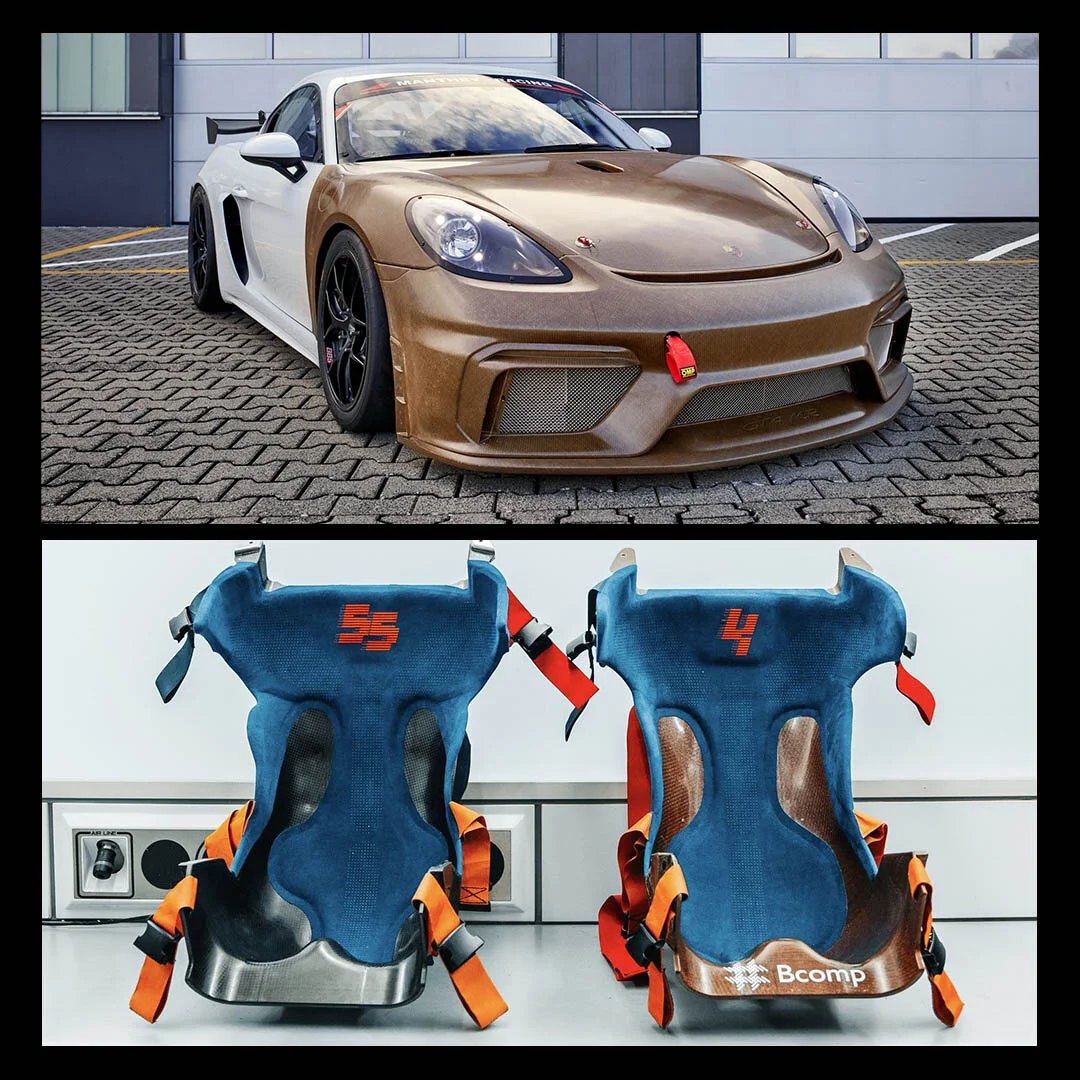
Polestar recently partnered with swiss firm BComp, who have created a sustainable lightweight material from the Flax fibre. ‘‘BComp’s powerRibs™ technology produces a three-dimensional grid structure, which is reinforced by BComp’s optimally spun and woven flax fibre reinforcement fabric, ampliTex™.’’ Made by twisting flax fibres to form a thick yarn; PowerRibs™ acts as a backbone to the ampliTex™ flax fabric that is bonded to it.’’ This structure is also being used by McLaren’s racing division to create a seat with a 75% lower Co2 footprint than carbon fibre.
The use of this technology has gone much further. In 2019, Porsche Motorsport launched a Cayman 718 GT4 CS MR with a full body kit made from the same Flax based composites. Using the same moulds and manufacturing processes found with the carbon fibre, Bcomp uses their powerRibs™ technology to recreate the same body panels but with better structural integrity. From a performance perspective, this development reduces vibrations by 250%, triples the flexural bending and stiffness of the body. From a sustainability perspective, the natural material can be ground down into a new base material or thermally recycled without any residual waste. A step towards closing landfills and stopping the export of waste. BComp has recognised this key issue, as have Berkeley Sports Cars with their Flax based bio-chases - you can read more about this here.
As we have alluded to, there is much the automotive world is doing that needs to be celebrated. But we have also seen how smaller brands and innovative designers in the fashion world are doing more to challenge norms. This tenacity and fervour for alternative materials and production methods could help promote sustainability in the automotive world, altering the dependence on marketing things as new and polished. Marketing the revitalisation of an existing material and item showcases a company’s innovative culture, adaptability and unique skills. In the words of Coco Channel, ‘’In order to be irreplaceable, one must always be different.’’
We’ve barely tucked into the pie with this feature… If you know of any designers and companies going against the grain in both spheres, please send us an email or reach out on Twitter: @TheCarCult